

German has a reputation for long words, three genders and four cases, and plenty of learners spend a year tapping through app lessons only to freeze the first time a German speaker answers them at normal speed.
So what’s the best app to learn German? It depends on your stage. Your first few hundred words and the basics of German grammar can come from almost any structured course. After that, you need hundreds of hours of real German you can mostly follow, and very few apps are built for that. LingQ is.
Below is an honest comparison of the German apps worth your time in 2026, what each one does well, where each one runs out, and how to combine them.
The quick answer
The best app to learn German past the beginner stage is LingQ, because it lets you learn from real German content (Netflix series, YouTube, podcasts, news and audiobooks) with one-tap word lookups and a count of every word you know. For your first weeks, pair it with a structured course like Duolingo, Babbel or DW Learn German to get the basics of grammar. For speaking, add a tutor.
| App | Best for | Stage | Free option |
|---|---|---|---|
| LingQ | Reading and listening to real German | Beginner to advanced | Yes, with limits |
| Duolingo | A free, structured course with a daily habit | Beginner to upper intermediate (B2) | Yes |
| Babbel | Short lessons with clear grammar explanations | Beginner to upper intermediate (B2) | First lessons |
| DW Learn German | Free courses from Germany’s public broadcaster | Beginner to advanced | Yes, completely free |
| Busuu | Structured lessons with feedback from native speakers | Beginner to upper intermediate | Limited free plan |
| Anki | Custom flashcards with spaced repetition | All levels | Yes (iPhone app is paid) |
| Pimsleur | Speaking and pronunciation on the go | Beginner | Free trial |
| italki | Speaking with a tutor | Late beginner and up | No, pay per lesson |
Free options checked November 2026. Prices and plans change, so check each app’s site.
Why most German apps stall at the intermediate level
Most German apps teach you about German in small, controlled pieces: a word, a sentence built for the lesson, a grammar rule with a few examples. That works for the first few months. Then it stops working, for three reasons.
German takes a lot of hours. The US Foreign Service Institute estimates about 36 weeks (900 class hours) of study for an English speaker to reach professional working proficiency in German. Short daily exercises don’t add up to that. You need content you can keep reading and listening to for months. (More in is German hard to learn?)
German grammar only sticks in context. You can memorize a table of der, die and das and adjective endings in an afternoon, then still get them wrong in every sentence you speak. Cases, genders and German word order become automatic only after you’ve met them thousands of times in real sentences.
Real German doesn’t sound like app German. Native speakers swallow endings, use particles like doch, mal and halt, and switch to regional accents and slang. Apps built on slow, clear sentences rarely prepare you for a Netflix series, a German podcast or a conversation in a Berlin bar.
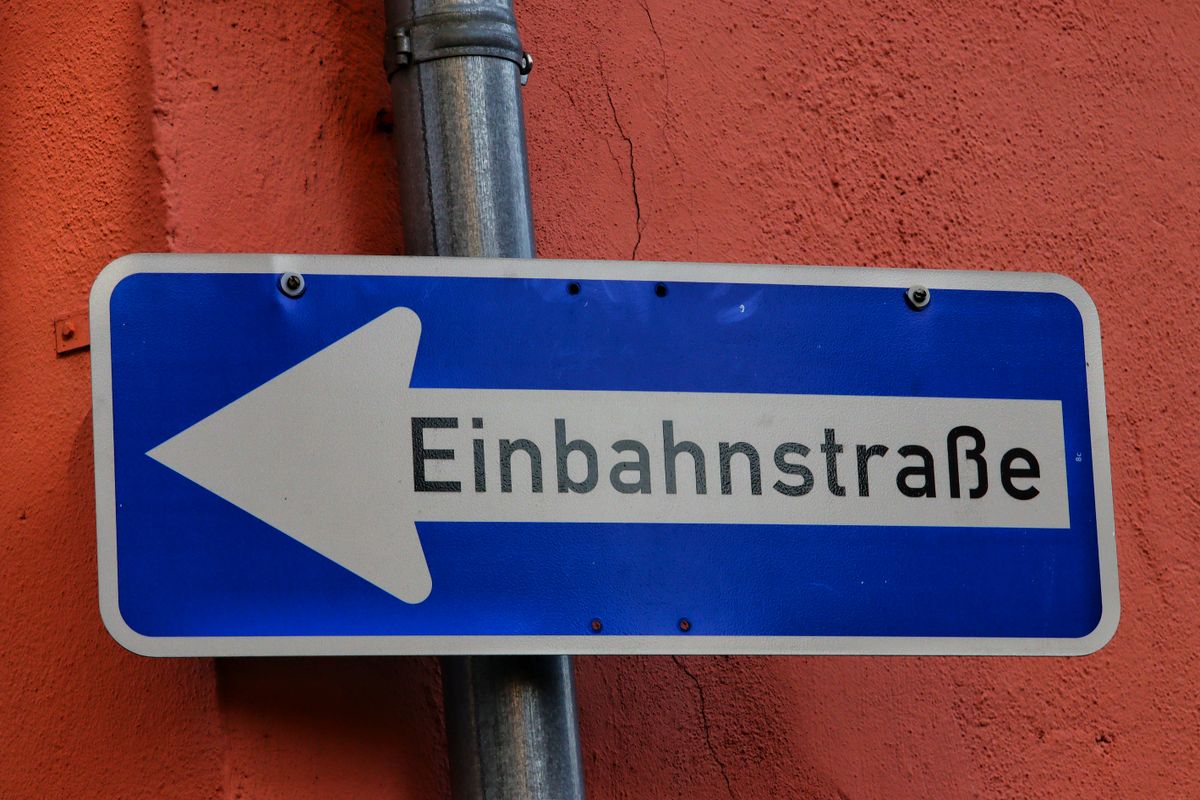
German’s long compound words are a good example. You won’t learn Einbahnstraße (one-way street) from a flashcard list, but after you’ve seen ein, Bahn and Straße a few hundred times in real German, you can work it out on sight.
Takeaway: once you know the basics, spend at least half your study time on real German, not exercises, and build up to two thirds as it gets easier.
The best apps to learn German, by stage
These are listed in roughly the order you’ll need them, from your first German words to understanding native speakers.
1) Duolingo: best free structured course
Verdict: a much bigger German course than it used to be, and a solid free start, but everything in it is German written for the app.
In 2026, Duolingo extended its nine biggest courses, German among them, up to B2 on the CEFR scale (upper intermediate), with more reading and listening practice. It’s free, it builds a daily habit, and it’s a fine way to learn your first few hundred words.
The limit is the material itself. Every sentence and story in Duolingo is scripted and leveled for learners. That’s useful practice, but it isn’t the German you’ll hear in Berlin or on Netflix. A B2 course on Duolingo makes you a strong Duolingo learner. Understanding native German still takes native German. (More in can you become fluent with Duolingo?)
- Use it for: a free daily course in your first months
- Pair it with: real German content as early as you can, rather than waiting until you finish the course
- Cost: free with ads; paid plans remove ads and add features
2) Babbel: best for clear grammar explanations
Verdict: the clearest structured grammar course of the big apps, built by a company based in Berlin.
Babbel’s German course uses short lessons built around everyday dialogues, with short explanations of grammar points like cases and word order as they come up. Its curriculum runs from A1 to B2. Like Duolingo, it’s a scripted course that ends when you finish it. See our Babbel review and Duolingo vs Babbel for more.
- Use it for: understanding why German sentences work the way they do
- Cost: paid subscription after the first lessons
3) LingQ: best for reading and listening to real German
Verdict: the best app for the stage where most learners stall: moving from app German to the German people actually speak and write.
LingQ was co-founded by Steve Kaufmann, who speaks more than 20 languages. It’s built on a simple idea: you learn a language by reading and listening to a lot of content you can mostly understand, and looking up the rest.
Here’s what that looks like in practice:
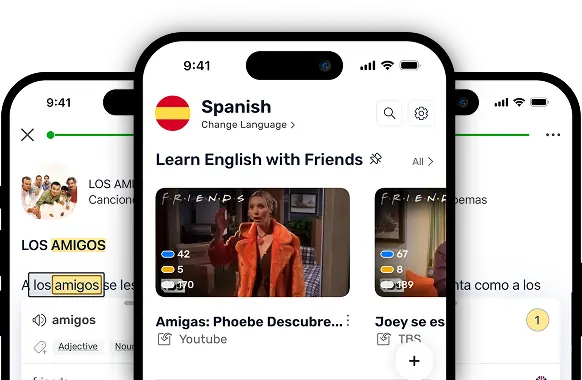
- Learn from German you actually want to understand. Import a YouTube video, a Netflix episode’s subtitles, a news article, an ebook or a podcast. LingQ turns it into an interactive lesson with text and audio.
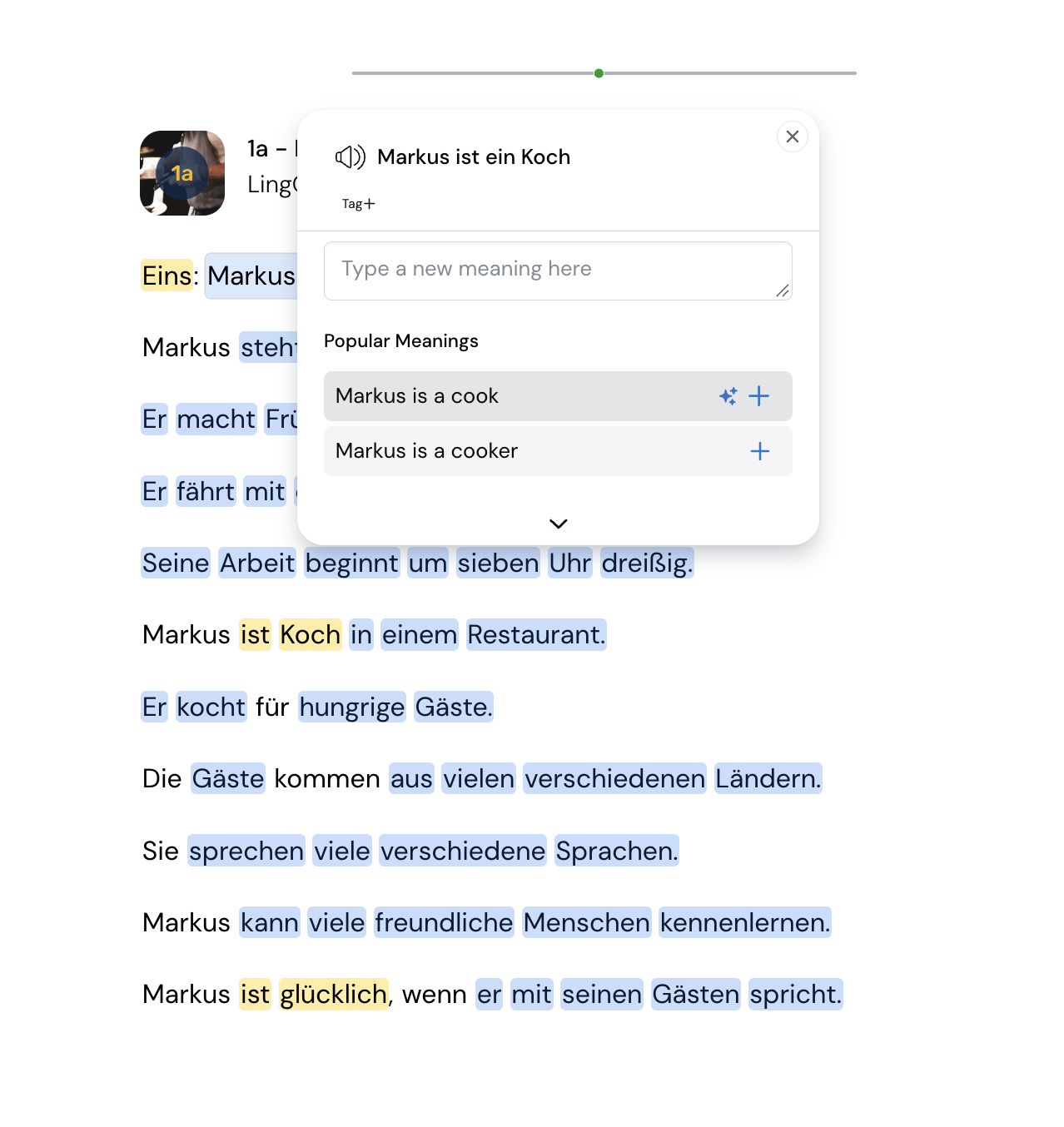
- Tap any word or phrase for its meaning. Unknown words are highlighted in blue. Tap one, or select a whole phrase, to see its meaning, hear it, and save it. Saved words are highlighted in yellow every time you meet them again, so you notice der, die and das in context over and over.
- Start with beginner content made for learners. LingQ’s German library includes Mini Stories, short stories with audio that repeat core vocabulary and grammar, so you have something readable from your first weeks.
- Watch your vocabulary grow. LingQ counts your known words and your hours of reading and listening, which is a far better measure of progress than a streak.
- Review without leaving your content. Saved words feed into flashcards and review activities, so you don’t need a separate vocabulary app.
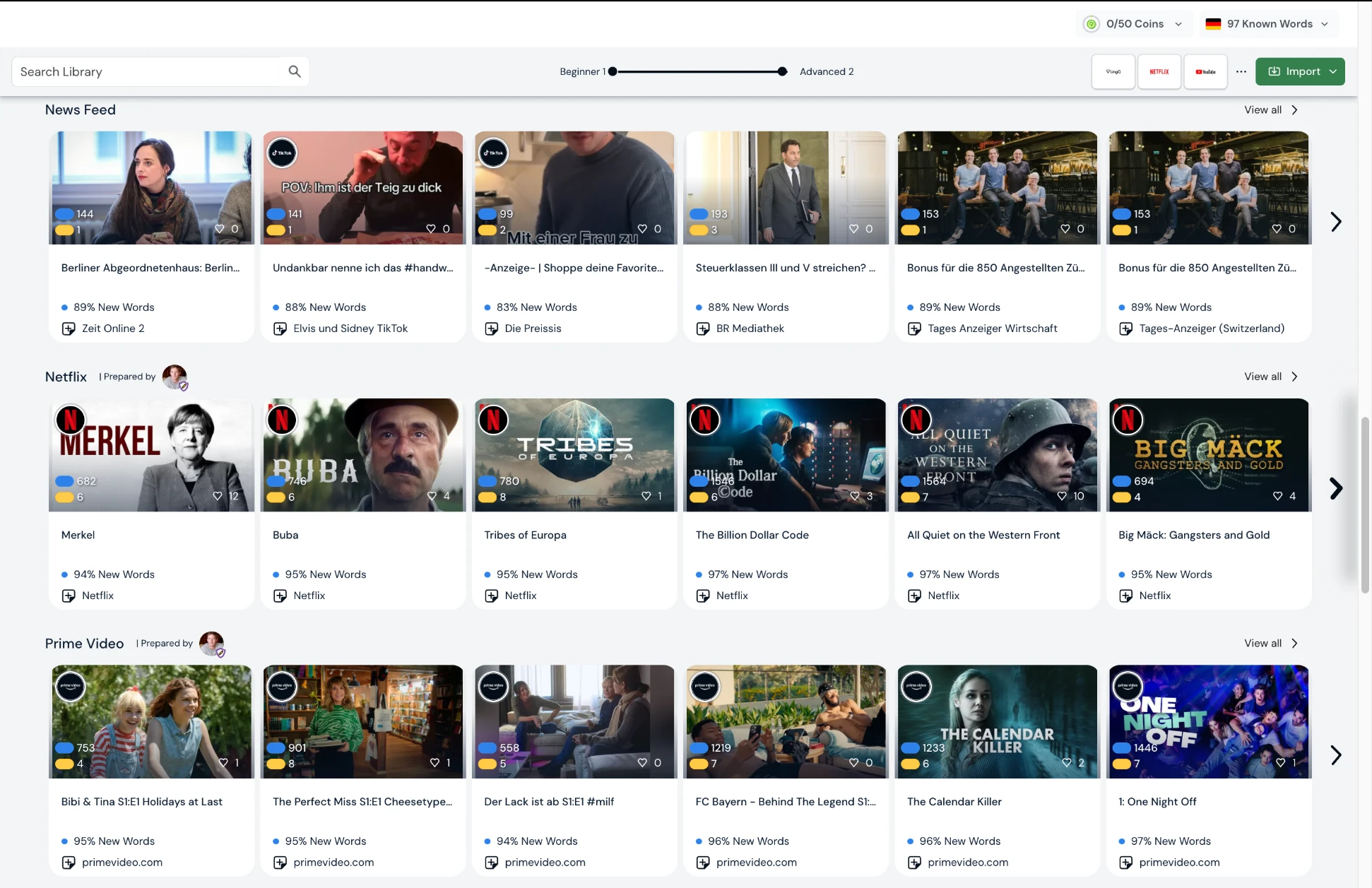
LingQ’s German library goes well beyond textbook lessons: a news feed from German-language outlets like Zeit Online and Switzerland’s Tages-Anzeiger, plus German Netflix and Prime Video series prepared as lessons, from Merkel to All Quiet on the Western Front. Every lesson shows what percentage of its words are new to you, so you can pick content that’s challenging but not overwhelming. Once Mini Stories feel easy, move on to German short stories, German podcasts and German Netflix shows.
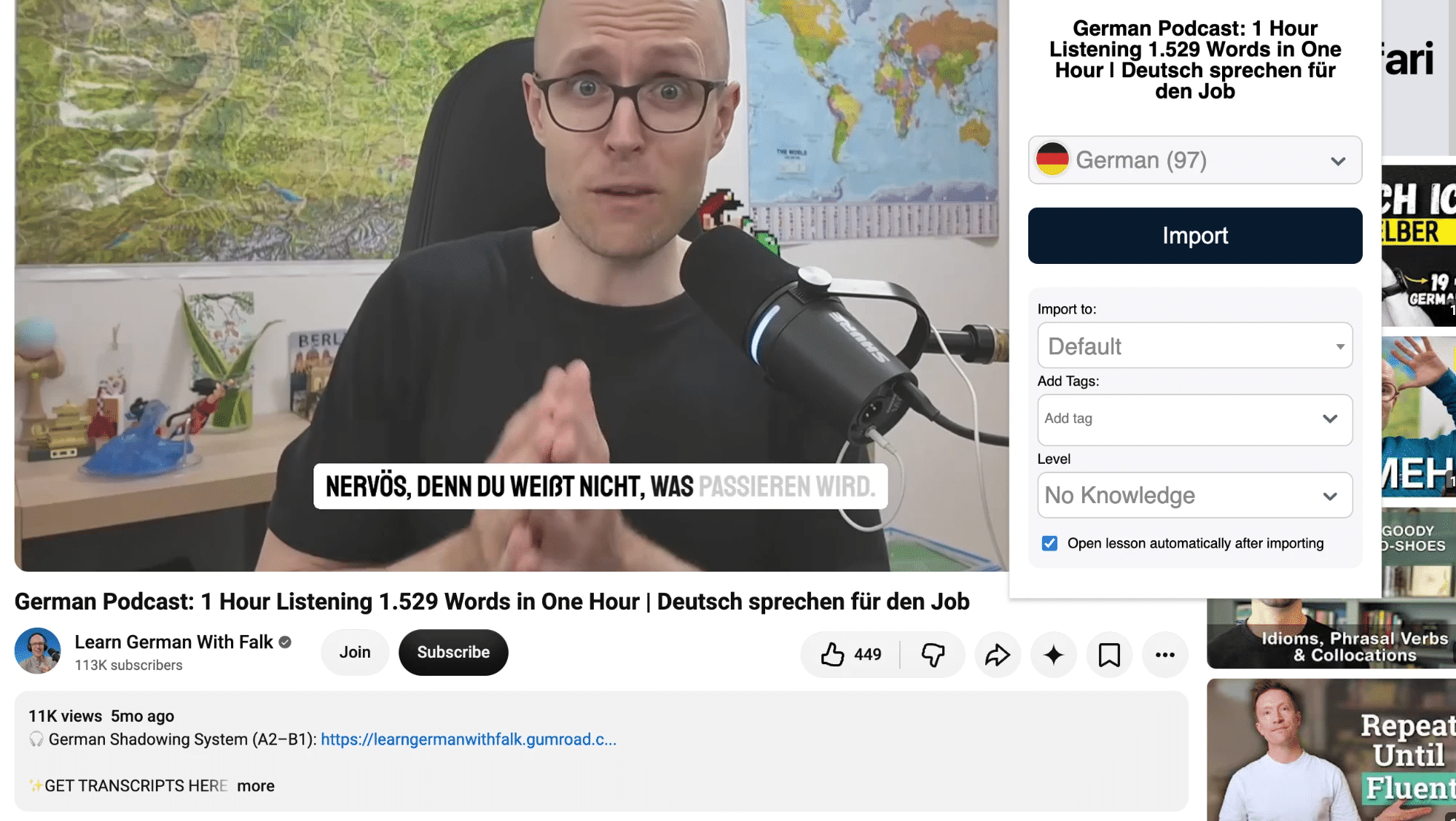
Found a German YouTuber you like? Import any video in one click with the LingQ browser extension, and it becomes a lesson with the full transcript, audio and word lookups.
Where LingQ is weaker: it doesn’t give you structured grammar lessons. Keep a grammar reference handy, or use Babbel or DW Learn German alongside it, and look things up when a pattern keeps confusing you.
- Use it for: the bulk of your study time, from your first few weeks onward
- Best paired with: a grammar resource and, later, a tutor for speaking
- Cost: free to start; Premium is $14.99 a month, or $10 a month on the annual plan (see LingQ Free vs Premium)
If you’re ready to move past exercises, start reading German on LingQ for free.
4) DW Learn German: best free courses
Verdict: the best completely free German course, from Germany’s international public broadcaster.
Deutsche Welle’s Learn German site and app offer full courses from beginner to advanced, including the video series Nicos Weg, with exercises and grammar notes. DW also publishes news read slowly in German, which you can import into LingQ to read and listen to with word lookups.
- Use it for: a free structured course, and slow news for listening practice
- Cost: free
5) Busuu: best for feedback from native speakers
Verdict: a structured course with a useful twist: native speakers in the community correct your writing and speaking exercises.
Busuu’s German lessons are organized by CEFR level, with vocabulary, grammar and short dialogues. Its community feature lets you submit written or spoken answers for correction, which is helpful practice before you’re ready for a tutor.
- Use it for: getting feedback on short pieces of writing
- Cost: limited free plan; the full course needs a subscription
6) Anki: best for custom flashcards
Verdict: the most flexible flashcard app, and free on most devices, but you build the system yourself.
Anki is a spaced repetition engine. Download a shared deck of common German words (ideally with the article on each noun) or make cards from sentences you’ve read. Keep it short: flashcards work best as a supplement to reading, not a replacement for it.
- Use it for: 10 minutes a day of vocabulary reviews
- Cost: free on desktop, web and Android; the iPhone app is a one-time purchase
7) Pimsleur: best for speaking practice on the go
Verdict: good for pronunciation and basic phrases on your commute; slow for vocabulary.
Pimsleur’s 30-minute audio lessons prompt you to answer out loud, which builds speaking confidence early. It covers a small vocabulary and almost no reading, so treat it as a supplement. See the best Pimsleur alternatives if you’re weighing it up.
- Use it for: commutes and walks in your first months
- Cost: free trial, then a subscription
8) italki: best for speaking with a real person
Verdict: the fastest way to turn what you understand into what you can say.
On italki, you can book one-on-one video lessons with German tutors. Speaking becomes much easier once you’ve built up comprehension, so many learners start tutoring after a few months of reading and listening.
- Use it for: 1 to 2 conversation lessons a week once you can follow simple German
- Cost: pay per lesson; rates are set by each tutor
What about Rosetta Stone and Memrise?
Rosetta Stone teaches German through pictures with almost no explanation, which makes cases and genders slow to pick up (see our Rosetta Stone review). Memrise is useful for vocabulary, but like the other course apps, it won’t give you the hours of real German you need.
Takeaway: pick one app per job. A beginner course to start, LingQ for real content and, later, a tutor.
German apps compared
| LingQ | Duolingo | Babbel | DW Learn German | Pimsleur | |
|---|---|---|---|---|---|
| Main format | Real content with lookups | Gamified exercises | Short structured lessons | Video courses and exercises | Audio drills |
| Grammar explanations | Look up as you go | Short tips | Clear | Clear | Minimal |
| Native-speed German | Yes | No | No | Partly (news, videos) | No |
| Content runs out? | No: import anything | Yes | Yes | Yes | Yes |
| Free option | Yes | Yes | First lessons | Yes | Trial only |
The best free apps to learn German
You can get surprisingly far without paying. A free setup that covers every stage:
- Structured course: DW Learn German or Duolingo
- Vocabulary: Anki on desktop or Android, with a shared deck
- Real content: LingQ’s free account, with Mini Stories and graded lessons, plus imports of free German content like DW’s slow news and German YouTube videos
- Dictionary: a free online dictionary like Leo or dict.cc for example sentences
The paid upgrade that makes the biggest difference is the one that removes limits on the tool you use most. For most learners past the first few months, that’s their reading and listening app.
Takeaway: start free. Pay only for the app you open every day.
How to combine German apps into a routine
The mistake most learners make is spreading 30 minutes across five apps. Each app ends up getting too little time to work. Instead, give most of your time to real content and keep the drilling short.
Here’s a 45-minute daily routine for a learner who knows the basics:
| Time | App | What you do |
|---|---|---|
| 10 min | Anki or LingQ flashcards | Review vocabulary from yesterday’s lesson |
| 30 min | LingQ | Read and listen to one lesson; save new words |
| 5 min | Babbel or a grammar reference | Look up one grammar point you met while reading |
On busy days, keep the LingQ lesson and drop the rest. Listen to the same lesson again on your commute: hearing a story you’ve already read is one of the easiest ways to build listening skill.
Once you can follow simple stories without much lookup, import episodes of German shows on Netflix and add one or two tutor sessions a week to talk about what you’ve been watching.
Takeaway: start with at least half your time on real German, build up to two thirds, and keep the rest for short reviews.
FAQs
What is the best app to learn German?
LingQ is the best app for learning German beyond the basics, because you learn from real content like Netflix, YouTube and podcasts with instant word lookups. Beginners can use a structured course like Duolingo, Babbel or DW Learn German alongside LingQ for grammar.
Is Duolingo good for learning German?
Yes, for a start. Duolingo’s German course now runs up to B2 (upper intermediate) and is free. It isn’t enough on its own to understand real German, though, because all of its content is scripted for the app. Pair it with native content like German podcasts, YouTube and Netflix.
Is Babbel or Duolingo better for German?
Babbel explains German grammar more clearly, and Duolingo is free and better for building a daily habit. Both are scripted courses, so most learners also need real German content. See our Duolingo vs Babbel comparison.
What is the best free app to learn German?
DW Learn German is completely free, with courses from beginner to advanced. Duolingo is free too. For reading and listening, LingQ’s free account gives you beginner lessons and lets you import free German content from YouTube and the web.
How long does it take to learn German with an app?
The US Foreign Service Institute estimates about 900 class hours for English speakers to reach professional working proficiency in German. Apps help most when they give you lots of real German to read and listen to, rather than short exercises.
Can you learn German with just an app?
Apps can take you a long way, especially if one of them gives you lots of real German to read and listen to. To speak well, add conversation practice with a tutor or language partner once you can follow simple German.
Start learning German with LingQ
The best app to learn German is the one that gets you reading and listening to real German as early as possible. Learn the basics, then let the content you enjoy do the heavy lifting: the series you watch, the podcasts you follow, the news you’d read anyway.
LingQ’s free account gives you beginner German lessons with audio, one-tap word lookups and a count of every word you learn. Import one video or article you’re curious about and see how much you can already follow.
Try LingQ free and start learning German →
Keep reading: The best way to learn German · Is German hard to learn? · The best language learning apps in 2026
Cover photo by Max Kladitin on Pexels.
 Learning German?