Duolingo vs Babbel: Neither Will Make You Fluent (Here’s What Will)
 Tyler Tolman
30 Apr 2026
Tyler Tolman
30 Apr 2026
TL;DR
- Duolingo is the better free habit-builder for total beginners. The gamification works, the free version is usable, and it costs nothing to start.
- Babbel has more thorough grammar instruction, more practical content, and a higher ceiling. It costs more but delivers more structure.
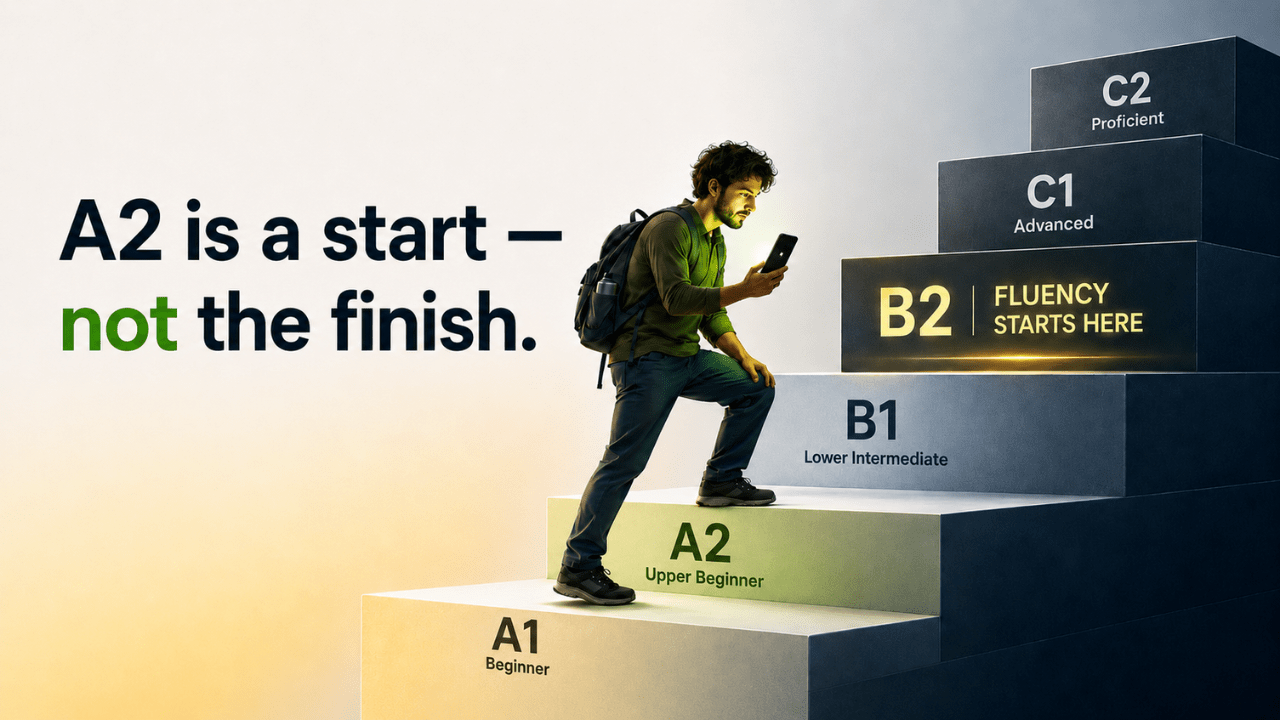
- Neither app will get you to fluency. Duolingo tops out around A2. Babbel gets closer to B1–B2. Both stop working before you reach the level you’re actually aiming for.
- For learners who have a foundation and want to actually get good, LingQ is built for what comes next: turning real content you care about into interactive lessons that grow your vocabulary in context.
If you’re searching “duolingo vs babbel” or “is babbel better than duolingo,” you’ve probably already tried one of them. Maybe you’ve been on a Duolingo streak for six months and you’re starting to wonder why you still can’t hold a conversation. Maybe you’re weighing up whether Babbel is worth paying for. Either way, here’s the honest answer, including the part both apps would rather you didn’t think about.
As Steve Kaufmann, who speaks over 20 languages, puts it: Duolingo has 135 million users and that’s genuinely impressive. It breaks down barriers and builds a daily habit. But after a year of daily practice, the average learner walks away with only about 1,500 words. That’s not a flaw in the app. It’s a sign you’ve outgrown it.

Babbel vs Duolingo: The Quick Comparison
Here’s a babbel vs duolingo comparison at a glance:
| Duolingo | Babbel | |
|---|---|---|
| Strength | Habit-building, total beginners | Structured learning |
| Teaching method | Gamified drills | CEFR-aligned lessons |
| Grammar instruction | Minimal | Explicitly explained |
| Languages | 40+ | 14 |
| Free tier | Yes (with ads and limits) | First lesson only |
| Paid price | ~$84/year | ~$96/year |
| Ceiling level | ~A2 | ~B1–B2 |
| Best for speaking | No | No |
| Gets you to fluency | No | No |
The Core Difference: A Game vs A Classroom
Duolingo and Babbel have fundamentally different philosophies about what language learning is.
Duolingo feels like a carefully designed game that makes you want to open it every day. The streaks, the leaderboards, and the animated owl all contribute to building a habit. That’s not a criticism. For many learners, the hardest part of language learning is consistency, and Duolingo addresses that problem better than almost anything else. But the gamification is the product. The language learning is secondary to keeping you engaged.
Babbel is a more traditional approach to language instruction. Lessons are built around real-world topics like ordering food, navigating a city, and workplace conversations, and they include explicit grammar explanations. Babbel doesn’t incentivise engagement as aggressively as Duolingo. The lesson-based format is less addictive, and it requires a bit more self-motivation to open each day. What you get in return is a more structured curriculum that actually builds toward something.
Method Comparison
Duolingo: Gamification First
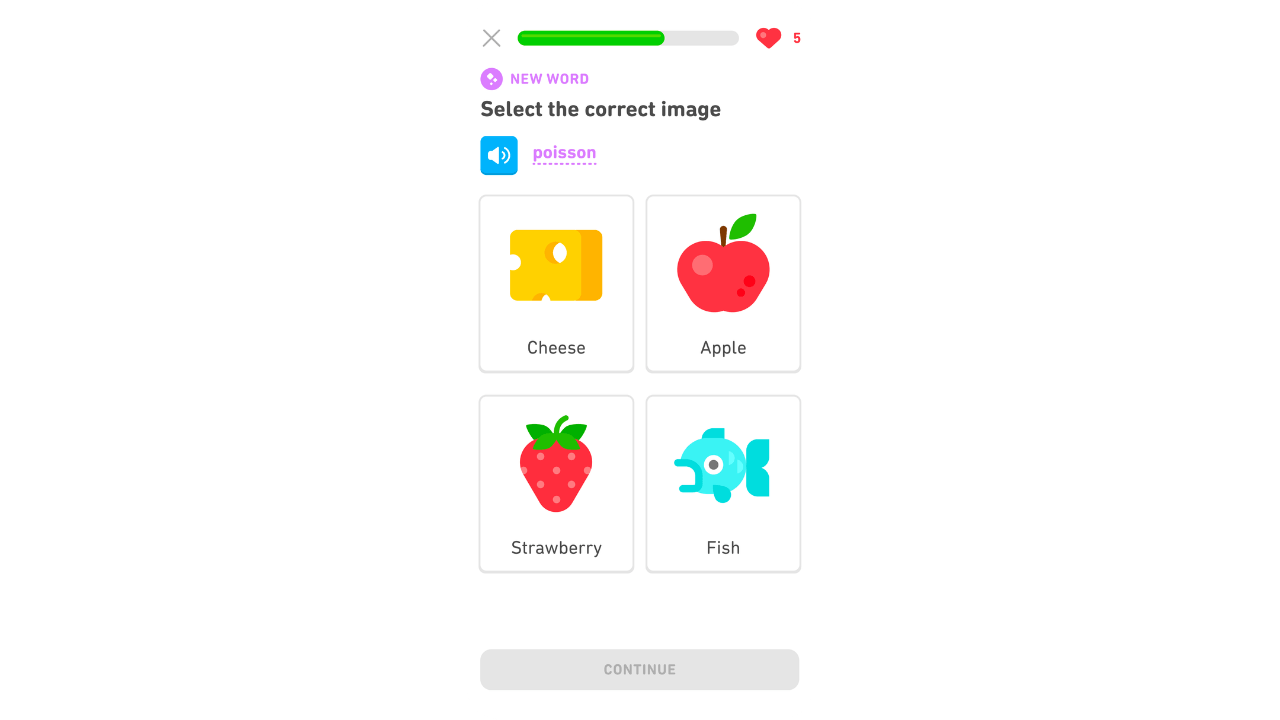
Duolingo’s exercises are primarily pattern recognition and translation drills. You match words to images, translate sentences, and arrange words in the right order. The repetition builds a basic sense of familiarity with the language, and the gamification along with the brevity of each lesson counteracts boredom.
The limitations are real. Most Duolingo exercises are passive: you’re recognising the language, not producing it. You learn almost entirely through translation, which is not how conversation works. The app does little to develop speaking or writing skills. And past the A2 level, there’s no significant increase in difficulty. You’re mostly reinforcing what you’ve already seen.
Total beginners can absolutely benefit from Duolingo. It’s effective at building foundational vocabulary and basic grammar exposure. As you approach a high-novice level, however, the exercises don’t get meaningfully harder. Steve Kaufmann puts it plainly in his review of Duolingo: “Duolingo is a good appetizer. Isolated sentences and gamified drills have hard limits for language learners.”
A note on Duolingo’s 2025 energy system: Duolingo recently rolled out a new energy system to mobile users. This limits daily practice for free users to roughly 15 to 20 minutes, cutting users off even without mistakes. For casual learners it’s a minor inconvenience. For anyone hoping to use Duolingo more intensively, it’s a meaningful constraint and a push toward a paid subscription.
Babbel: Structure and Real-World Application
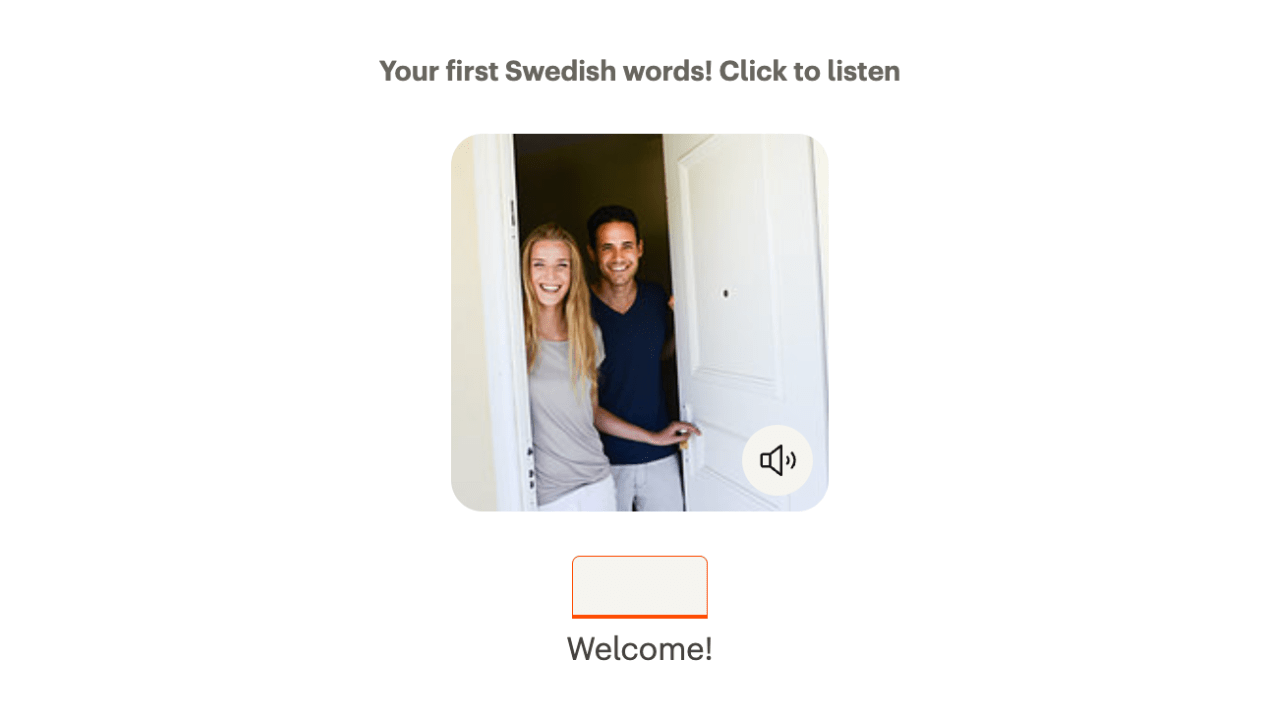
Babbel’s lessons run around 10 to 15 minutes each and use a variety of exercises: listen-and-repeat, fill-in-the-blank, matching, mock conversations, short grammar notes, and flashcard review. The content cycles through the same material from different angles, which improves retention.
The approach to grammar is an important differentiator. Babbel embeds short, clear explanations rather than expecting you to absorb grammar implicitly through drilling. You encounter a rule, immediately apply it, and move on. The curriculum is CEFR-aligned from A1 through B2, which gives learners a clear map and makes it easy to gauge progress.
The shortcomings are real too. Once you finish the course content, you’re out of material. Babbel promises a B2 level, but that’s unlikely across all domains. And unlike Duolingo, there’s no fully free version.
Pricing Comparison
Duolingo
- Free: Fully functional with ads and energy restrictions
- Super Duolingo: ~$12.99/month or ~$84/year (~$7/month)
- Duolingo Max (AI conversation features): higher tier, limited language availability
- Family Plan: ~$119.99/year for up to 6 users
Babbel
- Free: First lesson of each course only
- 3-month plan: ~$15/month
- 6-month plan: ~$13/month
- 12-month plan: ~$8.95/month (~$108/year)
- Lifetime access: ~$299 (all languages)
On comparable paid tiers, the two are priced similarly. The key difference is what you’re paying for. Duolingo’s paid tier is largely a feature-removal subscription: no ads, no energy restrictions. Babbel’s paid tier is the product itself.
Pricing approximate in USD. Verify current rates at each platform before subscribing, as regional pricing and promotions vary.
Is Duolingo or Babbel Better for Your Situation?

“I’m a complete beginner and want to build a habit” Duolingo. It’s great for habit formation, the free version is usable, and it’s the best zero-cost, zero-pressure entry point to any language.
“I want to understand grammar and learn phrases I’ll actually use” Babbel. Its curriculum is more practically designed, and the grammar instruction is more meaningfully structured than Duolingo’s.
“I’ve been using Duolingo for months and I’ve hit a wall” Neither, fully. Babbel will feel like an improvement and its curriculum more effectively leads to an intermediate level. But neither app bridges the gap to authentic native content. If you’re at this stage, you need tools built for it. See the LingQ section below, or read Steve’s guide on breaking through the intermediate plateau.
“I want to speak the language, not just recognise it” Neither, honestly. Both apps have speaking exercises, but they’re light and limited. A dedicated tool like italki fills this gap far more effectively.
“I’m learning a less common language” Duolingo by default. Babbel covers only 14 languages. If your target language isn’t in Babbel’s lineup, the comparison ends there.
“I’m learning Spanish specifically” Both apps have strong Spanish courses and the comparison above applies equally. Duolingo’s Spanish is probably its best-developed language. Babbel’s Spanish curriculum is thorough and practically focused. Neither will get you to fluency on its own.
“What’s better: Duolingo or Babbel vs Rosetta Stone?” Rosetta Stone uses a full-immersion approach with no native language translation, which some learners prefer. Its ceiling is similar to Babbel’s. For most learners comparing all three, Babbel offers the best balance of structure and price. Duolingo wins on accessibility and habit-building. Rosetta Stone is worth considering if you specifically want to avoid translation-based learning.
“I’m a serious adult learner who wants a complete system” Neither is enough on its own. Babbel has more depth and grammar. Duolingo helps you build the habit. As Steve writes in his post on the most effective language learning method, you’ll still need to supplement with extensive reading and listening, ideally with real content in your target language.
Can Duolingo or Babbel Get You to Fluency?
No. Neither was designed to, and most independent research supports this.
Duolingo reliably gets learners to around A2, which means functional recognition of common vocabulary and basic grammar. Babbel’s content extends further, often getting users to B1 or B2. But fluency means holding a real conversation, reading a novel, understanding a podcast without pausing every few seconds. That requires something neither app provides: sustained time with real, authentic content in your target language.
As Steve explains in his video Why Duolingo won’t make you fluent, the apps are useful starting points but the real work happens when you move into content designed for native speakers. This is the ceiling both apps avoid advertising. It’s also the reason most serious language learners eventually move on.
For a deeper look at how long fluency actually takes and what drives it, see Steve’s post on how long it takes to learn a language.
Why Does No One Like Duolingo Anymore?

Search any language learning forum and you’ll find a version of this sentiment. The frustration usually comes down to a few things. The 2025 energy system limits free users more aggressively than the old hearts system did. The gamification starts to feel hollow once the novelty wears off. And learners plateau at a level where they expected to feel progress but don’t.
None of this makes Duolingo a bad product for what it actually is: a habit-builder for beginners. The frustration usually comes from expecting it to do more than it was designed to do. Steve covered this in detail in his post The pros and cons of Duolingo: the app is a gateway, not a destination.
The Third Option: LingQ

Once you’ve built a habit and reached a basic foundation, the most effective thing you can do is start reading and listening to real content in your target language: books, podcasts, YouTube videos, articles. The challenge is that authentic content is hard when you don’t know enough vocabulary yet.
LingQ is built around exactly this problem. It turns any content you care about into an interactive lesson. You import a YouTube video, a podcast episode, a news article, or a book, and LingQ makes it interactive. Tap any unknown word to see a translation, save it to your vocabulary list, and track your progress across everything you’ve read. Your vocabulary grows in context, attached to content you actually chose, not pre-packaged sentences about office meetings.
This is the core of what linguists call comprehensible input: reading and listening to language you mostly understand, in content you actually care about. It’s the foundation of how Steve has learned over 20 languages, and the principle behind why LingQ works differently from Duolingo or Babbel.
LingQ is not the right tool for total beginners. If you’ve never seen the language before, Duolingo or a basic course is a better starting point. But for learners who have a foundation and want to actually get good, it’s one of the most effective tools available.
If you’ve hit the wall with Duolingo or finished Babbel’s curriculum and want to know what’s next: https://www.lingq.com/en/learn-languages-like-steve-kaufmann/
Frequently Asked Questions
Is Duolingo or Babbel better? It depends on what you need. Duolingo is better for free, gamified habit-building, especially for beginners. Babbel is better for structured grammar instruction and practical phrases.
Is Babbel better than Duolingo for serious learners? Yes, generally. Babbel’s curriculum is more thorough, its grammar instruction is more explicit, and its ceiling is higher. If you’re willing to pay and want a structured course rather than a game, Babbel is the stronger choice.
Is Babbel worth paying for over Duolingo’s free version? Yes, if you’re serious about making progress. Babbel’s curriculum is more thorough and has a higher ceiling. Duolingo’s free version is a reasonable starting point, but a limited one.
Can Duolingo or Babbel get me to fluency? As Steve explains in his video below, neither is designed to. Duolingo reliably gets learners to A2. Babbel’s content extends to B1–B2. Real fluency requires methods beyond what either app provides. For a fuller explanation, see Steve’s video Why Duolingo won’t make you fluent.
Which has better speaking practice? Babbel, marginally. Both apps include speech recognition exercises. Duolingo Max offers an AI speaking tool, but neither compares to a real conversation. If speaking is your primary goal, italki is a better choice.
Why does no one like Duolingo anymore? The 2025 energy system limits free users more aggressively than before, the gamification loses its appeal once the novelty wears off, and learners plateau without making the progress they expected. Duolingo is a strong habit-builder for beginners. The frustration usually comes from expecting it to do more than it was designed to do.
What’s better than both Duolingo and Babbel for serious learners? For reading and long-term vocabulary building in context: LingQ, for speaking practice: italki and for vocabulary drilling: Anki or Clozemaster. Most serious learners combine two or three tools rather than relying on any single app. Steve’s post on the six principles of language learning is the best place to start if you want to understand the full picture.
Writer Bio

Tyler is an American language teacher and language learner. He’s taught Spanish, French and Latin in the K-12 system since 2018. Tyler also speaks Thai and Italian. Currently, he’s learning German and Polish on LingQ!
Twenty minutes a day beats a weekend of drilling.
Read and listen to things you’d have read anyway — LingQ counts every word you pick up along the way.
- 5M+ learners
- 4.7★
- Free to start


You might also like