LingQ Review (2026): Honest Pros, Cons, and Who It’s Actually For
 Tyler Tolman
14 Apr 2026
Tyler Tolman
14 Apr 2026
TL;DR LingQ is a reading and listening platform built on one core idea: you learn a language faster and more naturally by consuming content you actually care about. It’s genuinely excellent for learners who want to read books, listen to podcasts, and enjoy the language the same way a native speaker would. Anyone who wants structured, grammar-first lessons may find LingQ overwhelming. Read the full LingQ review if you’re ready to move past the basics and want a tool that grows with you for years.
What Is LingQ?
LingQ (pronounced “link”) is a language learning platform founded by Steve Kaufmann, a Canadian polyglot who speaks over 20 languages. LingQ has been around since 2007 and has grown to support content in 50+ languages.
LingQ’s Philosophy
The philosophy behind LingQ is rooted in comprehensible input, a concept developed by linguist Stephen Krashen. The idea is simple: you acquire language by reading and listening to content in the target language that is challenging but still understandable. Instead of drilling grammar rules or memorizing flashcard decks, LingQ gives you the tools and content you need to immerse yourself in the language.
In practice, that means you open a lesson on LingQ (a news article, a podcast transcript, a book chapter, or a YouTube video) and tap any unknown word to see its definition. That word becomes a “LingQ,” a saved vocabulary item, and gets color-coded every time it appears in future content: blue for new words, yellow for words you’re learning, and white for words you know. Over time, you’ll see your progress as lessons shift from mostly blue to mostly white.
You can use LingQ’s built-in content library, or import virtually anything from the web: Netflix subtitles, YouTube videos, ebooks, blogs, podcasts. You don’t have to follow a set path or course. LingQ encourages you to forge your own path and dive into content that actually interests you.
Core Features
The Reader
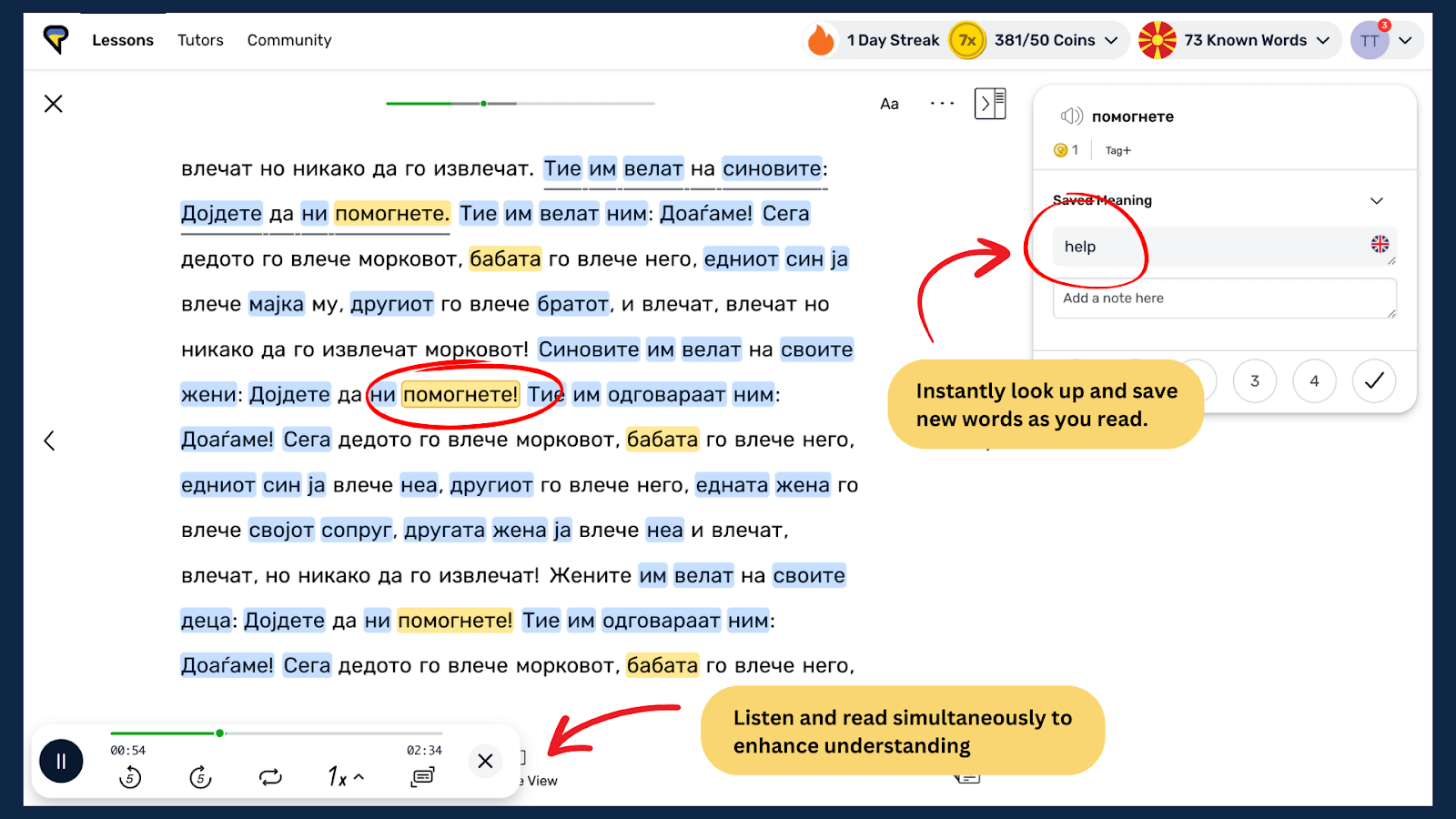
LingQ’s central experience is its interactive reader. You open a lesson, read or listen, and click unknown words for instant definitions pulled from multiple dictionary sources. The app also offers AI-suggested translations and lets you add custom definitions. Every word you interact with gets tracked across your entire library, so a word highlighted in one lesson will still be highlighted when it appears somewhere else.
Content Import
This is where LingQ stands apart from almost every competitor. You can transform practically any content you enjoy into a custom language lesson: YouTube videos, Netflix episodes, podcasts, ebooks, online articles, and more. If it’s text or audio, it can become a lesson. You’re not stuck with a specific genre or format. You can explore the target language as widely as you’d like.
Word Tracking and Progress Stats
LingQ tracks your known word count, the number of words read, and hours of listening across every language you’re studying. These metrics help you visualize progress and make more informed, quantifiable goals; they calculate the percentage of unknown words in every lesson so you can gauge difficulty at a glance; and they let you track learning habits over time to support greater consistency.
Mini Stories
Each language on LingQ includes a set of mini stories: short, structured beginner lessons recorded by native speakers. They’re designed to repeat high-frequency vocabulary and basic sentence structures, and they serve as a useful on-ramp toward intermediate-level and more authentic content.
Vocabulary Review (SRS)
Words you’ve saved can be reviewed through a spaced repetition system with multiple choice, fill-in-the-blank, and dictation exercises. LingQ’s review features are functional, customizable, and designed to help you engage with content more deeply.
Community and Tutors
LingQ has a community forum, leaderboards, and language challenges. It also lets you book one-on-one tutoring sessions with native speakers for conversation practice or writing correction. The tutor selection is more limited than on general tutoring platforms, but more aligned with LingQ’s philosophy.
Fully Mobile
LingQ works across phones, tablets, and desktops. Study your target language wherever you are, whenever you have time.

LingQ Review: Pros and Cons
Pros: What LingQ Does Really Well
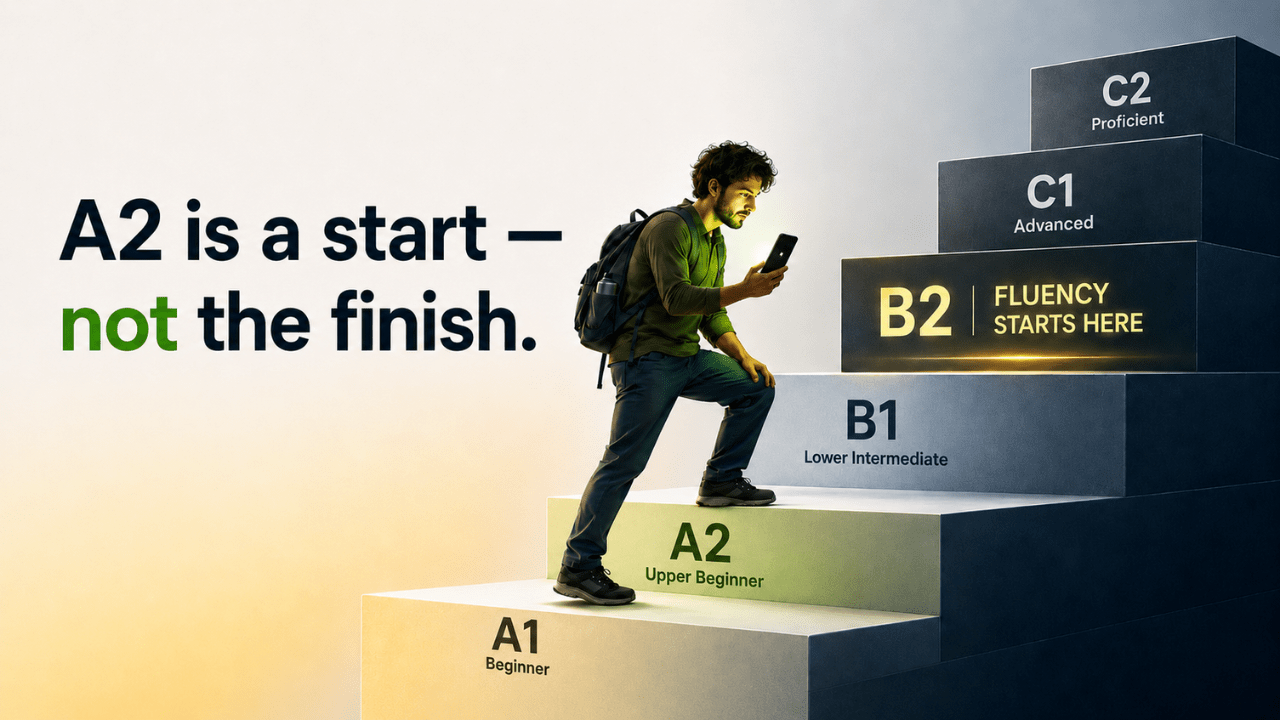
1. It works for the long haul. Most language apps plateau at A2 or B1. LingQ doesn’t. You can use it from your first hundred words all the way to reading novels in your target language. In fact, LingQ enables you to tackle advanced content more confidently than almost any competitor.
2. The content import feature is unmatched. No other mainstream platform lets you customize your learning content as widely and as easily as LingQ. Want to read a Spanish thriller you already own? Import it. Studying Korean through dramas? Pull in the subtitles. The potential for customization and variety is essentially limitless.
3. Vocabulary tracking is genuinely motivating. The visual color-coding system, watching blue words turn white as you move from unknown to known, keeps your progress visible and tangible in a way that abstract percentage scores don’t.
4. It supports a huge range of languages, including rare ones. With 50+ languages, LingQ covers territory that most apps don’t. How many platforms host not only Spanish, French, and German, but also Finnish, Thai, Ukrainian, and Irish Gaelic?
5. The annual price is competitive. At roughly $10/month on an annual plan, Premium is reasonable value given the depth of features. You’re accessing multiple tools with one subscription. Check current pricing here.
Cons: Where LingQ Falls Short
1. There is a learning curve. This is the most consistent criticism across reviews and user feedback, and it’s fair. There is not just one way to use LingQ. Navigation isn’t always intuitive, and it takes time to optimize tools and routines.
2. The free plan is very limited. Free accounts are capped at 20 saved LingQs. To put that in perspective, you could hit that ceiling in a single short lesson. The free version of LingQ is essentially a demo. You won’t make meaningful progress without a Premium account.
3. The SRS review queue can spiral. If you save a lot of words quickly (which is easy to do), your review queue grows faster than you can clear it. It can feel like an unmanageable backlog. The important thing to remember is that the goal isn’t to keep your “Review Due” deck clear. It’s consistent reading and listening.
4. Content importing has limits. While the import feature is powerful, larger files hit size restrictions (60 minutes per audio file, 60MB file size), and longer content will appear in chunks as separate lessons.
5. Weak for speaking practice. LingQ is a reading and listening tool. If building conversational fluency is your primary goal, you’ll need to supplement it with something else, such as a conversation exchange partner or a private tutor.
LingQ Pricing: Free vs Premium
LingQ keeps its pricing simple. You’re either using the free version to demo the product, or you have full access with LingQ Premium.
Free
- Up to 20 saved LingQs (vocabulary items) — enough for roughly one short lesson
- Access to a limited portion of the content library
- Basic progress tracking
- Ads
Premium ($10/month billed annually)
- Unlimited LingQs and vocabulary tracking
- Full access to the content library
- Content import (YouTube, Netflix, ebooks, podcasts)
- Offline mode
- Streak tracking and community features
- AI tutor chat for lesson comprehension
There’s also a bi-annual option at $8.99/month, though it does not come with additional features.
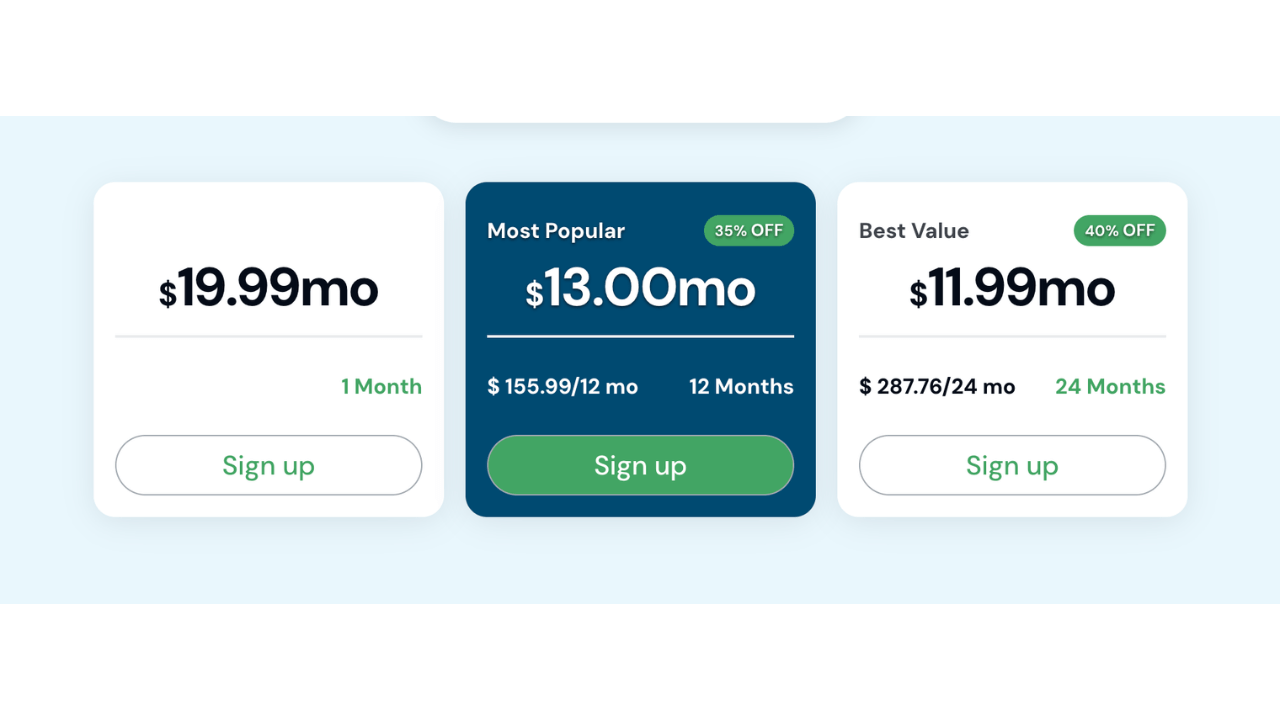
Prices shown are approximate USD and may vary by region. See current pricing →
How LingQ Compares to Other Apps
| LingQ | Duolingo | Babbel | Rosetta Stone | |
|---|---|---|---|---|
| Best for | Beginner to advanced learners | Complete beginners | Beginner to intermediate | Beginner to intermediate |
| Approach | Immersion through real content | Gamified structured lessons | Structured conversation lessons | Immersive visuals, no translation |
| Content flexibility | Very high — import anything | None | Low | Low |
| Languages | 50+ | 40+ | 14 | 25 |
| Speaking practice | Limited — needs supplementing | Some | Yes | Yes |
| Long-term scalability | Excellent | Plateaus at B1 | Plateaus at B1 | Plateaus at B1 |
| Free plan | Very limited (20 LingQs) | Full free tier | 1 free lesson per chapter | Free trial only |
| Price (monthly) | ~$10/month (annual) | ~$7/month (annual) | ~$7/month (annual) | ~$12/month (annual) |
| Verdict | Best for fluency | Best for habit-building | Best for quick conversations | Overpriced for what you get |
LingQ occupies a different category from most language learning apps. Here’s a quick orientation.
LingQ vs Duolingo: Duolingo is gamified, structured, and very beginner-friendly. It’s great for building a daily habit. LingQ is immersion-based, flexible, and suited to any level. They serve different goals, and many learners use both: starting with Duolingo and graduating to LingQ once they have a foundation.
LingQ vs Babbel: Babbel focuses on structured, conversation-ready lessons. It’s more guided than LingQ but has less depth and fewer languages. LingQ wins on content flexibility and long-term scalability.
LingQ vs Rosetta Stone: Rosetta Stone uses immersive visuals without translation. It’s expensive relative to what you get. LingQ is more flexible, supports far more languages, and offers better content variety at a lower price point.
Who LingQ Is Best For
LingQ celebrates the independent learner. Total freedom isn’t for everyone, so here is a quick guide to help you decide if an immersive approach aligns with your learning style.
LingQ is a great fit if you:
- Enjoy learning through reading and listening.
- Want to study content that interests you, not content the app chose for you.
- Are studying a less common language with limited app support.
- Are a self-directed, motivated learner who doesn’t need hand-holding.
- Are planning to learn a language over months or years, not weeks. If that’s you, LingQ is built for exactly that journey.
If any of the above apply to you, Create a free LingQ account today→
LingQ is probably not the right fit if you:
- Need structured grammar explanations as part of your learning
- Want a gamified, guided experience like Duolingo
- Prefer speaking-focused practice over reading and listening
- Are just looking to memorize some tourist phrases
Frequently Asked Questions
Is LingQ worth it? For the right learner, yes. LingQ offers a depth and flexibility that most apps don’t come close to matching.
Is LingQ legit? Yes. LingQ has been around since 2007, was founded by Steve Kaufmann (a renowned polyglot who speaks 20+ languages), and has been used by millions of language learners worldwide. It’s consistently rated among the most effective language learning platforms by independent researchers.
Is LingQ free? LingQ has a free tier, but it’s capped at 20 saved words, which you can hit in a single short lesson. Most learners will need a Premium subscription to get real value from the platform.
What’s the difference between LingQ free and LingQ Premium? Free accounts let you test out the platform, while Premium gives you full access to all of LingQ’s tools and features, including unlimited imports, offline mode, and AI tools.
How does LingQ compare to Duolingo? They serve different learning philosophies. Duolingo is gamified, structured, and very beginner-friendly. LingQ is immersion-based, flexible, and suitable for any level. LingQ is the better tool for achieving genuine fluency.
Is LingQ better than Duolingo? It depends on where you are in your learning journey. Duolingo is better for absolute beginners who need structure and habit-building. LingQ is better for those who want to move toward real fluency through authentic content.
What languages does LingQ support? LingQ currently offers content in 50+ languages. Major languages like Spanish, French, German, Japanese, Chinese (Mandarin and Cantonese), Korean, Italian, and Portuguese have full-featured courses. Many others, including Vietnamese, Punjabi, Hungarian, Irish Gaelic, and Tagalog, are available with growing content libraries.
The Bottom Line
LingQ isn’t the flashiest language app, and it’s not trying to be. For the right person, it’s one of the most powerful long-term language learning tools available. If you’re looking for more than drills and lists, love reading, and want a system that can take you to genuine fluency, LingQ is hard to beat.
You won’t be told exactly how to use it or what content to study. But as you explore the platform and build up your content repertoire in your target language, LingQ becomes genuinely unbeatable for achieving fluency.
Get started with LingQ for free →
Writer Bio

Tyler is an American language teacher and language learner. He’s taught Spanish, French and Latin in the K-12 system since 2018. Tyler also speaks Thai and Italian. Currently, he’s learning German and Polish on LingQ!
You might also like