



Pimsleur is good at one thing: it gets nervous beginners speaking out loud from the first lesson. But it costs about $20 a month, teaches through a fixed set of scripted conversations, and runs out long before you can follow a movie, a podcast or a real conversation at native speed.
If you’ve hit that wall, or you’d rather not pay for it in the first place, here are the best Pimsleur alternatives in 2026, what each one is good for, and which one actually gets you to understanding real native speakers.
Want the full breakdown of Pimsleur itself? Read Steve Kaufmann’s Pimsleur review for the LingQ co-founder’s take on the method and who it suits.
The quick answer
The best Pimsleur alternative is LingQ. Instead of drilling scripted dialogues, you learn from real content (YouTube, Netflix, podcasts, news and graded lessons) with one-tap word lookups and audio for every lesson. It covers the skills Pimsleur leaves out, vocabulary, reading and native-speed listening, and LingQ Premium costs about half as much on the annual plan.
| Alternative | Best for | Price | Free option |
|---|---|---|---|
| LingQ | Getting fluent from real content: vocabulary, reading and listening | Free; Premium from $10/month (annual) | Yes |
| Language Transfer | Free audio course for hands-free beginners | Free | Yes |
| Duolingo | A free daily habit for beginners | Free; paid plans available | Yes |
| Babbel | Short structured lessons with grammar explanations | Paid subscription | No (trial lessons) |
| A tutor (italki, Preply) | Real speaking practice with a person | Per lesson | No |
Prices checked November 2026. They vary by country and promotion, so check each app’s site.
Why people look for a Pimsleur alternative
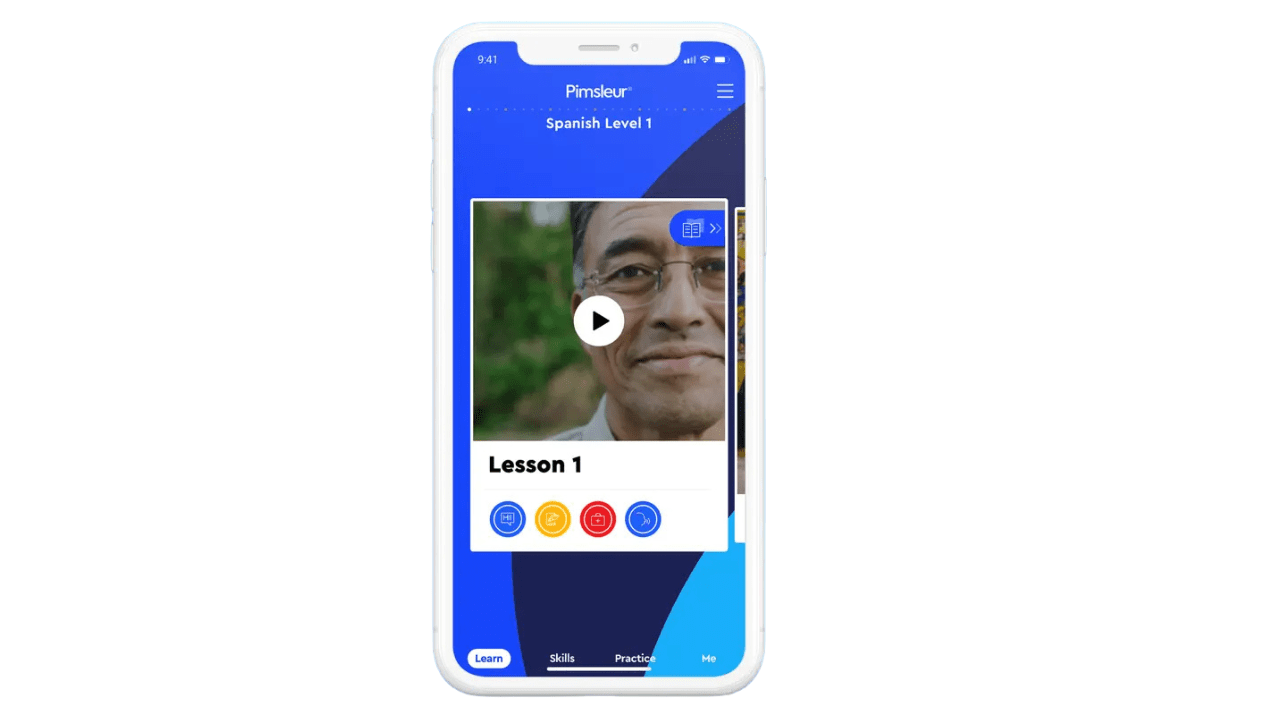
Pimsleur’s 30-minute call-and-response lessons build pronunciation and speaking confidence. The complaints usually come later:
- Too few words for the time. Each lesson drills a handful of new words from many angles. That’s slow: learners commonly estimate a few hundred words per 30-lesson level, and you need several thousand to follow everyday conversations and TV.
- Scripted, slow conversations. Pimsleur’s dialogues are clear and formal. Real speech is faster and more casual, so many learners finish the course and still can’t follow native speakers.
- Almost no reading. It’s overwhelmingly an audio course, which is a big gap if you want to read, or you’re learning a language with a different writing system.
- It runs out, and it isn’t cheap. About $19.95 a month for one language (about $20.95 for All Access), no free plan, and nothing new to do once you finish the levels.
So the best alternative is one that fills those gaps: lots of words, real native speech, and reading, without a fixed end point. For a deeper look at Pimsleur’s strengths and weaknesses, see Steve Kaufmann’s Pimsleur review.
1) LingQ: the best Pimsleur alternative for getting fluent
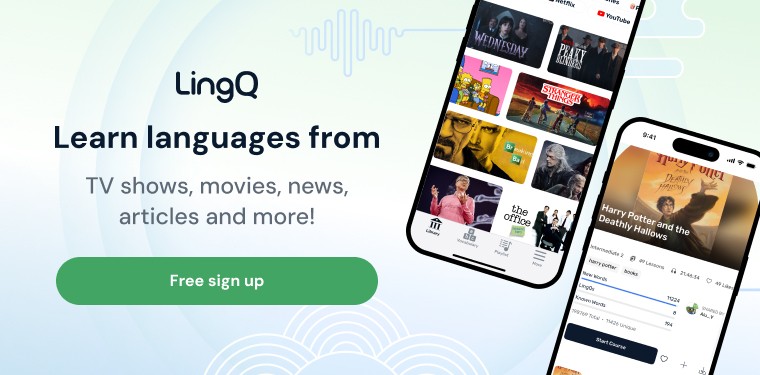
Pimsleur teaches you a fixed script. LingQ lets you learn from any content in the language you’re learning: YouTube videos, Netflix shows, podcasts, news articles, ebooks and its own library of graded lessons. Every word you don’t know is highlighted, and you can tap it for a definition. It’s built on comprehensible input: hundreds of hours of reading and listening to content you can mostly follow, which is how a big vocabulary and real listening skills are built.

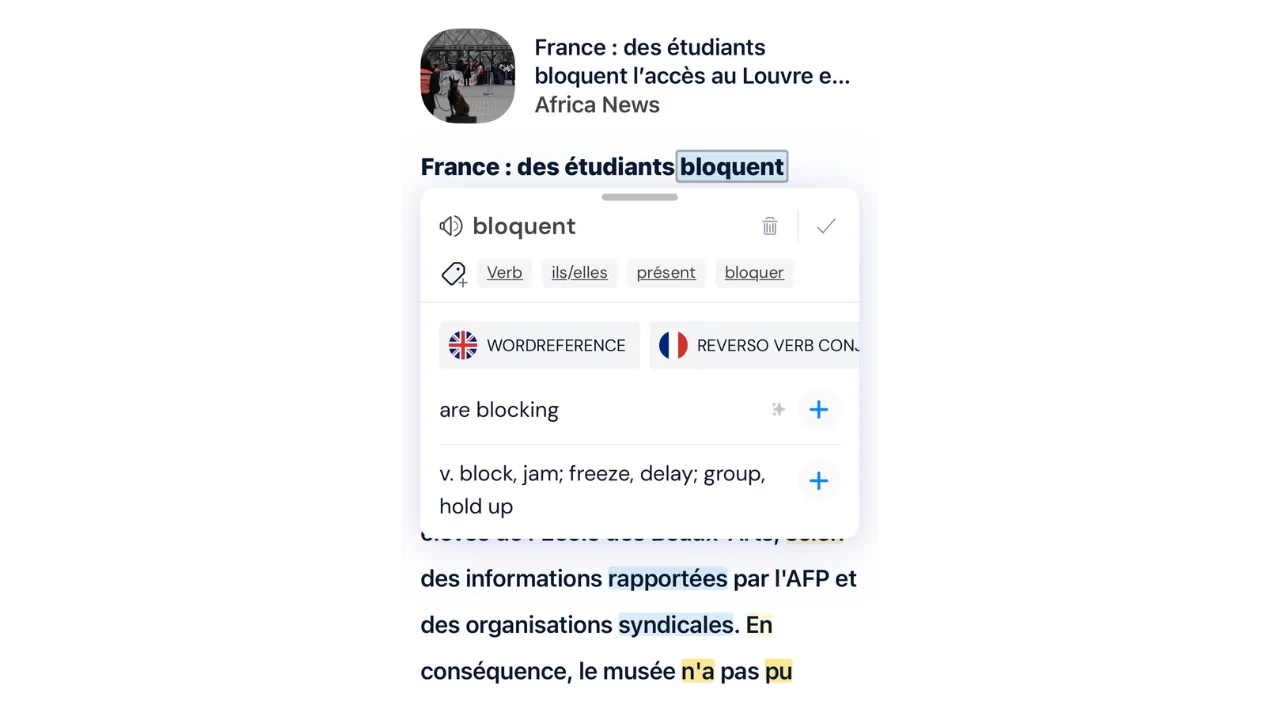
Tap any word to look it up
Unknown words are highlighted in blue. Tap one to see its meaning, hear it, and save it to your vocabulary. Words you save are highlighted in yellow the next time you see them, in any lesson, so you notice them again and again in new sentences.
Learn from content you actually want to understand
LingQ’s library has thousands of lessons, from beginner Mini Stories to podcasts, TV clips and news, sorted by level and topic. Each one shows what percentage of its words are new to you, so you can pick content that’s challenging but not overwhelming.
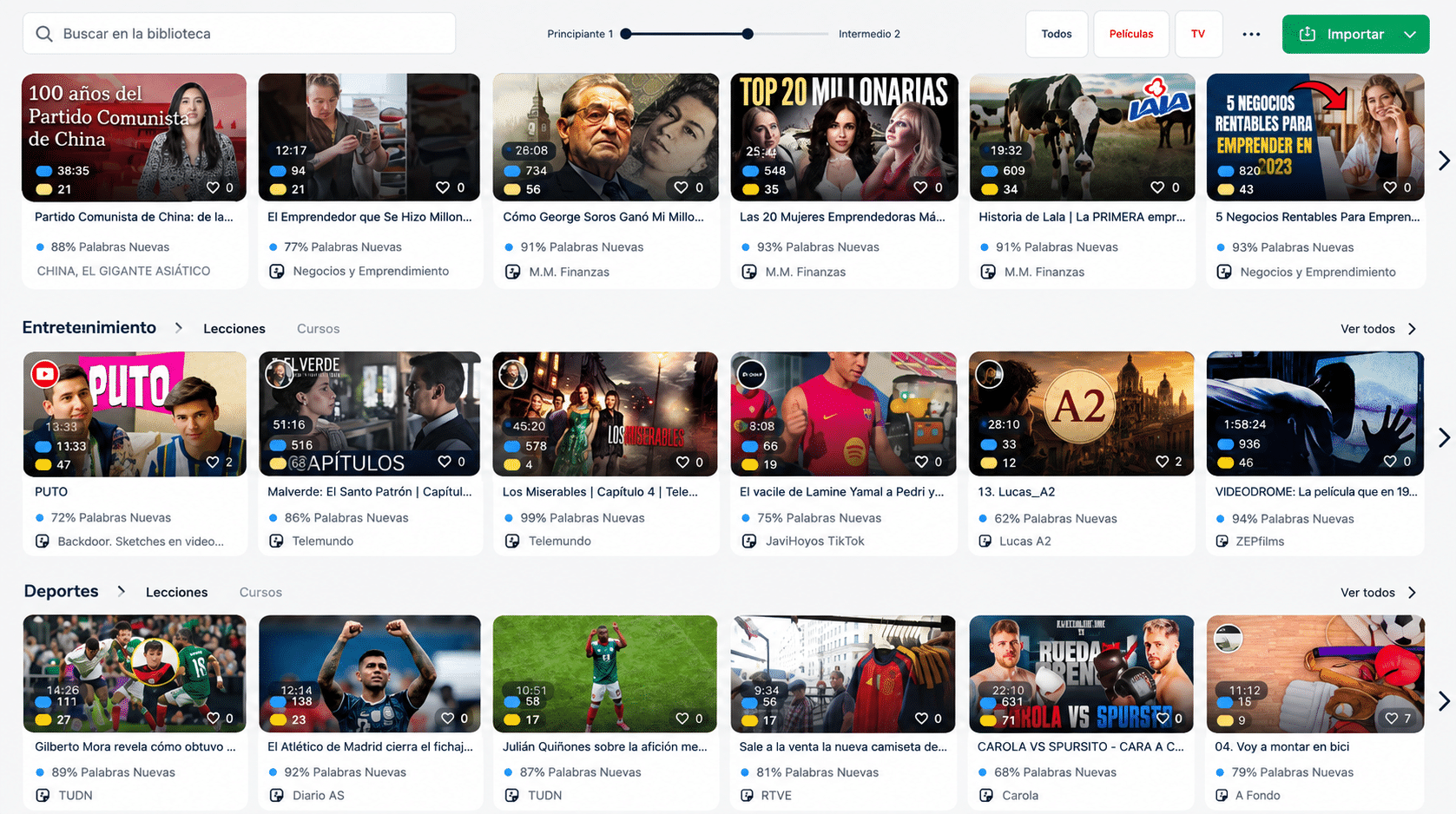
You can also import your own content with the LingQ browser extension. Here’s a YouTube video turned into a lesson:
Keep Pimsleur’s best feature: learning on the go
Most LingQ lessons come with audio, so you can relisten on your commute to a story you’ve already read. That’s one of the most effective ways to build listening skills, and it’s just as hands-free as a Pimsleur lesson.
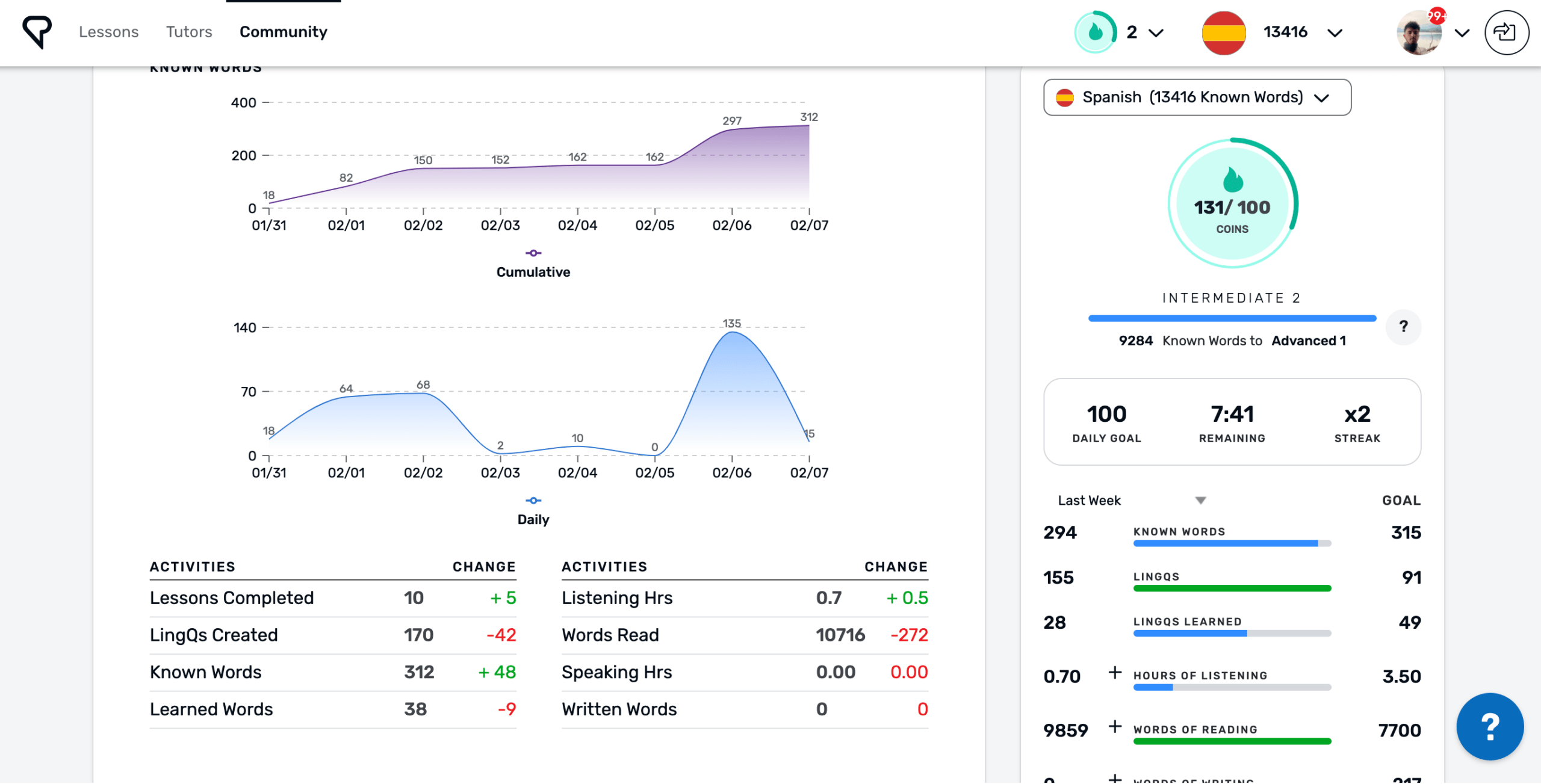
See real progress, not just lessons completed
LingQ counts every word you know, plus your hours of reading and listening. That’s a far better measure of progress than how many lessons you’ve done.
Pimsleur vs LingQ at a glance
| Pimsleur | LingQ | |
|---|---|---|
| How you learn | Scripted audio drills | Real content you choose, with text and audio |
| Vocabulary | A few hundred words per level | As many as you read and hear, with no ceiling |
| Listening | Slow, clear course audio | Course audio and real native speakers |
| Reading | Minimal | Every lesson |
| Learn on the go | Yes, audio-only | Yes: relisten to any lesson’s audio |
| Content runs out? | Yes, after the last level | No: import anything |
| Progress tracking | Lessons completed | Known words, reading and listening hours |
| Price | About $20/month, no free plan | Free to start; Premium $14.99/month or $10/month (annual) |
LingQ Premium includes every language LingQ offers. See LingQ Free vs Premium for exactly what each plan includes.
Ready to try it? Start learning on LingQ for free.
2) Language Transfer: the closest free alternative
If what you like about Pimsleur is the audio-only, think-out-loud format, Language Transfer is the closest free match. It’s a set of audio courses where a teacher guides a student through building sentences step by step, and you pause to answer before the student does. It’s excellent for understanding how a language fits together.
The limits: it covers a handful of languages, and like Pimsleur it’s a beginner course with a fixed end. It won’t give you a big vocabulary or native-speed listening, so pair it with LingQ.
3) Duolingo: a free daily habit
Duolingo is free and turns study into a game, with streaks and short exercises. Its biggest courses now go up to B2, but everything in them is written for the app. It’s weaker than Pimsleur for speaking and pronunciation, and better for building a daily habit at no cost. Neither gets you to understanding real native speakers. (More in can you become fluent with Duolingo?)
4) Babbel: structured lessons with grammar
Babbel uses short lessons built around everyday dialogues, with clear grammar explanations. It gives you more reading and grammar than Pimsleur, and less speaking practice. It’s still a scripted course that ends once you finish it. See our Babbel review for more.
5) A tutor: real speaking practice
Pimsleur’s real selling point is speaking. Nothing beats a real person for that. Online tutors on sites like italki and Preply let you book conversation lessons by the hour. Tutoring works best once you can understand a fair amount, which is where reading and listening on LingQ comes in first.
Pimsleur alternatives compared
| Pimsleur | LingQ | Language Transfer | Duolingo | Babbel | |
|---|---|---|---|---|---|
| Main format | Audio drills | Real content with lookups | Audio course | Gamified exercises | Short structured lessons |
| Speaking practice | Strong | Pair with a tutor | Strong | Light | Light |
| Reading | Minimal | Every lesson | None | Short sentences | Short dialogues |
| Native-speed listening | No | Yes | No | No | No |
| Content runs out? | Yes | No | Yes | Yes | Yes |
| Free option | No | Yes | Yes | Yes | No |
Takeaway: Pimsleur, Language Transfer, Duolingo and Babbel are all starter courses. To get past the intermediate plateau, you need real content, which is where LingQ comes in. For more options, see the best language learning apps in 2026.
Can you use Pimsleur and LingQ together?
Yes. If speaking anxiety is holding you back, do a Pimsleur lesson on your commute for the first month or two, and spend the rest of your study time reading and listening on LingQ. Once you’re comfortable saying basic phrases, drop Pimsleur and put that time into LingQ, which keeps growing with you long after Pimsleur runs out.
FAQs
What is the best alternative to Pimsleur?
For getting fluent, LingQ is the best Pimsleur alternative. You learn from real content like YouTube, Netflix and podcasts, with one-tap word lookups and audio for every lesson, so you build the vocabulary, reading and native-speed listening that Pimsleur leaves out.
Is there a free alternative to Pimsleur?
Yes. Language Transfer is a free audio course in a similar format, and Duolingo is free. LingQ also has a free plan that lets you try every language it offers.
Is LingQ better than Pimsleur?
For understanding real native speakers and building a large vocabulary, yes. Pimsleur is better for drilling pronunciation as a beginner. Many learners use Pimsleur for a month or two, then move all their study time to LingQ.
Is LingQ cheaper than Pimsleur?
Yes. Pimsleur costs about $19.95 a month for one language and has no free plan. LingQ is free to start, and Premium costs $14.99 a month or $10 a month on the annual plan, for every LingQ language.
Is Pimsleur worth it?
It’s worth it for a short time if speaking confidence is your biggest problem. It isn’t worth it as your main course, because it teaches a small vocabulary through scripted conversations. For a full review, see Steve Kaufmann’s Pimsleur review on The Linguist blog.
Are there apps like Pimsleur for learning on the go?
Yes. Language Transfer is audio-only like Pimsleur, and LingQ lessons come with audio you can relisten to on your commute, after you’ve read them in the app.
The bottom line
Pimsleur is a good way to start speaking, and a poor way to finish. The free audio courses and apps on this list make good starters too, but they all end where Pimsleur does.
If your goal is to follow conversations, shows and podcasts in your new language, spend your time on lots of real content you can understand. LingQ turns anything you want to read or watch into a lesson, looks up every word for you, and tracks every word you learn, for about half the price of Pimsleur.
Try LingQ free and start learning from real content →
Keep reading: Steve Kaufmann’s Pimsleur review · The best language learning apps in 2026 · Babbel review · LingQ Free vs Premium
Cover photo by MART PRODUCTION on Pexels.


