
Rosetta Stone Review 2026: Is It Still Worth Using?
 Tyler Tolman
7 Jul 2026
Tyler Tolman
7 Jul 2026
For decades, those bright yellow boxes were a default choice for language learners — sitting on shelves in electronics stores and airport kiosks next to the neck pillows and phone chargers. Rosetta Stone practically was language learning software for a whole generation.
The market looks nothing like that now. Duolingo turned language learning into a game people play on the bus. AI tutors will now hold a full conversation with you in Portuguese at 11pm. Against that backdrop, is Rosetta Stone’s decades-old immersion method still a logical choice in 2026, or is it coasting on brand recognition alone?
In this review, we’ll break down how the platform actually works, what its no-translation method does well (and where it doesn’t), what it costs today, and how it stacks up against LingQ if you’re trying to decide where to put your time and money.
| Rosetta Stone | LingQ | |
|---|---|---|
| Method | Image-association immersion, no translation | Reading and listening to real content |
| What you do | Match images to words and phrases | Engage with real content, save unknown words |
| What it measures | Lessons completed, pronunciation score | Known words, listening hours, words read |
| Languages | 25 | 50+ |
| Translation support | None — immersion only | Instant in-context translation on every word |
| Speech recognition | Built in | Built in via sentence review |
| Realistic ceiling | A2–B1 | C1+ |
| Best at | Early confidence and pronunciation habits | Actual fluency |
What Is Rosetta Stone? A Brief History
Rosetta Stone was founded in 1992, which makes it an actual pioneer in digital language education — long before smartphones or cloud computing existed, it was moving language learning off the page and onto CD-ROMs.
The whole system was built on one core idea: Dynamic Immersion. Rosetta Stone claims to replicate how children learn their first language, connecting sights and sounds directly to meaning, with zero English translation involved.
Over the years the company shifted from boxed software to a subscription model with mobile apps. It now covers 25 languages, from heavy hitters like Spanish and French to less commonly taught ones like Vietnamese and Tagalog. Competition has only gotten fiercer, but the name still carries weight.
The Core Method: Immersive Image Association
The foundation of every Rosetta Stone course is a strict no-translation policy. From lesson one, you won’t see a single word of English.
Instead, you learn through image association. Here’s the pattern:
- You’re shown four photographs.
- The app plays a native audio recording of a phrase (for example, “Il ragazzo mangia” in Italian).
- That same phrase appears on screen as text.
- You pick the image that matches what you heard and read.
As you move through the course, sentences get more complex. “The boy eats” eventually becomes “The boy and the man eat,” and later you’ll see past tense and conditional phrases — all without a formal grammar explanation or a single translated word.
Rosetta Stone Pros: What It Does Well
Rosetta Stone earned its reputation for real reasons. Here’s where it still holds up.
1. Great for Intuitive, Low-Stress Visual Learners
If conjugation tables and flashcard drilling make you want to close the laptop, the visual method is a relief. You’re not memorizing — you’re deducing meaning from context, which is a genuinely lower-stress way to start.
2. Clean, Distraction-Free Interface
The app looks and feels professional. There are no streaks, popping animations, or fake currencies competing for your attention — just the language. It feels like a tool built for serious adults, not a mobile game with a language theme.
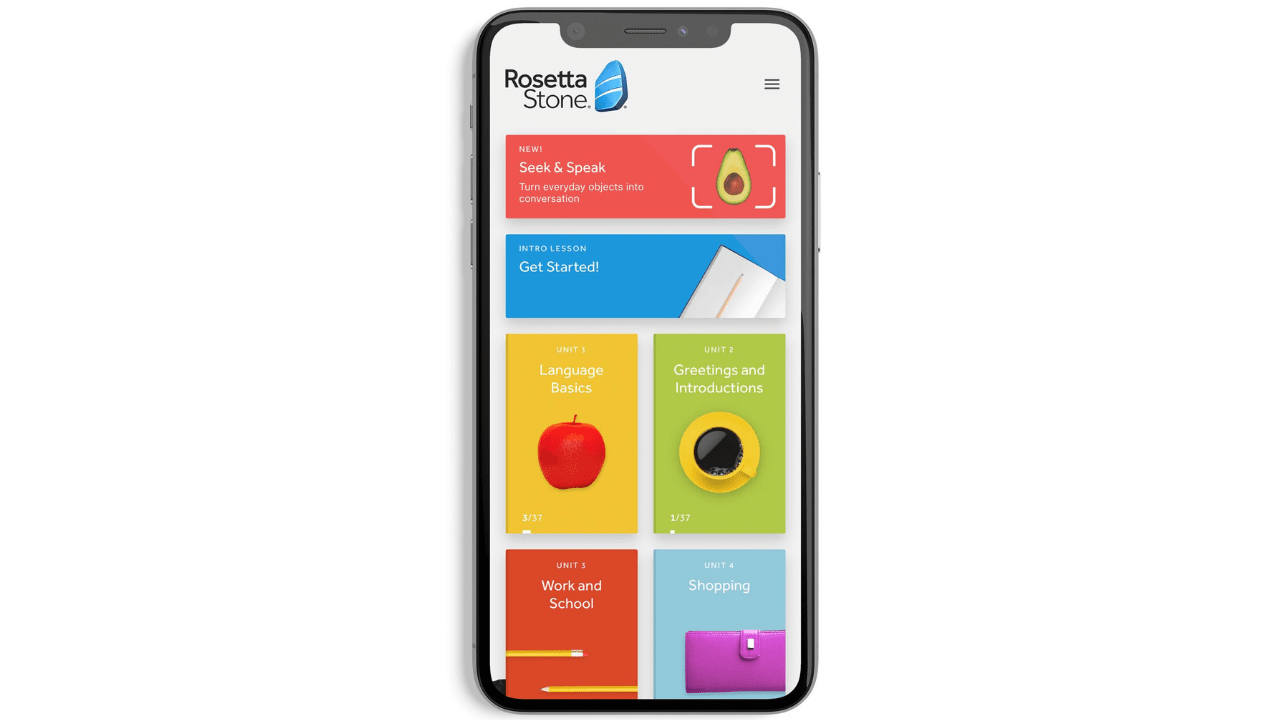
3. Strong Audio and TruAccent Speech Recognition
Recording quality across all 25 languages is genuinely good, with clear, well-paced native speakers. Its TruAccent speech recognition is also appropriately forgiving — lenient enough not to punish a slightly imperfect accent, but sharp enough to give useful pronunciation feedback.
Rosetta Stone Cons: Where It Falls Short
None of this means it’s a perfect resource. Here’s what holds it back.
1. High Cost for a Rigid Curriculum
Rosetta Stone sits on the pricier end of language apps, and that price doesn’t buy flexibility. You can’t skip a unit that bores you or steer the curriculum toward your own interests — you follow the fixed path or you don’t use the app.
2. Runs Out of Road for Intermediate and Advanced Learners
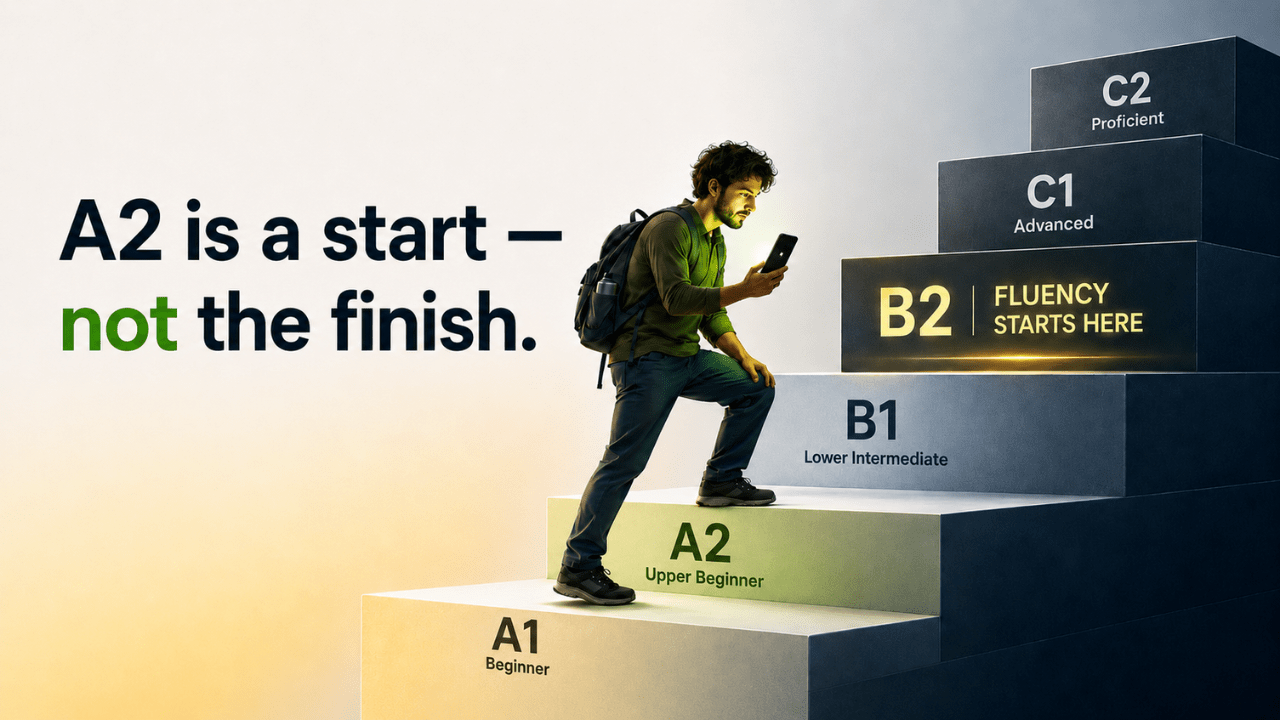
The no-translation rule works fine for concrete nouns like “apple” or “bicycle.” It gets tedious fast once you’re past basic vocabulary — abstract concepts, specific terminology, and advanced grammar are hard to teach with a stock photo. How do you show a picture of “nevertheless,” or the difference between the past subjunctive and the imperfect? In practice, the content hits a ceiling around upper-beginner (A2) level, and a lot of users report plateauing hard right around there.
3. Repetitive and Culturally Flat
To produce content across 25 languages affordably, Rosetta Stone reuses the same photos and the same translated sentences in almost every course. Your Italian lessons and your Japanese lessons tell the exact same visual story — same actors, same living rooms, same “the boy and the man eat” sentence structure, just with different audio dubbed over it.
The Cultural Disconnect
Strip out regional idioms, cultural references, and real social context, and the learning experience turns sterile fast — detached from how people actually talk. For a lot of learners, culture is the entire reason they picked up the language in the first place, whether that’s understanding a favorite show without subtitles, following the news, or just getting the joke your in-laws are making at dinner.
2026 Pricing and Subscription Models
As of 2026, Rosetta Stone has fully moved away from one-time software purchases to a subscription model.
| Subscription Tier | Standard Pricing | Key Details |
|---|---|---|
| 3 Months | ~$19.99/month | Single language only |
| 12 Months | ~$13.25/month | Single language only |
| Lifetime Membership | ~$199.00 one-time | All 25 languages, unlocked forever |
Rosetta Stone also runs frequent seasonal sales that drop the Lifetime Membership to around $129. Check Rosetta Stone’s website directly for current pricing, and see our Duolingo alternatives roundup if you want a wider price comparison.
Rosetta Stone vs. LingQ: Which Is Right for You?
The right call here depends on your target language, your current level, and how you actually like to learn.
Who Rosetta Stone Actually Works For
If you’re an absolute beginner who wants a gentle, structured, visual introduction, Rosetta Stone is a decent springboard for your first few weeks. It’ll build a basic vocabulary base and get your ear used to the language’s sounds — even if the method starts to feel stale fast.
Where LingQ Takes Over
If your goal is real conversational fluency, cultural fluency, or just being able to enjoy native media without subtitles, Rosetta Stone won’t get you there. Fluency needs volume — real context, real variety, a steady climb in difficulty. Pictures alone can’t carry that weight.
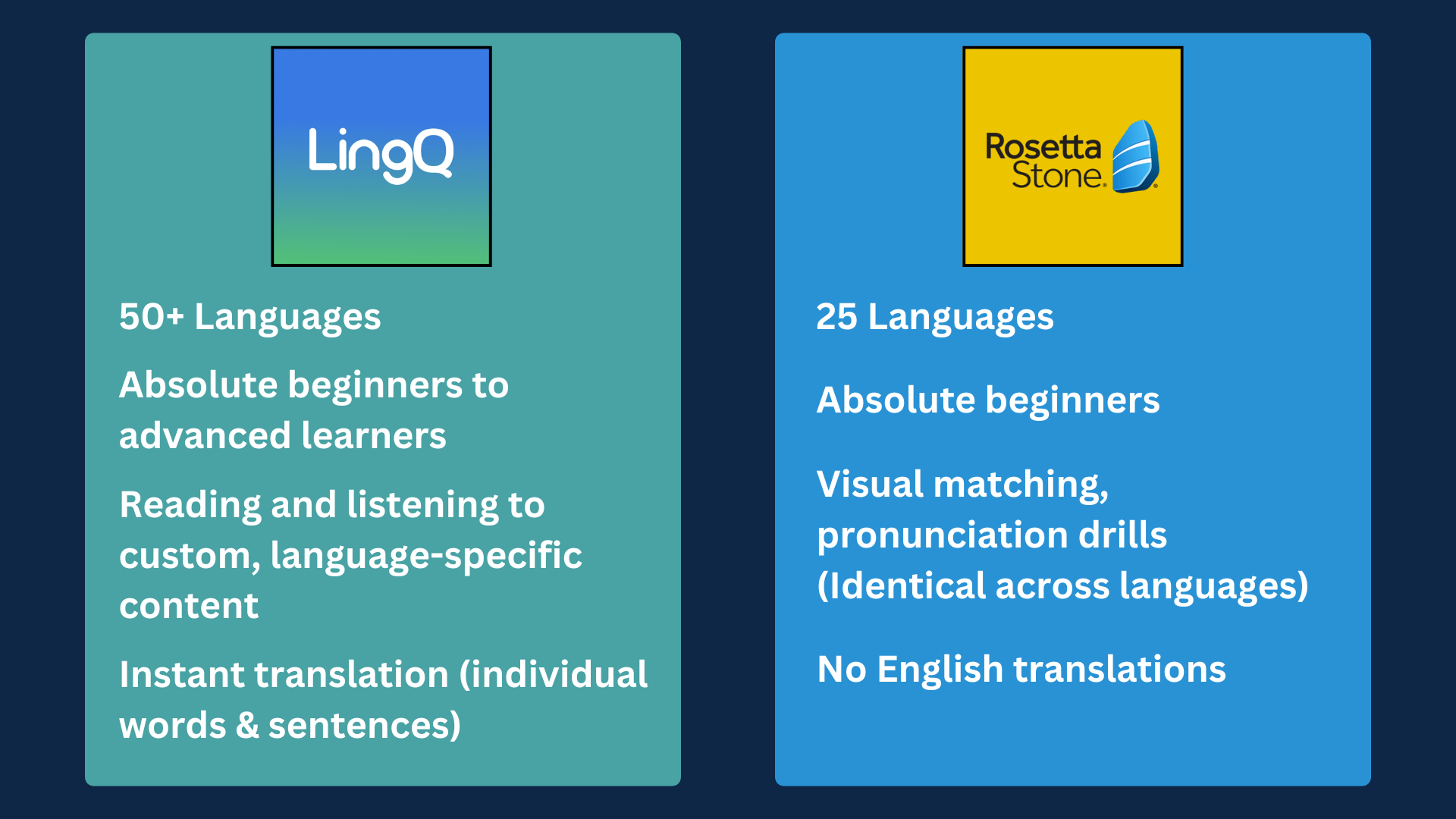
This is exactly where comprehensible input comes in. Instead of a fixed curriculum, LingQ builds lessons out of content you actually chose — a podcast, a YouTube video, a news article, an entire novel. You control the difficulty and the topic, because the material is real and the internet is your library.
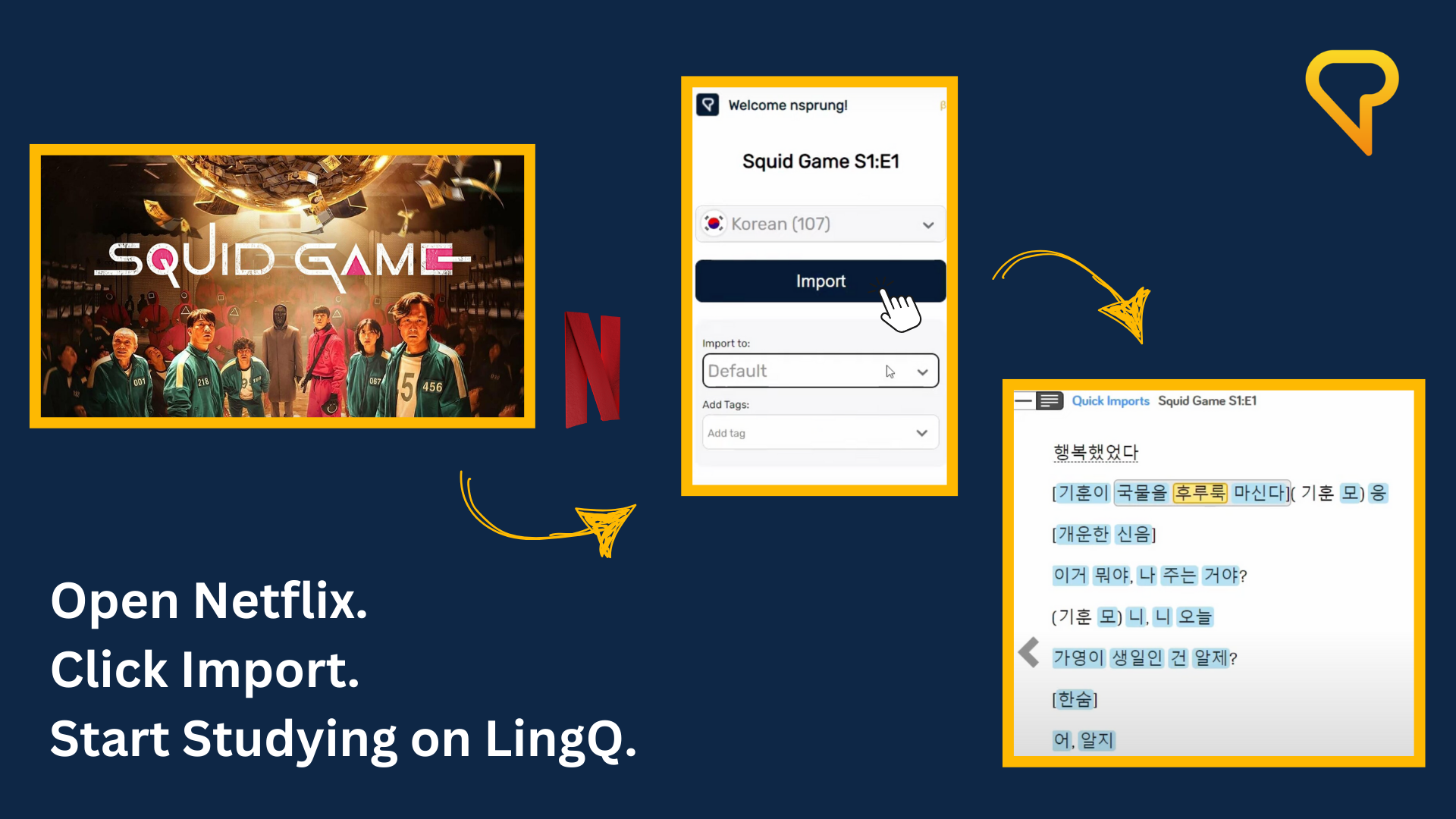
See how LingQ compares to Duolingo, Pimsleur, and Babbel if you’re still weighing your options — or just try LingQ free and import something you’re already interested in reading.
The Verdict
Rosetta Stone hasn’t gotten worse — the rest of the market has just caught up and, in most cases, gone further. It’s still a reasonable, low-pressure way to get your bearings in a new language’s sounds and basic vocabulary, and the polish and audio quality genuinely hold up against anything released in the last few years.
What it can’t do is take you the rest of the way. It was never built to. The moment you need real conversational range, cultural context, or the ability to actually use the language for something you care about — a trip, a relationship, a show you want to watch without subtitles — the fixed curriculum and stock photos stop being enough.
If you’re just starting out and the low-stress, visual approach appeals to you, Rosetta Stone is a fine first few weeks. Past that, the smarter move is to start engaging with real content in the language, at whatever level you’re actually at. If you’re past beginner level, skip it and go straight to LingQ or a comprehensible input method.
FAQs
Not really. The image-association method gets inefficient fast once you’re past upper-beginner (A2) level.
No — not from Rosetta Stone alone. It’s solid for early confidence, pronunciation habits, and basic vocabulary, but it doesn’t have the depth or authenticity to reach an advanced level.
No. The entire method relies on immersion — you’ll only see and hear the target language, using photos to work out meaning yourself.
The 3-month and 12-month plans give you one language. Only the Lifetime Membership unlocks all 25.
Depth and customization. Rosetta Stone locks you into a fixed set of stock photos and scripted phrases. LingQ lets you import anything — novels, YouTube, news, podcasts — and turns it into an interactive lesson with built-in translations and progress tracking.
Ready to move past flashcards and stock photos? Start reading and listening to real content in your target language on LingQ.
Writer Bio

Tyler is an American language teacher and language learner. He’s taught Spanish, French and Latin in the K-12 system since 2018. Tyler also speaks Thai and Italian. Currently, he’s learning German and Polish on LingQ!
Twenty minutes a day beats a weekend of drilling.
Read and listen to things you’d have read anyway — LingQ counts every word you pick up along the way.
- 5M+ learners
- 4.7★
- Free to start


You might also like