
How to Learn Korean with Squid Game
 Tyler Tolman
12 Dec 2024
Tyler Tolman
12 Dec 2024
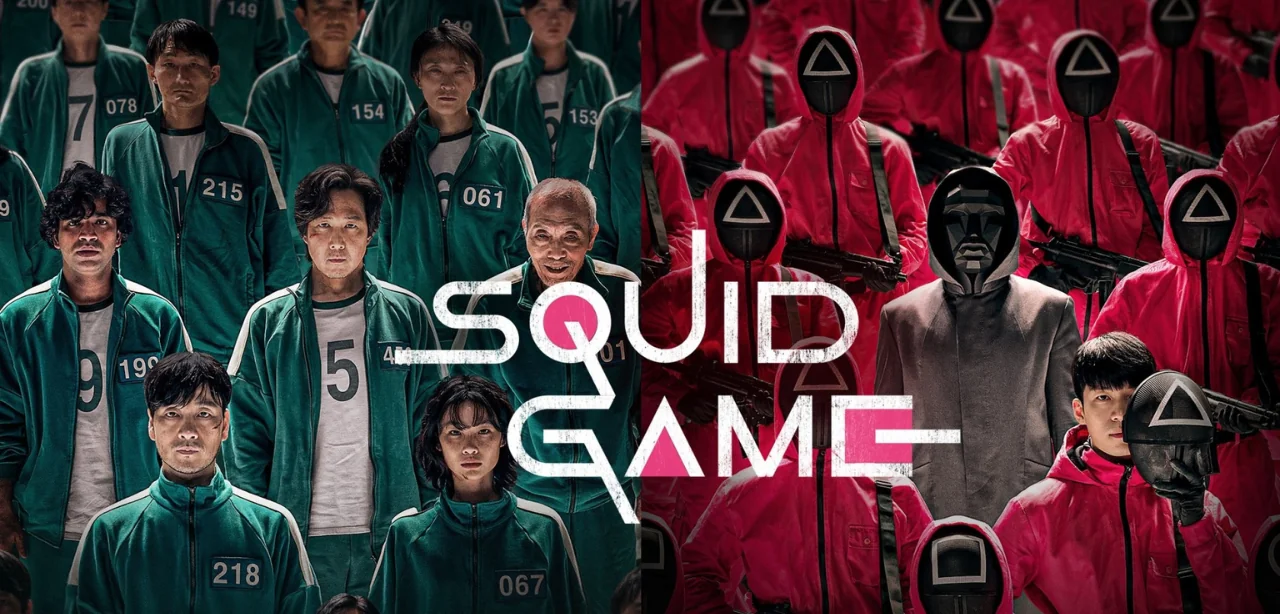
Squid Game is one of the most watched shows in Netflix history. It is also one of the best accidental motivators for learning Korean that has ever existed. The moment the subtitles start rolling, something clicks: the characters sound nothing like what you expected, the sentences feel more interesting than the translation, and you find yourself wondering what you are actually missing.
If you are learning Korean, or thinking about starting, Squid Game is a genuinely useful resource. Here is how to use it well.
Why Squid Game Works for Korean Learners
The show is set almost entirely in Korean. The dialogue is natural, conversational, and dense with cultural context that subtitles cannot fully capture. When English speakers discovered that Netflix’s official captions were missing significant nuance in key scenes, it sparked a wave of interest in learning Korean directly.
That is the motivation. What you do with it is what matters.
How to Import Squid Game into LingQ
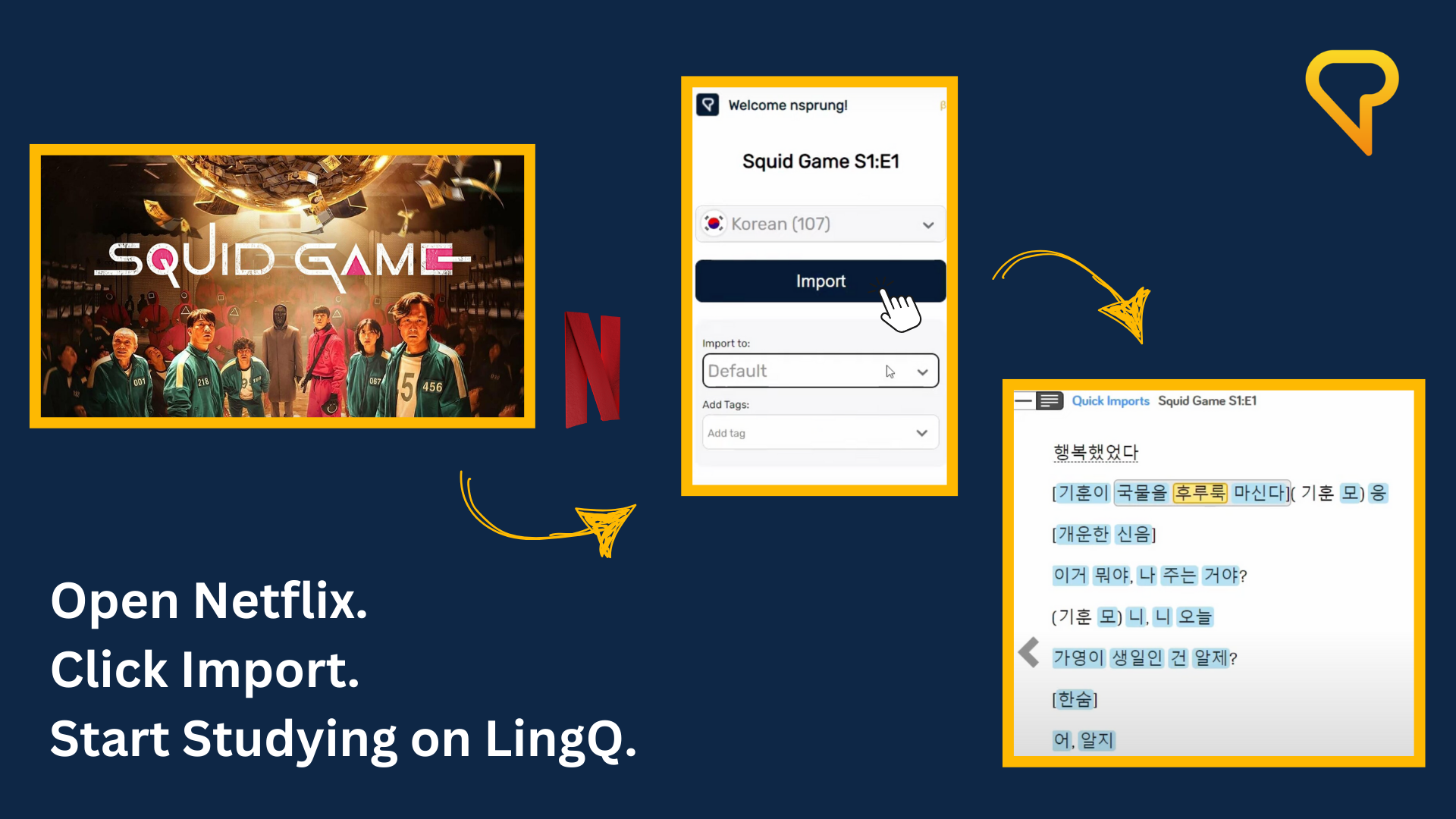
The most direct way to use Squid Game as a study resource is to import the subtitle file into LingQ and turn it into an interactive lesson. Here is how:
Step 1. Find the episode you want to study and download the Korean subtitle file (SRT format). Several subtitle databases carry these for free.
Step 2. In LingQ, click the Import button and select the SRT file. LingQ will split it into sentences automatically.
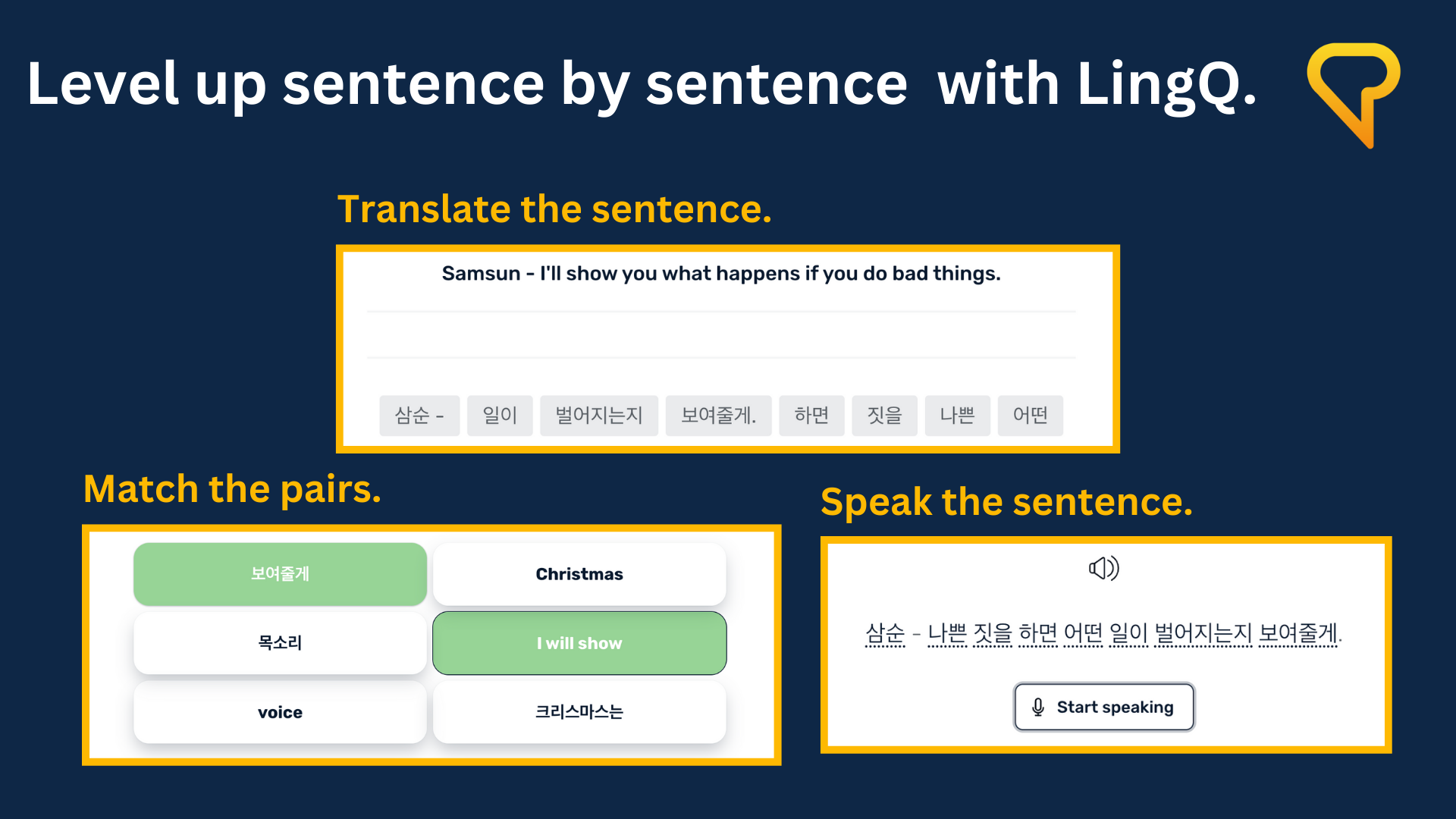
Step 3. Read through the episode transcript with audio. Tap any unknown word for an instant translation. Every word you save gets tracked across all your future lessons.
This workflow takes about two minutes to set up per episode, and it turns passive watching into active vocabulary building.
Using LingQ’s AI Simplification Feature
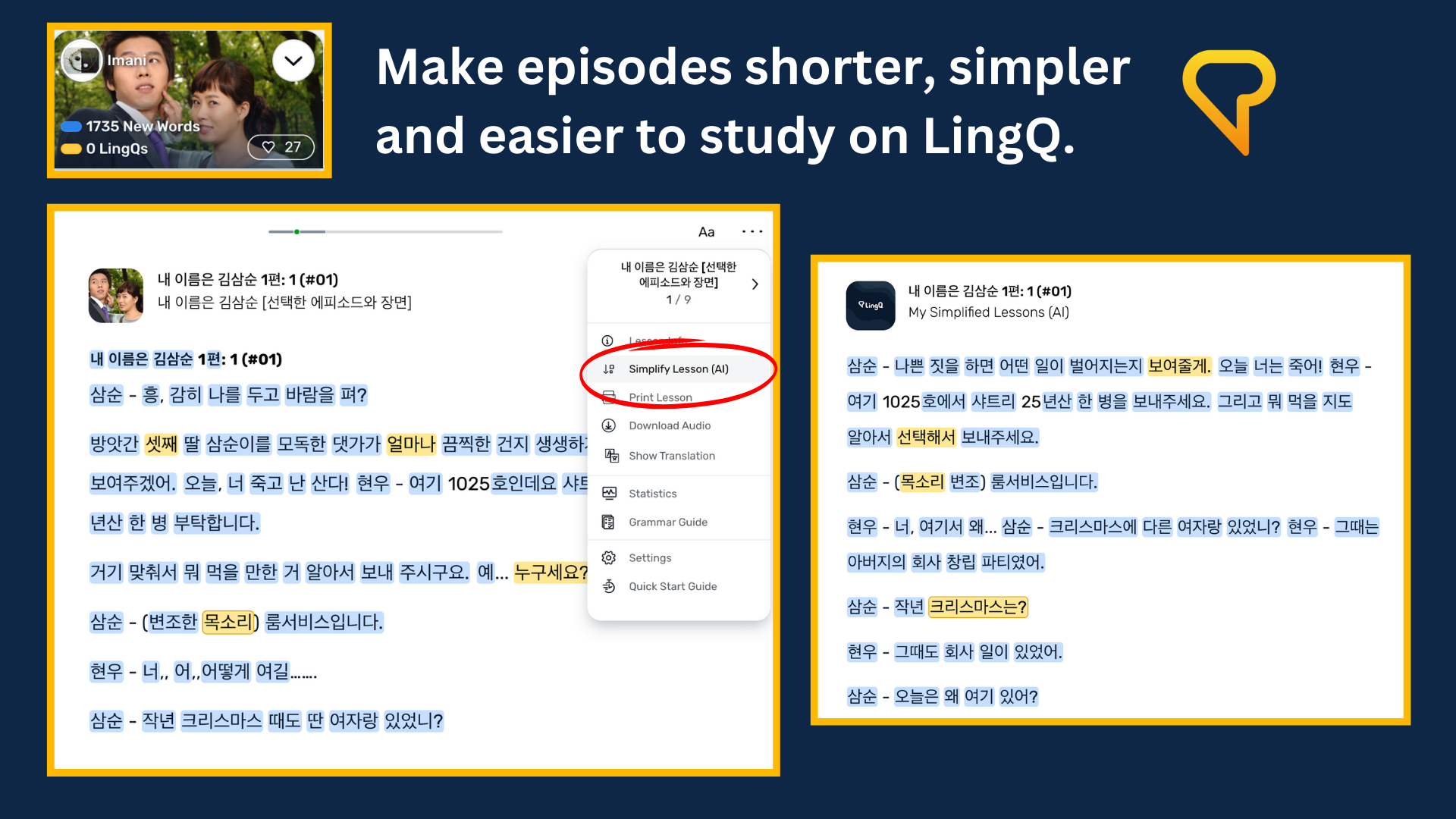
Squid Game uses natural Korean dialogue, which means some episodes are linguistically demanding for beginner and intermediate learners. LingQ’s AI simplification feature addresses this directly.
Within any imported lesson, you can ask LingQ to simplify the text. It rewrites the same content using more basic vocabulary and sentence structures, so you can follow the plot and engage with the Korean language at your actual level. Once you have worked through the simplified version, move on to the original. The familiarity with the content makes the jump far more manageable.
Level-Appropriate Squid Game Content
The show itself is not the only option. There is a broad ecosystem of Korean content about Squid Game that is more accessible for learners at different levels.
For beginners: BDB Korean published a beginner-friendly lesson breaking down Korean grammar points directly from Squid Game Season 3 dialogue, released alongside the show in June 2025. It is one of the most current resources available for learners who want to study the show as it is being watched globally. Watch it here.
For intermediate learners: Search for Korean-language reaction videos to the series. A Korean speaker reacting to scenes they already know gives you a lot of contextual repetition at a natural but manageable pace. Here is one example designed for intermediate learners.
For all levels: Korean-language interviews with the Squid Game cast are a strong resource regardless of level. The structure of an interview is predictable. Each question gives you a natural pause to check comprehension before the next answer begins. The vocabulary stays relatively consistent across the conversation.
All of these resources can be imported directly into LingQ using the browser extension. Find something useful on YouTube, click the extension icon, and it becomes a lesson with instant word lookups and vocabulary tracking built in.
Korean Vocabulary You Will Encounter in Squid Game
Several key words and phrases come up repeatedly in the show. Here are a few worth knowing before you watch:
오징어 게임 (ojingeo geim) Squid Game. The word 오징어 means squid.
참가자 (chamgaja) Participant. Used throughout the show to refer to contestants.
선생님 (seonsaengnim) Literally “teacher” or “superior.” Used as an honorific when addressing someone of higher status.
형 (hyeong) Older brother, used between males. The moment Ali starts using this word for Cho Sang-woo is one of the most culturally significant exchanges in the series.
무궁화 꽃이 피었습니다 (mugunghwa kkochi pieotseumnida) “The mugunghwa flower has bloomed.” This is what the robot sings during the Red Light, Green Light game. The mugunghwa is South Korea’s national flower.
The Subtitle Translation Issue
When Squid Game was released, Korean-speaking viewers quickly identified that Netflix’s English subtitles missed or changed significant meaning in several key scenes. What reads as casual dialogue in English is sometimes formal, emotionally loaded, or culturally specific in the original Korean.
The subtitle debate itself became a reason many people started learning Korean. The idea that something important was being lost was more compelling than any textbook argument for language learning. If you want to understand what was actually said in those scenes, the only solution is to learn Korean. That is a real and sustainable motivation.
Starting from Zero: Korean Mini Stories on LingQ
If Squid Game has made you want to learn Korean but you are not yet at a level where the show is comprehensible, LingQ’s Korean Mini Stories are the right starting point.
The Korean Mini Stories series consists of 62 lessons covering close to 3,000 high-frequency words. The stories are short, designed around simple sentence structures, and recorded with clear audio. They are built on the comprehensible input principle: exposure to Korean at a level just above your current ability, enough to understand most of it, enough to be slightly challenged.
Work through the Mini Stories first. Then return to Squid Game with more of the language already in you. The show will sound different. More will click.
Once you are ready for authentic content, LingQ lets you learn Korean through any content you actually want to consume, whether that is Squid Game episodes, Korean podcasts, news articles, or anything else.
Happy learning!
FAQs
Yes, with the right approach. Watching Squid Game passively builds familiarity with Korean sounds and patterns. Active study, importing transcripts, looking up vocabulary, and revisiting content, produces real acquisition. Using the show as a source of comprehensible input and motivation alongside structured beginner materials gives you the best of both approaches.
The natural dialogue in the show is challenging for absolute beginners. However, LingQ’s AI simplification feature can rewrite episode transcripts at a more accessible level, and there are Korean-language videos about Squid Game designed specifically for early-stage learners. You do not need to tackle the show directly to benefit from the motivation it creates.
The robot sings “무궁화 꽃이 피었습니다” (mugunghwa kkochi pieotseumnida), which translates to “The mugunghwa flower has bloomed.” The mugunghwa is South Korea’s national flower. It replaces the “red light / green light” calling used in the English version of the game.
Korean-speaking viewers identified that Netflix’s English closed captions changed or flattened significant meaning in several scenes, particularly around honorifics and cultural dynamics. Key lines that carry emotional weight in Korean were rendered as generic dialogue in English. The controversy highlighted how much is lost in translation and prompted many viewers to start learning Korean.
Download the Korean subtitle file (SRT format) for the episode you want to study. In LingQ, click Import, select the SRT file, and it becomes an interactive lesson with clickable words, instant translations, and automatic vocabulary tracking. You can also use the LingQ browser extension to import Korean YouTube content related to the show in one click.
Writer Bio

Tyler is an American language teacher and language learner. He’s taught Spanish, French and Latin in the K-12 system since 2018. Tyler also speaks Thai and Italian. Currently, he’s learning German and Polish on LingQ!
Twenty minutes a day beats a weekend of drilling.
Read and listen to things you’d have read anyway — LingQ counts every word you pick up along the way.
- 5M+ learners
- 4.7★
- Free to start


You might also like