



Duolingo and Pimsleur are two of the most popular ways to start a language, and they could hardly be more different. Duolingo is a freemium app built around short, game-like lessons. Pimsleur is a paid, audio-first course. So in the Duolingo vs Pimsleur matchup, which one should you use, and can either get you to real conversations?
A quick disclosure: we make LingQ, a different kind of language app, so we’re not neutral. We’ve tried to be fair to both, and the prices below were checked in November 2026.
Duolingo vs Pimsleur: the quick answer
Duolingo is better if you want a free, fun daily habit and you’re happy to tap through short exercises on your phone. It covers about 40 languages, the full course is free, and its most popular courses now go up to upper-intermediate (B2) level.
Pimsleur is better if you want to start speaking and understanding spoken language and you’ll pay for it. Every lesson gets you saying phrases out loud, it works hands-free on a commute, and it costs about $15 to $21 a month.
Neither will make you fluent on its own. Both are built from material written for learners. To understand real conversations, shows and books, you also need lots of real listening and reading, which is what LingQ is built for.
| Duolingo | Pimsleur | LingQ | |
|---|---|---|---|
| Method | Short, game-like exercises with translation | 30-minute audio lessons: listen, repeat, answer out loud | Reading and listening to real content, one-tap translations |
| Languages | About 40 | 50+ | More than 50 |
| Price (US) | Free; Super about $84/year | About $15 to $21 a month, or $164.95 a year for All Access | Free plan; Premium $14.99/month or about $10/month yearly |
| Free option | Yes, the full course with ads | 7-day free trial | Free plan (20 saved words, 5 imported lessons) |
| Speaking | Speaking exercises; Video Call on paid plans | The core of every lesson | AI chat practice with Lynx; tutors booked separately |
| Reading | Short sentences and Stories | Reading lessons on Premium and All Access | Unlimited: articles, books and transcripts |
| Best for | A free daily habit and first words | Speaking basic phrases with good pronunciation | Getting past beginner level with real content |
Prices checked November 2026. They vary by country and change with sales.
How Duolingo works
Duolingo turns language learning into a game. Lessons take a few minutes each: you translate sentences, match words, fill in blanks and answer listening and speaking prompts. Streaks, leagues and rewards keep you coming back every day. The full course is free with ads; Super Duolingo removes ads and costs about $84 a year.
Its strength is the habit. Duolingo now adds Stories and DuoRadio, short scripted listening episodes, and its biggest courses run up to B2. The listening is still written for learners, though, rather than drawn from real podcasts or shows. See can you become fluent with Duolingo?.
How Pimsleur works
Pimsleur is an audio-first course. Each core lesson is about 30 minutes long: a narrator walks you through a short conversation, then prompts you to say phrases out loud and answer questions before you hear the answer. Words and phrases come back at spaced intervals so they stick. Course length varies: the biggest courses have five levels of 30 lessons, and smaller ones have fewer. The core lessons are hands-free, with offline listening and Apple CarPlay and Android Auto, while the Premium and All Access plans add reading lessons, flashcards and quizzes, and some plans add Voice Coach pronunciation feedback in supported courses.
Its strength is speaking: after a few lessons you can say and understand useful phrases with decent pronunciation. Its weakness is vocabulary range. Each lesson focuses on a small set of words and phrases, so by the end of a level your vocabulary is still small compared with what real conversations need. LingQ co-founder Steve Kaufmann tried it and gives his full verdict in his Pimsleur review.
Which teaches you to speak better?
Pimsleur. Speaking out loud is the core of every lesson, with native speakers throughout, so you get speaking and pronunciation practice from the first lesson. Duolingo has speaking exercises, lets you answer many exercises out loud and, on paid plans, offers Video Call conversations with an AI character, but speaking is only one part of each lesson.
Speaking well also depends on what you can understand. Both apps give you a limited vocabulary compared with what real conversations need, so whichever you choose, add lots of listening and reading as soon as you can.
Which is better for vocabulary and reading?
Duolingo, slightly. You see written words in every exercise, while Pimsleur is mostly audio. Pimsleur’s reading lessons, on its higher plans, teach you to sound out the script but aren’t its main tool for building vocabulary.
Neither is built around long-form, authentic reading. That’s where real content comes in: articles, books and transcripts give you thousands of new words in context.
Is Pimsleur worth the money compared with free Duolingo?
| Plan | Duolingo | Pimsleur |
|---|---|---|
| Free | The full course, with ads | 7-day free trial only |
| Paid | Super: about $84/year | About $15 to $21 a month, or $164.95 a year for All Access |
| Languages included | All of them | One language, or all 50+ on the top plan |
Pimsleur has three subscription plans: Audio-Only at $14.95 a month, Premium at $19.95, and All Access at $20.95 a month or $164.95 a year, which includes all of its 50+ languages. Premium and All Access add the reading lessons and practice tools. New subscribers get a 7-day free trial, and Pimsleur also sells lifetime access, often on sale.
Pimsleur costs more than Super Duolingo, so it’s worth it mainly if speaking is your priority and you’ll actually do a lesson most days. If you’re not sure you’ll stick with a language, start free with Duolingo or with LingQ‘s free plan.
Duolingo vs Pimsleur: pros and cons
| Pros | Cons | |
|---|---|---|
| Duolingo | Free; fun and motivating; about 40 languages; Stories and DuoRadio; top courses reach B2 | Scripted, learner-level content; less speaking than Pimsleur |
| Pimsleur | Gets you speaking from lesson one; strong pronunciation; hands-free on a commute; 50+ languages | Paid; limited vocabulary per level; mostly audio; content ends after the last level |
Which should you choose?
- Choose Duolingo if you want to try a language for free and build a habit with a few minutes a day.
- Choose Pimsleur if you want to speak basic phrases confidently, you learn well by listening, and you have time to listen on a commute or walk.
- Choose LingQ if your goal is to understand real people, shows and books, or you’ve finished a course and want to keep going.
They also combine well: many learners use Duolingo or Pimsleur for the first few months, then move to real content once the course starts to feel repetitive.
The alternative: learn from real content with LingQ
Structured courses give you controlled practice. LingQ is built for spending more of your time with real-world content, and it works from day one too:
- Start with Mini Stories. Short graded stories with audio teach the most common words and patterns, in more than 50 languages.
- Tap any word to see what it means. Save it, and LingQ highlights it everywhere it appears again, so your vocabulary grows with everything you read and hear.
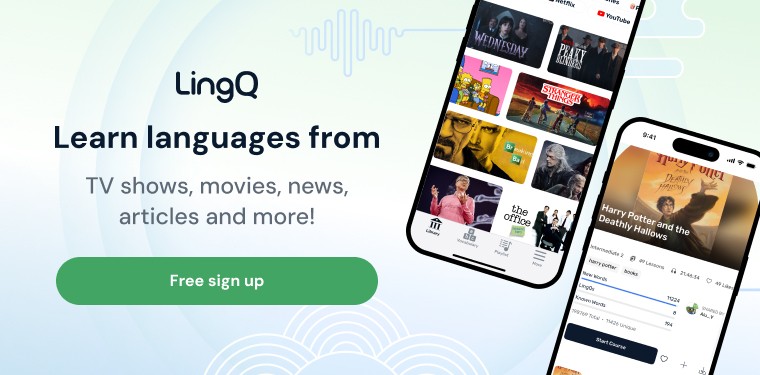
- Learn from what you love. Import Netflix shows, YouTube videos, podcasts, articles and ebooks, and turn them into interactive lessons.
- Listen and read together. Scroll mode keeps the text in step with the audio, so podcasts and videos become lessons too.

Try LingQ free and learn from real content →
Duolingo vs Pimsleur FAQs
Is Pimsleur better than Duolingo?
For speaking, yes. Pimsleur gets you saying phrases out loud from the first lesson and trains your pronunciation. Duolingo is better as a free daily habit and gives you more reading practice. Neither will make you fluent on its own.
Can you use Duolingo and Pimsleur together?
Yes. Some learners use Pimsleur for speaking and listening on a commute and Duolingo for a few minutes of reading and vocabulary practice. Add real content, like podcasts and articles, as soon as you can follow some of it.
How much does Pimsleur cost compared with Duolingo?
Duolingo is free, and Super Duolingo costs about $84 a year. Pimsleur costs about $15 to $21 a month, or $164.95 a year for All Access, with a 7-day free trial. Prices checked November 2026.
Can you become fluent with Duolingo or Pimsleur?
Not with either alone. Both are built from material written for learners. Fluency also takes lots of real listening and reading, which is what LingQ is designed for.
Which is better for beginners, Duolingo or Pimsleur?
Both work for complete beginners. Choose Duolingo if you want something free and casual, and Pimsleur if you want to start speaking and can listen for 30 minutes at a time.
What is a good alternative to Duolingo and Pimsleur?
LingQ. You learn from real content, from beginner Mini Stories to Netflix shows, podcasts and books, with one-tap word lookups and vocabulary tracking in more than 50 languages. It has a free plan.
The bottom line
Duolingo is the better choice here for a free daily habit; Pimsleur is the better way to start speaking. Pick the one that fits how you like to learn, then move on to real content before the course runs out.
When you’re ready to understand the language as people actually speak it, LingQ turns anything you want to read or watch into a lesson and tracks every word you learn.
Start learning with LingQ for free →
Keep reading: Can you become fluent with Duolingo? · Duolingo vs Babbel · The best Duolingo alternatives · The best Pimsleur alternatives · The best language learning apps
Cover photo by cottonbro studio on Pexels.