
Best App to Learn French: An Honest Comparison (2026)
 LingQ
19 Oct 2026
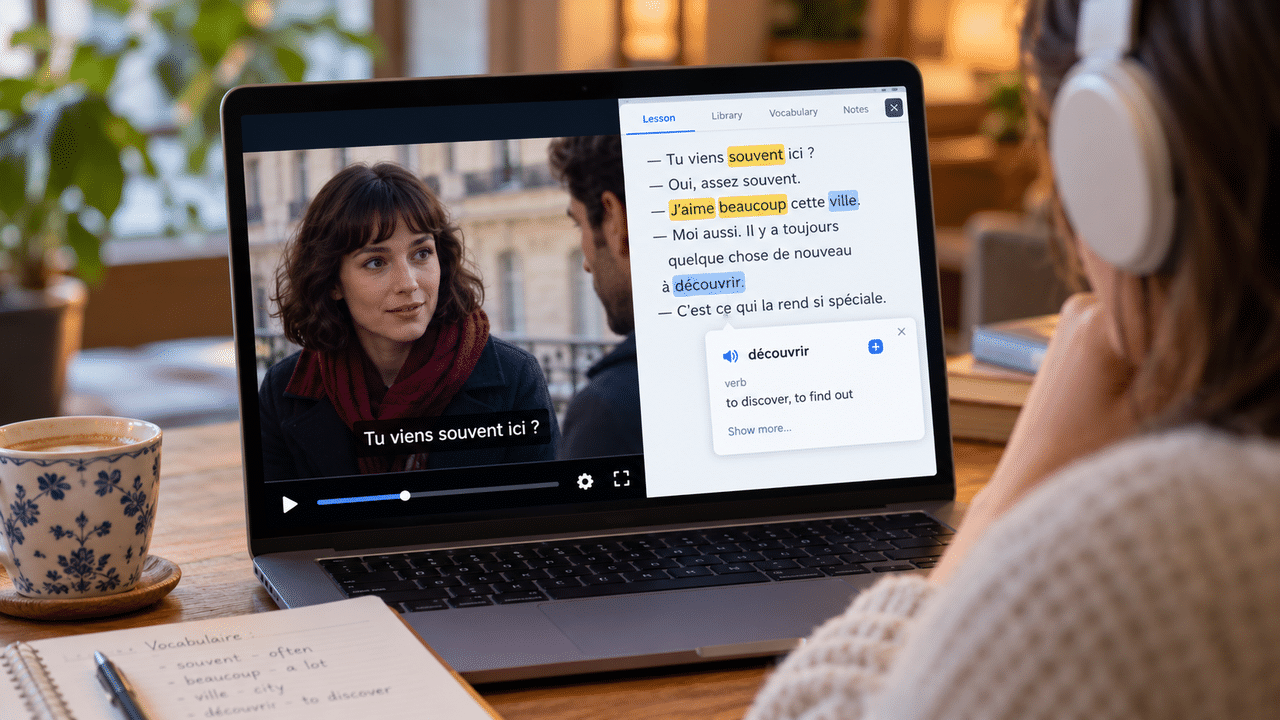
Most French apps get you to “Je voudrais un croissant” quickly. The hard part comes later, when you try to follow a French podcast or a Netflix series and it all goes by too fast. The best app to learn French is the one that gets you from the first one to the second.
Below, you’ll see why LingQ works so well for French, how it compares with Duolingo, Babbel, Busuu, Rosetta Stone and tutoring, and the fastest way to get started.
LingQ publishes this blog. Where we compare apps, we use independent research and say where it comes from.
The Short Answer
LingQ, if your goal is to understand real French and keep improving past the beginner stage. It has you reading and listening to French you actually enjoy, with every word one tap away. When an independent research team tested popular apps with Spanish learners, LingQ users reached first-semester college level in about 13 hours, tied for the fastest result and less than half the time Duolingo took.
Here’s why LingQ works so well for French, and how it stacks up against the apps people usually try first.
What Makes a Good App for Learning French?
French has a specific problem: written French and spoken French feel like two different languages. Silent letters, liaisons and fast, run-together speech mean you can know a word on the page and still miss it completely when someone says it. A good French app has to train your ear, not just your eyes.
We judged each app on four things:
- Real French: Does it get you listening to and reading French made for native speakers, not just short scripted sentences?
- Listening: Does every lesson come with natural audio, so you get used to how French actually sounds?
- Room to grow: Does it still help at the intermediate level, or does it run out of content once you finish the course?
- Evidence: Is there independent research on how well it works?
On evidence, one caveat up front. The best independent head-to-head data comes from Compare Language Apps, which tested each app with groups of beginners using the same college placement exam. Those studies measured Spanish learners. There’s no equivalent set of studies for French, so we use the Spanish results as a guide to how well each method works, not as French-specific scores.
Why LingQ Is the Best App to Learn French
1) You hear every sentence as you read it
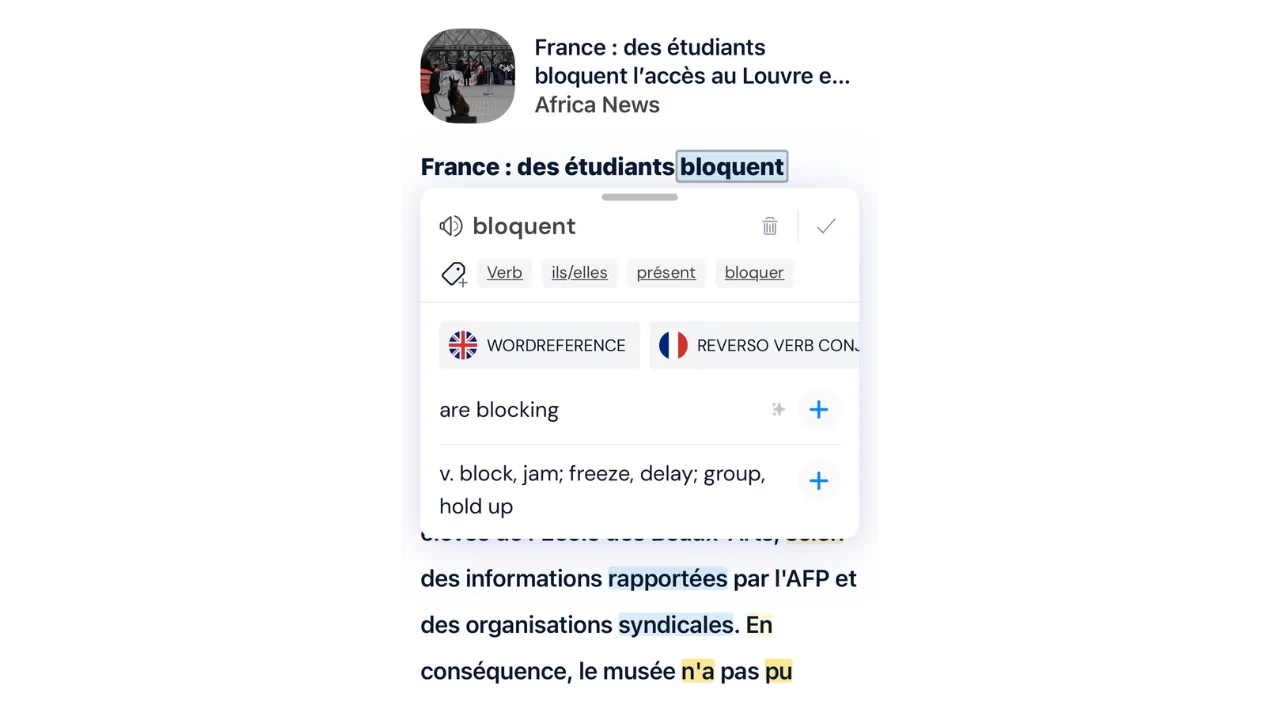
Every LingQ lesson pairs text with native audio. You see a sentence and hear how it’s really said, silent letters, liaisons and all. That closes the gap between written and spoken French, which is where most learners struggle.
2) You learn from real French
Most apps teach French with short, made-up sentences. LingQ lets you learn from the French you actually want to understand: podcasts, YouTube, news, books and series. Use the large French library, or import almost anything you find online, like a Netflix series or a podcast with transcripts such as RFI’s Journal en français facile.

3) Every word is one tap away
Tap any word to see a translation and save it. New words show in blue and words you’re learning in yellow, so you can see your progress on every page. LingQ tracks every word you know as your vocabulary grows.
4) It takes you from beginner to fluent
Beginners start with French Mini Stories, 60 short stories built around everyday words, with native-speaker audio. As you improve, you move on to podcasts, shows and novels. Most apps run out of content at the intermediate level. LingQ grows with you.
5) It improves your speaking too
LingQ focuses on reading and listening, but in the Compare Language Apps study with Spanish learners, 89% of LingQ users improved their speaking, and they reached first-semester college level in about 13 hours. The more French you understand, the more you have to say.
One honest note: LingQ doesn’t give you a game-style path. You choose what to read and listen to, which some beginners find less guided at first. Mini Stories are the easiest place to start.
How LingQ Compares to Other Popular French Apps
LingQ vs Duolingo
Duolingo is good for building a daily habit, and many people start there. But its exercises are short translations of sentences written for learners, so you hear very little natural, fast French. In the Spanish study, Duolingo users needed about 34 hours to reach first-semester level, compared with 13 on LingQ. If you’ve stalled on Duolingo, see our list of Duolingo alternatives.
LingQ vs Babbel
Babbel offers structured lessons with grammar explanations. Its dialogues are written for learners, though, and Babbel users needed about 21 hours in the Spanish study. On LingQ you look up grammar when you need it, while spending most of your time with real French.
LingQ vs Busuu
Busuu combines course lessons with corrections from native speakers. Beginners needed about 22 hours in the Spanish study, and like most course apps, Busuu runs out of content around the intermediate level. LingQ keeps going with real French at every level.
LingQ vs Rosetta Stone
Rosetta Stone tied with LingQ at about 13 hours. Its picture-based lessons avoid translations, which can make exact meanings slow to work out, and all the content is scripted. LingQ gives you instant translations and real French from day one. Read our full Rosetta Stone review.
LingQ vs a tutor
A tutor is valuable for speaking practice, and learners with tutors needed about 19 hours in the Spanish study. But tutoring costs more per hour and works best once you can follow a conversation. The fastest approach is to build that understanding on LingQ first, then add conversation.
French Apps Side by Side
| App | Real French content | Useful past intermediate | Hours to 1st-semester level (Spanish study) |
|---|---|---|---|
| LingQ | Yes: library + import anything | Yes | 13 |
| Rosetta Stone | No, scripted | Limited | 13 |
| Tutor (italki) | Depends on the tutor | Yes | 19 |
| Babbel | No, scripted | Limited | 21 |
| Busuu | No, scripted | Limited | 22 |
| Duolingo | No, scripted | Limited | 34 |
Hours come from separate Compare Language Apps studies of beginner Spanish learners, tested between 2012 and 2023, using the same placement exam. Apps may have changed since their test year.
How to Use LingQ for French, by Level
- You’re a complete beginner. Start with French Mini Stories. Listen to each story a few times while reading along, then move on to the next.
- You’ve finished another app’s course and feel stuck. This is the most common wall in French. Move to French you’d enjoy anyway on LingQ: an easy podcast, a YouTube channel, a series you already know.
- You want to understand French films and shows. Import an episode into LingQ, read the transcript, look up new words, then watch it again. The second time, you’ll catch far more.
- You need to speak soon, for a move or a trip. Build your listening and vocabulary on LingQ every day, and add one or two conversation sessions a week with a tutor.
- You only have your commute. Listen to your LingQ lessons on the go. It’s the same French you read at home, so it sticks faster.
Whatever your level, what decides your progress is how much French you hear and read. Twenty to thirty minutes a day, every day, adds up fast.
Learning Spanish instead? See the best app to learn Spanish.
FAQs
LingQ, if you want to understand real French and keep improving past the beginner level. It pairs every lesson with native audio and lets you learn from podcasts, shows and articles you choose.
LingQ has a free plan with the reader, the French library and Mini Stories, so you can try learning from real French before upgrading. Duolingo is also free, but it gives you far less natural, spoken French.
Not on its own. It builds a habit and basic vocabulary, but you get little natural spoken French, and many learners stall at the intermediate level. Most people need lots of real listening and reading on top of it.
An app can take you a long way if it gets you listening and reading a lot. For fluent speaking, add regular conversation with a tutor or language partner.
The US Foreign Service Institute estimates about 600 to 750 class hours for an English speaker to reach professional working proficiency in French. You can understand easy podcasts and everyday conversations much sooner.
Start Learning French with LingQ
The fastest way to understand French is to spend lots of time with French you actually enjoy. LingQ turns podcasts, YouTube videos, series and articles into lessons, with native audio, instant translations and every word you learn tracked along the way.
- Create a free account and choose French.
- Start with Mini Stories if you’re a beginner, listening to each one a few times.
- Tap new words to see translations and save them.
- Import something you love as soon as it feels within reach.
- Read and listen every day, even if it’s only 20 minutes.
Twenty minutes a day beats a weekend of drilling.
Read and listen to things you’d have read anyway — LingQ counts every word you pick up along the way.
- 5M+ learners
- 4.7★
- Free to start


You might also like