What’s the Best App to Learn Spanish? Here’s What the Research Says (2026)
 Elle
6 Oct 2026
Elle
6 Oct 2026
What’s the best app to learn Spanish? Most lists answer with opinions. We’d rather show you numbers. An independent research team tested the most popular Spanish apps with real learners and measured how many hours each one took to get them to the level of a first-semester college Spanish course.
LingQ tied for the fastest results of any app tested. Below, you’ll see the full results, why LingQ works so well for Spanish, and how it compares with the other apps people usually consider.
The Short Answer
LingQ. In independent testing, LingQ learners reached first-semester college Spanish in about 13 hours on average, tied for the fastest of any app tested and less than half the time Duolingo took. 86% improved their vocabulary and grammar, and 89% improved their speaking
The reason is simple: LingQ has you reading and listening to real Spanish you enjoy, instead of drilling isolated sentences.
How Spanish Apps Compare: Hours to One Semester of Spanish
Compare Language Apps, an independent research team, tested several major apps with groups of Spanish learners. Each study used the same tests before and after: WebCAPE, a college placement exam developed at Brigham Young University, for vocabulary and grammar, and the True North Proficiency Test for speaking.
Here’s how many hours of study learners needed, on average, to reach the level required for a first-semester college Spanish course:
| App | Average hours | Range | Year tested |
|---|---|---|---|
| LingQ | 13 | 9–17 | 2023 |
| Rosetta Stone | 13 | 10–17 | 2019 |
| Mango Languages | 15 | 12–20 | 2019 |
| italki | 19 | 13–28 | 2018 |
| Babbel | 21 | 18–26 | 2016 |
| Busuu | 22 | 17–34 | 2016 |
| Language Zen | 25 | 18–41 | 2015 |
| Duolingo | 34 | 26–49 | 2012 |
Source: Compare Language Apps study results (LingQ study published 2023)
Each app was tested in a separate study, so apps may have changed since their test year. The same tests and threshold were used throughout.
Why LingQ Is the Best App to Learn Spanish

1) You learn from real Spanish
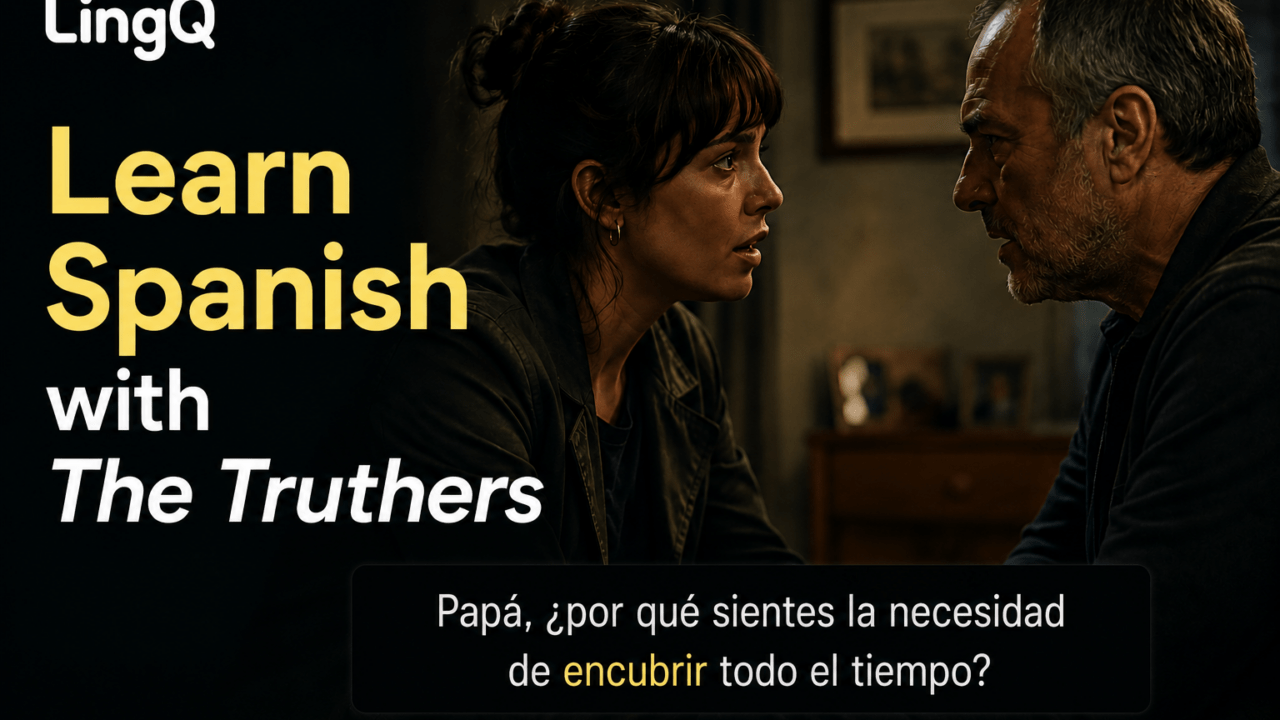
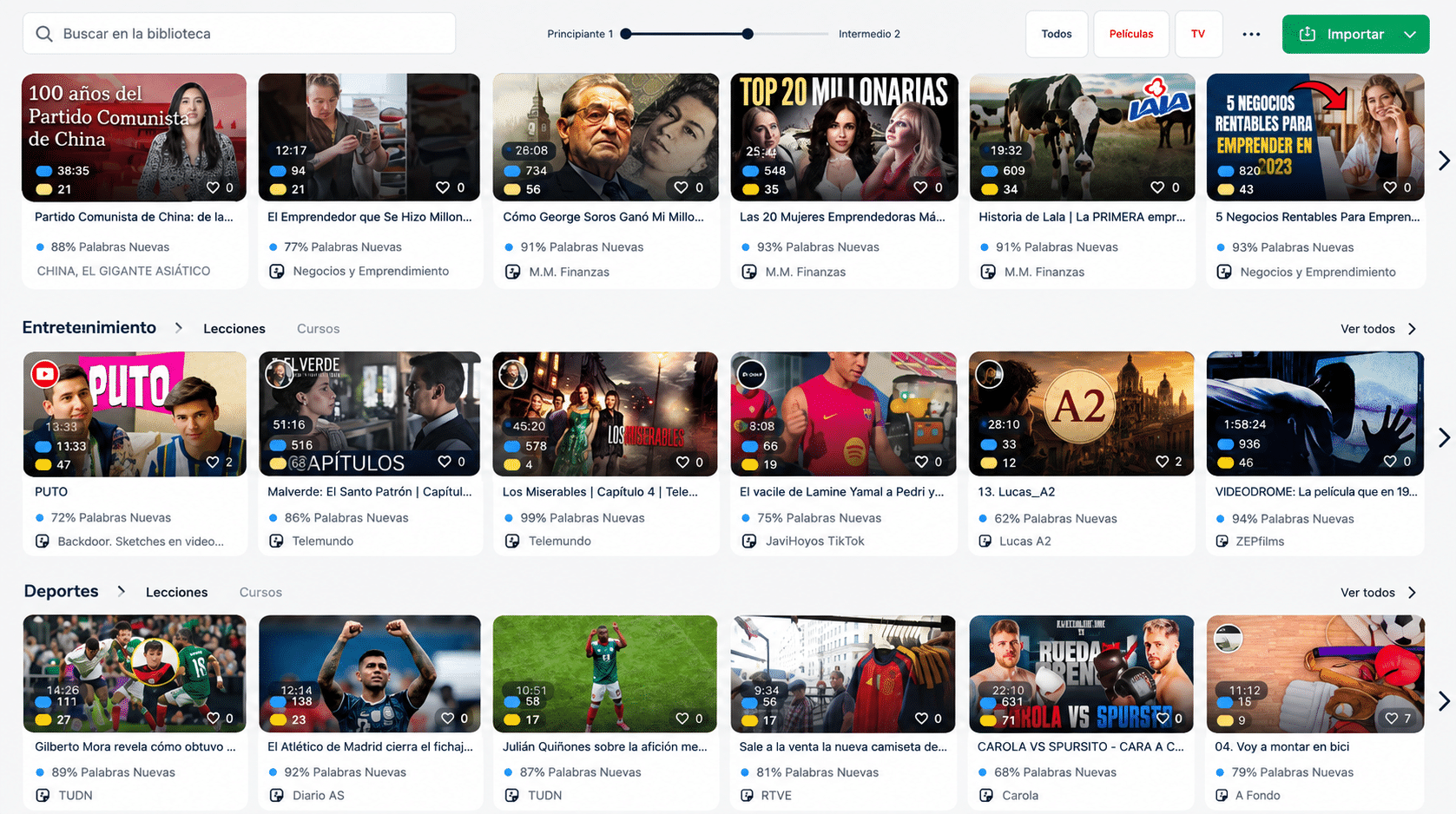
Most apps teach Spanish with short, made-up sentences. LingQ lets you learn from the Spanish you actually want to understand: shows, YouTube videos, podcasts, news articles and books. You can use the large Spanish library or import almost anything you find online, and every lesson comes with text and audio.
2) Every word is one tap away
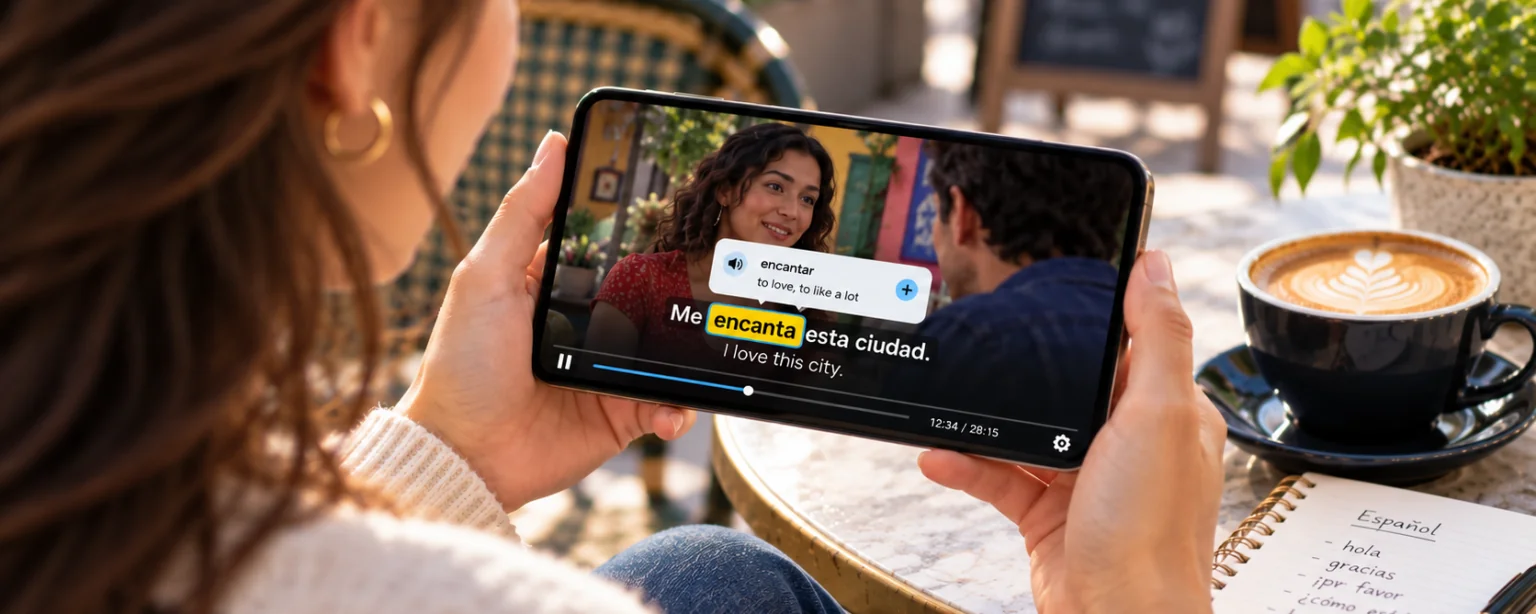
When you meet a new word, tap it to see a translation and save it. Unknown words are highlighted in blue and words you’re learning in yellow, so you can see your progress on every page. LingQ keeps track of every word you know as your vocabulary grows.
3) It works from day one to fluency
Beginners can start with Spanish Mini Stories, short stories built around the most common words, with native-speaker audio. As you improve, you move on to podcasts, Netflix series and novels. Most apps plateau at the intermediate level. LingQ grows with you.
4) It improves your speaking, too
LingQ focuses on reading and listening, but in the study 89% of participants improved their speaking. The more Spanish you understand, the more you have to say, and the more natural it sounds.
5) You choose what to learn
There’s no fixed path and no locked units. If you love football, cooking or true crime, learn Spanish from that. It’s much easier to keep going when the content is something you’d enjoy anyway.
How LingQ Compares to Other Popular Spanish Apps
LingQ vs Duolingo
Duolingo is great for building a daily habit, and many people start there. But in the study, Duolingo learners needed about 34 hours to reach first-semester level, compared with 13 on LingQ. Short translation exercises don’t give you much real Spanish, and most learners plateau around the intermediate level. If you’ve hit that wall, see our list of Duolingo alternatives.
LingQ vs Babbel
Babbel offers structured lessons with grammar explanations, which some beginners like. But its content is written for learners, and Babbel learners needed about 21 hours to reach the same level. On LingQ you can look up grammar when you need it, while spending most of your time with real Spanish.
LingQ vs Rosetta Stone
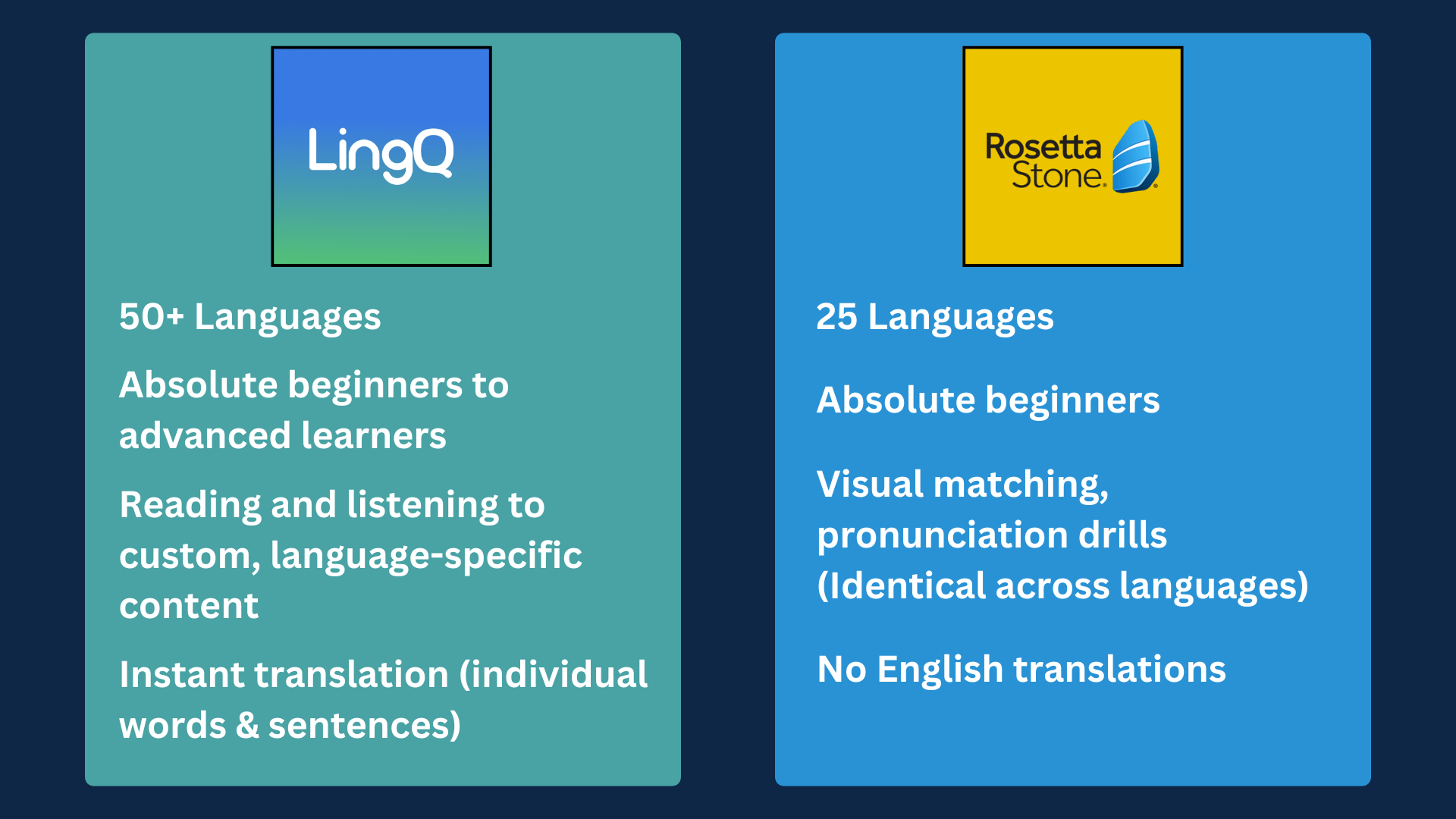
Rosetta Stone tied with LingQ at about 13 hours. Its picture-based lessons avoid translations, which can make exact meanings slow to work out, and the content is scripted. LingQ gives you instant translations and real content from day one. Read our full Rosetta Stone review.
LingQ vs Busuu
Busuu combines structured lessons with corrections from native speakers. Learners needed about 22 hours to reach first-semester level, and like most course-based apps, it runs out of content at the intermediate level.
LingQ vs a tutor
Online tutoring is valuable for speaking practice, and learners with tutors in the study needed about 19 hours. But tutoring costs more per hour and works best once you understand enough to follow a conversation. The fastest approach is to build that understanding on LingQ first, then add conversation.
How to Start Learning Spanish on LingQ
- Create a free account and choose Spanish.
- Start with Mini Stories if you’re a beginner. Listen to each story a few times and read along.
- Tap new words to see translations and save them.
- Import something you love, like a YouTube channel, a Netflix show or a podcast, as soon as it feels within reach.
- Read and listen every day. Even 20 to 30 minutes adds up fast. In the study, about 13 hours was enough to reach first-semester level.
For more ideas, try learning Spanish through reading and these free Spanish stories.
FAQs
Based on independent research, LingQ. Learners reached first-semester college Spanish in about 13 hours on average, tied for the fastest of any app tested and less than half the time Duolingo took.
Yes. Beginners can start with Spanish Mini Stories, which use the most common words and come with native-speaker audio, then move on to real content as they improve.
In independent testing, LingQ learners reached first-semester level in about 13 hours, compared with about 34 on Duolingo. Duolingo is good for building a habit, but LingQ gives you far more real Spanish.
Yes. Even though LingQ focuses on reading and listening, 89% of participants in the study improved their speaking. For conversation practice, you can pair it with a tutor or language partner.
You can start for free. Premium unlocks unlimited lessons and saved words.
In the study, about 13 hours of LingQ was enough to reach the level of a first-semester college Spanish course. Reaching conversational fluency takes many more hours of listening, reading and speaking, and LingQ supports you all the way there.
Start Learning Spanish with LingQ
The fastest way to understand Spanish is to spend lots of time with Spanish you actually enjoy. LingQ turns the shows, videos, podcasts and articles you’d watch or read anyway into lessons, with instant translations and every word you learn tracked along the way.
Twenty minutes a day beats a weekend of drilling.
Read and listen to things you’d have read anyway — LingQ counts every word you pick up along the way.
- 5M+ learners
- 4.7★
- Free to start


You might also like