Reading is one of the most effective ways to learn French. Books expose you to a large amount of vocabulary in context, show you how grammar works in real sentences, and let you go at your own speed.
The trick is finding French books for beginners that are easy enough to enjoy. This guide covers the best books to learn French at every stage: course books to get started, graded readers written for learners, and real French books that beginners and intermediate learners can actually finish.
The Best French Books for Beginners at a Glance
| Book | Type | Suggested level | Best for |
|---|---|---|---|
| Easy French Step-by-Step | Course book | Beginner | Learning grammar in a clear order |
| Complete French (Teach Yourself) | Course with audio | Beginner to intermediate | A full self-study course |
| French with Ease (Assimil) | Course with audio | Beginner to intermediate | Learning from dialogues |
| Practice Makes Perfect: Complete French Grammar | Grammar workbook | Beginner to intermediate | Grammar exercises with answers |
| Grammaire progressive du français | Grammar in French | Several levels | Grammar explained in French |
| First French Reader | Dual-language anthology | High beginner to intermediate | Real French writing with English alongside |
| Lectures CLE en français facile | Graded readers with audio | A1 to B2 | Adapted classics at your level |
| Lire en français facile (Hachette) | Graded readers with audio | A1 to B2 | Original and adapted stories |
| Short Stories in French for Beginners | Graded stories | High beginner | Varied genres with vocabulary help |
| Le Petit Prince | Classic | High beginner to intermediate | A short, famous first real book |
| Le Petit Nicolas | Children’s stories | Intermediate | Funny, everyday French |
| Harry Potter à l’école des sorciers | Translated novel | Intermediate | A long read you already know |
| Ru | Novel | Intermediate to advanced | A short book by a Quebec author |
| L’Étranger | Novel | Upper intermediate | Simple sentences, classic literature |
| Kiffe kiffe demain | Novel | Advanced | Informal French and slang |
How to Choose a French Book at Your Level
- Pick the right type. Course books teach the basics step by step. Graded readers are stories written with a limited vocabulary for each level. Real books are written for native speakers, so try them after a few graded readers.
- Check how many words you know. Reading is most enjoyable when you know most of the words on the page. If you need a dictionary in every line, choose something easier for now.
- Watch out for the literary past tense. Many French novels and classics tell the story in the passé simple, a past tense used mostly in writing. Learn to recognize it, because you’ll see it often.
- Get the audio if you can. French spelling doesn’t always match pronunciation, so listening while you read helps a lot.
Best French Textbooks for Beginners
If you’re starting from zero and like structure, a course book can give you a foundation in basic grammar and vocabulary. Choose one, work through it, and start reading easy stories as soon as you can.
Easy French Step-by-Step (Myrna Bell Rochester)
This book teaches French grammar in a careful order, one structure at a time, with readings and exercises along the way. It helps you understand how sentences are built instead of memorizing phrases.
Best for: beginners who like to understand the rules
Complete French (Teach Yourself)
A full self-study course with dialogues, grammar explanations, exercises and audio, taking you from beginner to intermediate level. It’s the closest thing here to a classroom course you can do on your own.
Best for: independent learners who want one structured course
French with Ease (Assimil)
Assimil’s French course for English speakers (older editions are called New French with Ease) is built around short, often funny dialogues with audio and notes. You start by listening and reading, and only later begin to produce the language yourself, which makes it a good fit for learning from input.
Best for: learners who like dialogues and audio
Practice Makes Perfect: Complete French Grammar (Annie Heminway)
A grammar workbook with clear explanations, plenty of exercises and an answer key. Use it alongside your reading when you want to practise a specific point, like the subjunctive.
Best for: drilling grammar you keep getting wrong
Grammaire progressive du français (CLE International)
A grammar series written in French, with books for different levels. Each topic has an explanation on one page and exercises on the next. It’s a good way to start thinking about grammar in French.
Best for: learners who want a grammar reference in French
Easy French Books for Beginners
Once you know some basic French, start reading stories. Graded readers use a limited vocabulary and simple grammar, so you can follow the plot and pick up new words from context.
First French Reader (edited by Stanley Appelbaum)
A dual-language anthology of short, unadapted excerpts from French writers across the centuries, with the English translation on the facing page. The facing English lets you check your understanding without looking up every word, but the selections are real literature, so the difficulty varies.
Best for: high beginners who want real French with a safety net
Lectures CLE en français facile (CLE International)
A large series of graded readers from A1 to B2, many of them adapted French classics by authors like Dumas, Hugo and Verne. Many titles come with an audio recording.
Best for: reading French classics at your level
Lire en français facile (Hachette)
Hachette’s graded series also runs from A1 to B2, with a mix of original stories and adapted classics, plus audio. It’s a good second series once you’ve tried a few CLE readers.
Best for: more graded reading at each level
Short Stories in French for Beginners (Olly Richards)
Eight stories in different genres, from science fiction to crime, written for high beginners. Each chapter has a summary, a vocabulary list and comprehension questions.
Best for: high beginners who want variety
LingQ has its own graded readers too. LingQ Mini Stories are about 60 short lessons with audio, written to teach the most common words and grammar, in French from France and Quebec French.
Real French Books for Beginners and Intermediate Learners
These are ungraded books read by French speakers, including original French works and translations, but they’re short, clear or familiar enough for learners. Try them once graded readers feel comfortable.
Le Petit Prince (Antoine de Saint-Exupéry)
Short, simple sentences and a story many people already know make this the classic first French book. It’s written in the passé simple, so it’s also a good way to get used to that tense.
Best for: your first real book in French
Le Petit Nicolas (René Goscinny and Jean-Jacques Sempé)
Short, funny stories told by a schoolboy in 1950s France. Each chapter stands on its own, and the narrator speaks like a child, so the French is lively and fairly simple.
Best for: everyday French in short chapters
Harry Potter à l’école des sorciers (J.K. Rowling)
If you’ve read Harry Potter in English, the French translation is a long book you can follow from memory. Note that some names are translated: Hogwarts is Poudlard.
Best for: learners who want a long book they’ll finish
Ru (Kim Thúy)
A short novel told in brief vignettes about a family who left Vietnam and started again in Quebec. It won the Governor General’s Award for French-language fiction, and its short sections make it easy to read in small pieces.
Best for: learners interested in Quebec and Canadian French writing
French Books for Upper-Intermediate and Advanced Learners
L’Étranger (Albert Camus)
Camus’s famous novel uses short, plain sentences and mostly the passé composé, the everyday past tense, so it’s more readable than most classics. It’s short, too.
Best for: upper-intermediate learners ready for literature
Kiffe kiffe demain (Faïza Guène)
A funny, sharp novel from 2004, narrated by a 15-year-old girl in a housing estate outside Paris. It’s full of colloquial French and early-2000s suburban youth slang, so it’s a great follow-up once textbook French feels easy.
Best for: informal French, slang and a distinctive teenage voice
Comics are another option. Astérix and Tintin are classics with pictures to help, but Astérix is full of puns and wordplay, so it’s harder than it looks.
How to Learn French from Books
Reading in French is most effective when you read a lot and don’t stop too often. Here’s a simple routine:
- Choose a book slightly below your level. You should be able to follow the story without a dictionary for most of each page.
- Read for meaning first. Look up the words that keep coming back, or that you need to follow the plot, and skip the rest.
- Listen while you read. Use the audiobook or audio recording if there is one. It’s a useful way to link French spelling to pronunciation.
- Review your new words. Save the words you look up and review them so you recognize them next time.
- Reread. A chapter is much easier the second time, and rereading helps new words stick.
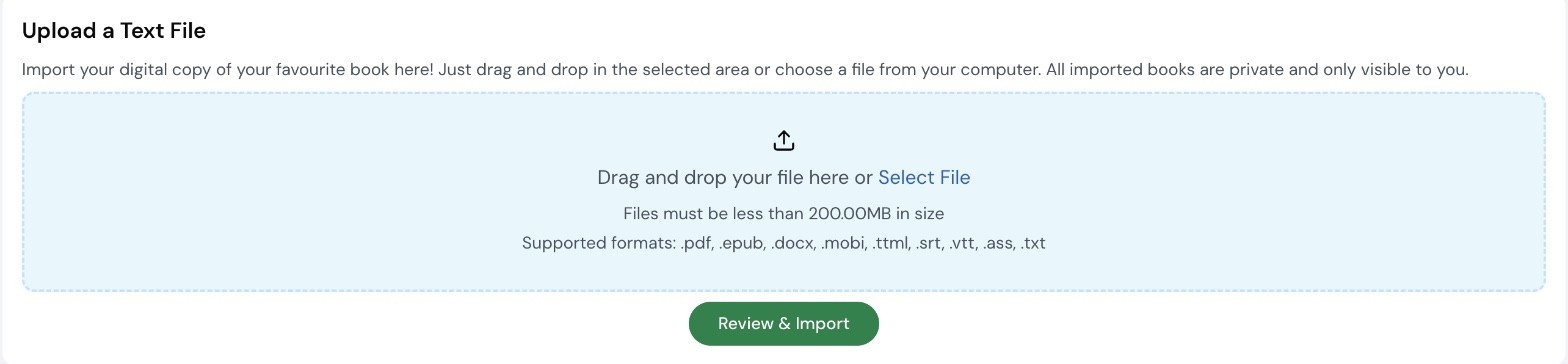
This is how LingQ works. Import a French ebook as a PDF, EPUB or MOBI file (DRM-protected files usually won’t import), and LingQ turns it into lessons. Tap any word to see its meaning and save it, and LingQ tracks the words you know, so every book gets easier. Each lesson shows how many words are new to you, so you can tell whether a book is at your level.
LingQ co-founder Steve Kaufmann, who speaks 20 languages, has learned most of them this way: by reading and listening to lots of content he finds interesting.
Start reading French on LingQ for free →
Pair Books with Other French Content
Books build your vocabulary, but you also need to hear French spoken. Mix your reading with listening:
- The best French podcasts, sorted by level.
- The best French shows on Netflix for learners.
- How to learn French fast, with a simple daily routine.
- The best app to learn French, if you want structured practice too.
French Books for Beginners FAQs
What is the best French book for beginners?
For complete beginners, a course book like Easy French Step-by-Step or Complete French (Teach Yourself) is a good start. Once you know the basics, graded readers like the Lectures CLE en français facile series or LingQ Mini Stories are good first stories.
What is a good first book to read in French?
Le Petit Prince is the classic choice: it’s short, the sentences are simple, and you may already know the story. Le Petit Nicolas and the French translation of Harry Potter are also popular first books.
Is Le Petit Prince good for beginners?
It’s good for high beginners and intermediate learners. The sentences are simple, but it’s written in the passé simple and has some poetic language, so read a few graded readers first if you’re brand new.
Can you learn French just by reading?
Reading can take you a long way, especially for vocabulary and grammar, but French pronunciation is hard to guess from spelling, so you also need to listen. Reading while listening to the audio is a good way to do both.
How do I read French books without looking up every word?
Choose books where you already know most of the words, and look up only the words you need to follow the story. On LingQ you can tap a word to see its meaning without leaving the page.
Start Reading French Today
The best French book for you is one at your level that you want to keep reading. Start with a course book if you’re brand new, move to graded readers as soon as you can, and work up to real French books.
When you’re ready, import your French books into LingQ, or start with its free Mini Stories, and learn every new word as you read.
Try LingQ free and start reading in French →
Cover photo by Céline on Pexels.