Best Books to Learn Japanese: A Complete Beginner’s Guide
 Tyler Tolman
28 Jul 2026
Tyler Tolman
28 Jul 2026TL;DR
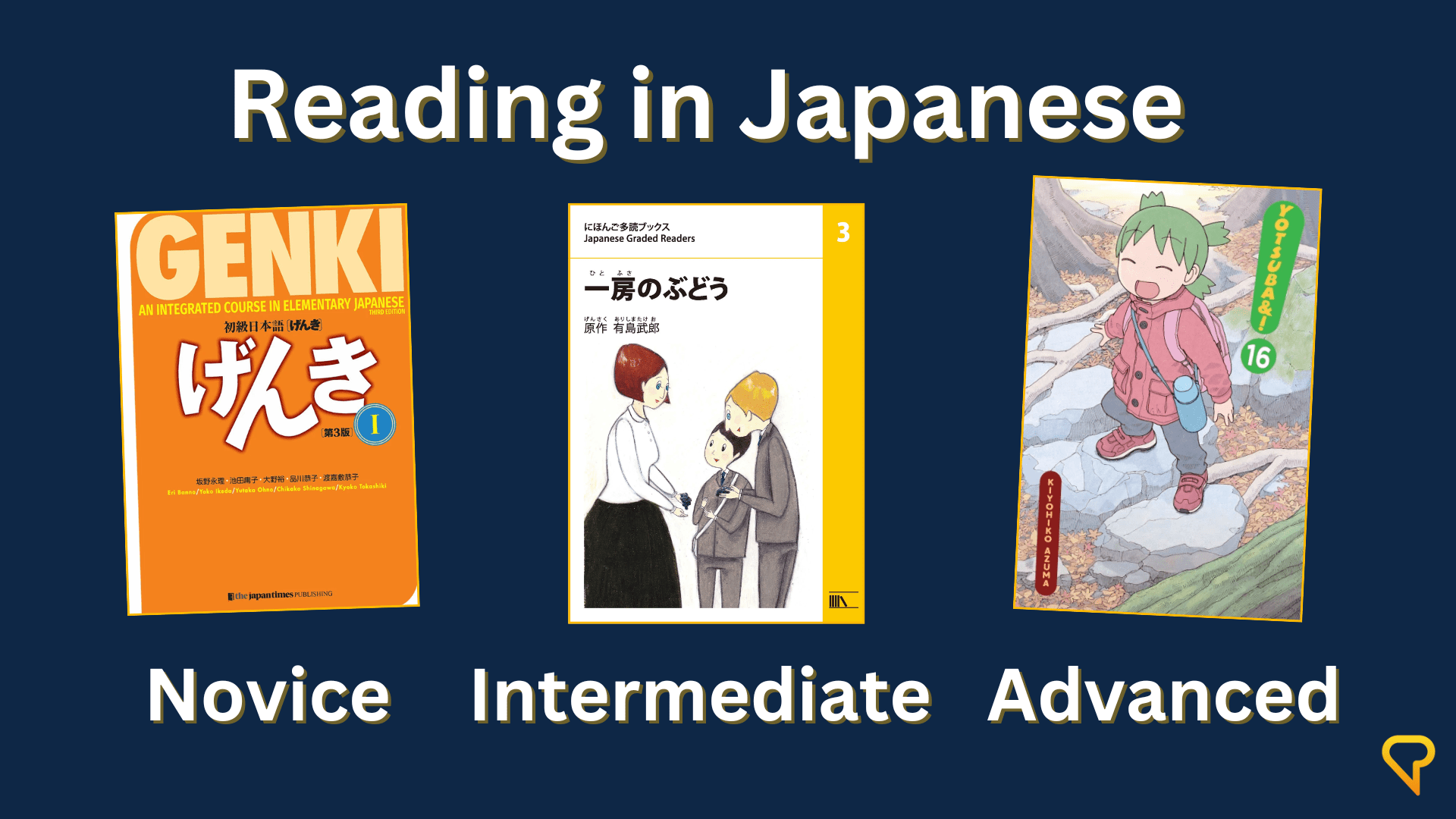
The best books to learn Japanese depend on where you are. Beginners need structure. Intermediate learners need volume. Advanced learners need authentic material. This guide covers all three stages.
Japanese has three writing systems, four levels of politeness, and a particularly foreign grammar for English speakers. Reading is fundamental at every level, but ensuring that you have the right book at the right stage can save you months of frustration. To successfully learn Japanese through comprehensible input, you need material that is mostly understandable and engaging. Throughout this guide, we’ll note which resources can be read directly on LingQ, so you get instant word lookups and automatic vocabulary tracking as you go.
Here are the best books to learn Japanese, organized by level and purpose, with quick notes on what each one is ideal for.
How to Find the Best Books to Learn Japanese
Before choosing, it helps to know what kind of book you actually need.
Textbooks give you structure: brief grammar explanations, short dialogues, vocabulary lists, and exercises that build systematically. Textbooks are a great launchpad for complete beginners who need a basic foundation before pursuing authentic content.
Graded readers are short stories written in simple Japanese, designed specifically for upper-beginner and intermediate learners. These types of books bridge the gap between textbooks and native content. Most serious Japanese learners use them to build reading stamina and expand their vocabulary.
Native books are written for Japanese speakers, not learners. They include manga, novels, and non-fiction. It’s not an easy transition, but it’s also a benchmark to fluency in Japanese. For most learners this is critical for intermediate learners hoping to achieve an advanced level.
Best Japanese Textbooks for Beginners
Genki: An Integrated Course in Elementary Japanese
Genki is the most widely used Japanese textbook series worldwide and for good reason. The series covers beginner to low-intermediate level. You’ll start learning hiragana, katakana, and around 300 kanji, all while steadily developing your knowledge of grammar across 23 chapters.
The structure is predictable. Each chapter includes a dialogue between a group of Japanese students, grammar points, vocabulary, and reading and writing practice. The workbook provides additional written practice for each chapter.
Genki works best if you want a structured, classroom-style approach. The explanations are clear, the pacing is reasonable, and there is an enormous amount of supplementary material available online from other learners.
Best for: Complete beginners who want a structured introduction to Japanese. This is a popular choice amongst university students and self-study learners.
Minna no Nihongo
Minna no Nihongo is another dominant beginner textbook, popular in language schools across Japan and Asia. Unlike Genki, it is taught entirely in Japanese from the first page. Grammar explanations are in a separate booklet. The immersive approach forces you to think in Japanese earlier, which some learners find more effective and others find overwhelming.
The series is widely used in intensive language programs in Japan, so if you plan to study there, this will likely be a go-to resource. It is slightly more formal in tone than Genki and covers similar ground.
Best for: Learners planning to study in Japan, or those who prefer to learn exclusively in Japanese from the very beginning.
Japanese From Zero (Books 1-5)
Japanese From Zero by George Trombley offers a more gentle approach to the language. It introduces hiragana gradually over the first few books, uses romaji alongside Japanese script early on, and builds in a way that feels more manageable for complete beginners.
The tone is more casual and encouraging than the university textbooks, and the online course makes the series easier to follow for self-study. However, it moves more slowly. Learners with a deadline might want to consider a textbook with faster pacing.
Best for: Absolute beginners who are self-studying without a rushed deadline.

Best Japanese Graded Readers
Graded readers are often overlooked by Japanese learners. The jump from textbooks to authentic material doesn’t have to be so jarring. Graded readers allow for a more gradual progression. Extensively read, but at a controlled difficulty level. This allows you to build your reading stamina without burnout and approach authentic material more confidently.
Tadoku Free Reading (online + print)
Tadoku is a free graded reading initiative that produces short Japanese stories at levels 0 through 4. Level 0 uses simple hiragana and katakana with basic vocabulary. Level 4 has more natural, complicated texts. The stories are available free online and cover a wide range of topics. The illustrations help with comprehension at lower levels.
The quality may vary across stories, but it’s a free resource with a large volume of material for Japanese learners.
Tadoku is a free graded reading initiative that produces short Japanese stories at levels 0 through 4. Level 0 uses simple hiragana and katakana with basic vocabulary. Level 4 has more natural, complicated texts. The stories are available free online and cover a wide range of topics. The illustrations help with comprehension at lower levels.
The quality may vary across stories, but it’s a free resource with a large volume of material for Japanese learners. Since Tadoku’s stories are plain text online, you can paste them straight into LingQ and build your saved-word list as you read, rather than looking words up one at a time in a separate dictionary.

Best for: Any learner ready to start reading simple Japanese, from early beginner through intermediate.
Ask Graded Readers Series
Ask Japanese Graded Readers is a commercially published series that runs from Level 0 (near zero Japanese) through Level 5 (advanced). Each story comes with audio, making them useful for simultaneous reading and listening practice. The production quality is higher than Tadoku and the difficulty levels are more consistent.
Each volume contains several short stories. The audio is read at a natural pace for the level, which helps with listening comprehension as well as reading.
Best for: Intermediate learners who want structured graded reading with accompanying audio.
Satori Reader (digital)
Satori Reader is a digital platform rather than a physical book, but it is a key resource for intermediate reading practice in Japanese. Stories are written in a natural (but comprehensible) manner, every sentence can be broken down grammatically, and the audio is professional quality.
The content ranges from cultural articles to fictional stories, all written with learners in mind. For learners between N4 and N2 JLPT level, it is one of the best bridges to native content.
Best for: Intermediate learners (N4-N2) who want a stepping stone to fully native content.
Best Books for Advanced Japanese Learners
Manga
This may seem like an obvious recommendation for Japanese learners, but manga is one of the most practical ways to start reading native Japanese content. The visual context helps you infer meaning when vocabulary is unfamiliar, and the dialogue-heavy format is closer to spoken Japanese than most prose. Beginner-friendly titles include Yotsuba&! and Shirokuma Café.
Manga uses a lot of colloquial speech, casual register, and sound effects. It is excellent for vocabulary and reading practice but less representative of formal written Japanese. Consider pairing manga with other genres to get a more well-rounded grasp of the language.
Manga uses a lot of colloquial speech, casual register, and sound effects. It is excellent for vocabulary and reading practice but less representative of formal written Japanese. Consider pairing manga with other genres to get a more well-rounded grasp of the language. If you’re working from a digital script or fan translation notes, importing the text into LingQ afterward is a good way to review and retain the vocabulary you picked up while reading.
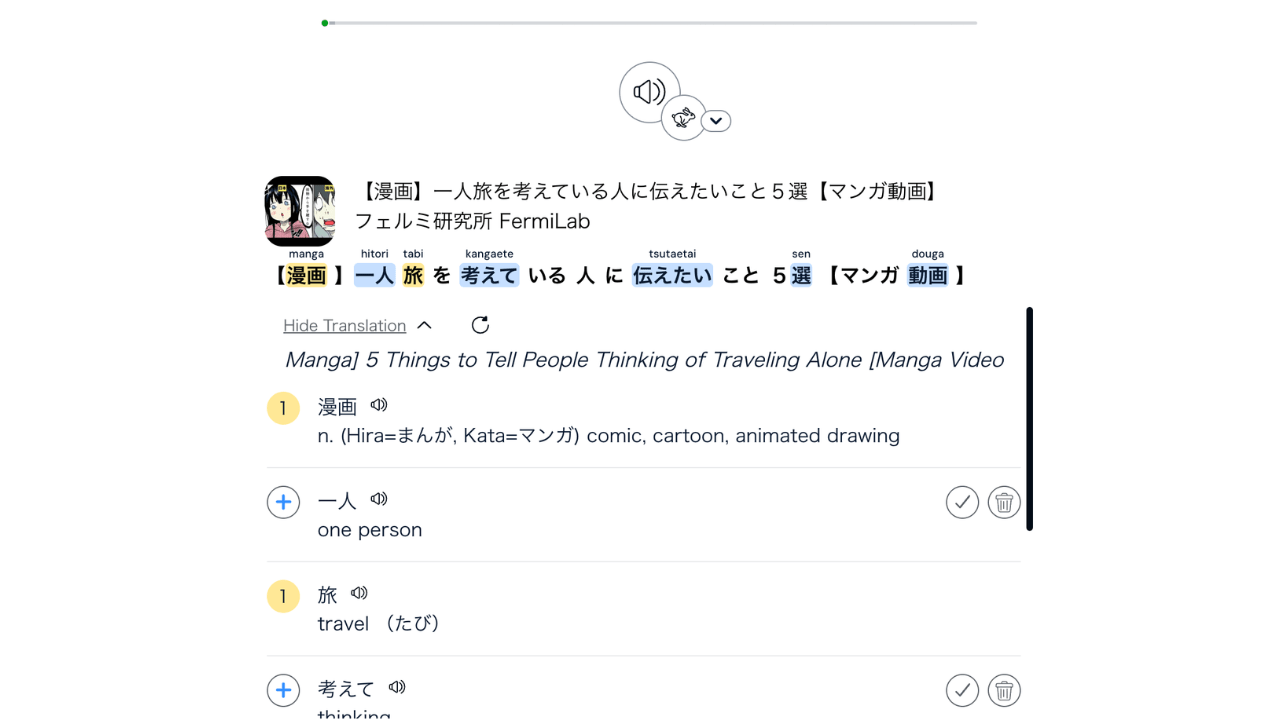
Best for: Advanced beginners and intermediate learners who want authentic reading with visual support.
NHK Web Easy
NHK Web Easy is a simplified news site published by Japan’s national broadcaster, written in accessible Japanese for younger readers and language learners. Every article comes with furigana (hiragana readings above kanji) and is written at a level that intermediate learners can follow with a dictionary.
Reading news keeps your vocabulary connected to real-world topics and current events, which is often more motivating for many learners than graded reader stories.
NHK Web Easy is a simplified news site published by Japan’s national broadcaster, written in accessible Japanese for younger readers and language learners. Every article comes with furigana (hiragana readings above kanji) and is written at a level that intermediate learners can follow with a dictionary.
Reading news keeps your vocabulary connected to real-world topics and current events, which is often more motivating for many learners than graded reader stories. You can import any NHK Web Easy article directly into LingQ with the browser extension (available for Chrome, Safari, Edge and Firefox) — tap any kanji you don’t know and it’s saved automatically, furigana and all.
Best for: Intermediate learners looking for comprehensible material on real, current topics

Reading Japanese Books on LingQ
Building up to authentic Japanese books isn’t easy. The vocabulary seems endless, the grammar is less predictable, and looking up phrases/cultural references becomes tedious.
LingQ solves this problem by letting you render any Japanese text (a news article, a manga script, an ebook, a podcast transcript, etc.) interactive and clickable.
Tap any word for an instant translation in context. Unknown words are automatically highlighted and saved. Track your progress, review as needed, and immerse yourself in Japanese more smoothly.
In Japanese, true reading proficiency requires thousands of kanji and tens of thousands of vocabulary items. Progress tracking on LingQ helps you visualize your progress, make quantifiable goals, and extensively read for longer periods of time.
The LingQ library also includes a Japanese section with curated beginner content ranging from our Japanese Mini Stories for novice learners to intermediate-level podcasts to novels, films, and other native-level content.
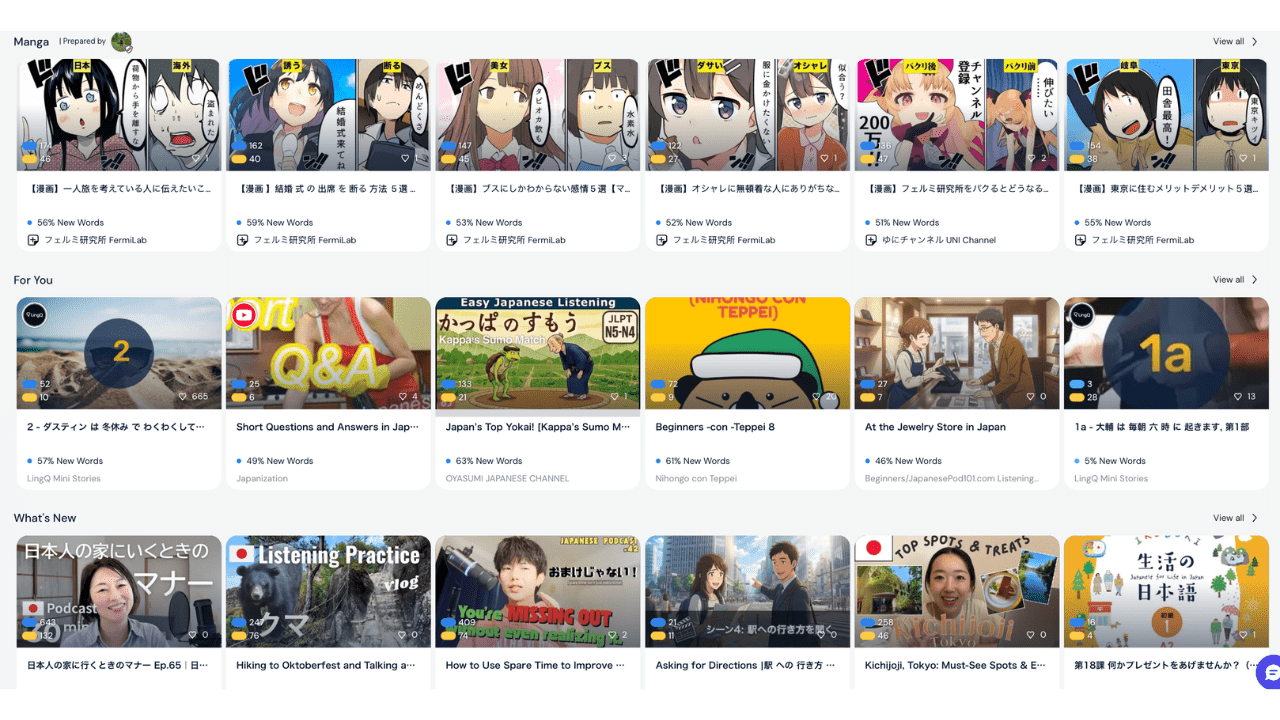
Start reading Japanese on LingQ today
Best Books by Level: Quick Reference
| Level | Best book | Why | Import to LingQ? |
|---|---|---|---|
| Absolute beginner | Genki I | Systematic, widely supported | No — physical textbook |
| Early intermediate | Tadoku Graded Readers | Free, accessible | Yes — paste text directly |
| Intermediate | Satori Reader | Audio + grammar breakdowns | No — closed platform |
| Upper intermediate | NHK Web Easy + manga | Authentic content, scaffolded | Yes — one-click import |
| Advanced | Native novels, news | Full exposure | Yes — via ebook/article import |
Happy learning!
Enjoy this post? Check out our other posts on learning Japanese.
- Japanese Numbers (The Complete Guide)
- Japanese Podcasts: The Best Options for Every Level
- How to Actually Learn Japanese with Netflix
Frequently Asked Questions
Genki I is the most widely recommended beginner Japanese textbook for English speakers. It covers hiragana, katakana, basic kanji, and essential grammar in a systematic way.
No, but a textbook is useful at the beginner stage to build a basic foundation. Basic vocabulary and knowledge of hiragana and katakana are needed to enjoy graded readers and other learner content.
Graded readers are short stories written specifically for Japanese language learners at controlled difficulty levels. They bridge the gap between textbooks (where everything is explained) and native content (where nothing is explained).
Yes, manga is a practical and enjoyable way to build reading ability in Japanese. The visual context and emphasis on dialogue helps with comprehension. The main limitation is that manga tends to use casual, colloquial language.
LingQ lets you import any Japanese text and read it with instant word lookups in context. Unknown words are highlighted, translations appear when you tap, and your vocabulary is tracked automatically across everything you read.
Digital and web-based resources — Tadoku, NHK Web Easy, native articles and ebooks — can be imported directly into LingQ for instant word lookups and vocabulary tracking. Physical textbooks like Genki or Minna no Nihongo can’t be imported directly, but LingQ works well as a companion once you’ve built enough of a foundation to move into graded readers and native content.
Writer Bio

Tyler is an American language teacher and language learner. He’s taught Spanish, French and Latin in the K-12 system since 2018. Tyler also speaks Thai and Italian. Currently, he’s learning German and Polish on LingQ!
Twenty minutes a day beats a weekend of drilling.
Read and listen to things you’d have read anyway — LingQ counts every word you pick up along the way.
- 5M+ learners
- 4.7★
- Free to start


You might also like