53 languages · Real content · One platform

Explore 53 Languages on LingQ

The best language to learn is the one that keeps you coming back day after day. LingQ has 53 of them — each with a reader that translates words with a click, tracks your vocabulary from first encounter to fully learned, and gives you access to a library of real content while letting you add your own.

Average rating
4.7
from 57,000+ reviews
Learners
5M+
learners
Languages
53
languages

Which language fits you best?

The honest answer is: the language you'll actually use. We're not going to pretend a personality quiz can tell you which one is "right" — it can't. But the reasons people pick languages cluster into a handful of patterns, and once you know which pattern is yours, the choice gets easier. Choose the reason that fits you best.

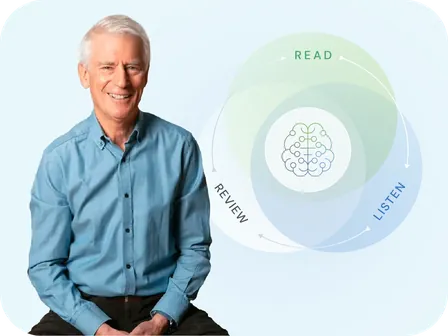
"I've learned in my fifties what I couldn't have learned in my twenties — that motivation beats every other factor. The language you're curious about is the right one."
Steve Kaufmann, co-founder of LingQ, on language learning system

Steve Kaufmann

World-renowned polyglot, speaker of 20 languages, co-founder of LingQ

Travel

The hardest part of travel isn't ordering coffee — it's the conversation that opens up afterwards.

Spanish

Español · 636M speakers

More than 500 million people speak Spanish as a first language, and the wider Spanish-speaking world passes 630 million. From Mexico City to Buenos Aires to Madrid, one language carries you across 20+ countries. Spelling maps closely to sound, so reading aloud comes early, though the subjunctive and the two verbs for "to be" take longer. The content side is deep: telenovelas, news podcasts, music and fiction. LingQ has 32,700+ Spanish lessons and 2,560+ hours of audio.

Learn Spanish on LingQ

French

français · 312M speakers

French is an official language in more than 25 countries, from Belgium to Senegal to Vanuatu, and it stays widely used in business, education and public life across much of West Africa. English shares a great deal of vocabulary with it — restaurant, déjà vu, entrepreneur — so you start with more common ground than you expect. Spelling and pronunciation don't always line up, which takes adjusting to. LingQ has 33,900+ French lessons and 3,280+ hours of audio.

Learn French on LingQ

Turkish

Türkçe · 91M speakers

Türkiye is one of the world's most-visited countries, and past the resort towns Turkish is simply what the day runs in — transport, markets, directions, the conversation after the transaction. It's closely related to Azerbaijani, though mutual understanding is far from automatic. The grammar is the work: meaning stacks up in suffixes at the end of a word and vowels shift to match. Almost nothing is irregular, though. LingQ has 20,200+ Turkish lessons and 1,460+ hours of audio.

Learn Turkish on LingQ

Career & business

Some languages give you access to specific industries; others give you access to entire economies.

English

English · 1.46B speakers

If your work crosses a border, English is often the language it crosses in — the one a meeting falls back on when colleagues don't share a first language. It's the practical tool for clients, documentation, conferences and remote teams. The grammar is comparatively light; spelling, idioms and phrasal verbs are where the exposure has to go, learned by meeting them repeatedly, not by rule. LingQ's English library is its largest: 42,700+ lessons and 4,470+ hours of audio.

Learn English on LingQ

German

Deutsch · 130M speakers

On the points route of Germany's Opportunity Card, B2 German earns three of the six points required, while C1 English adds one. The rules are only part of it: German opens local job listings, client conversations and everyday workplace talk in Europe's largest economy. It's closer to English than its reputation suggests, though compound nouns and case endings take sustained reading before they stop feeling foreign. LingQ has 26,600+ German lessons and 2,360+ hours of audio.

Learn German on LingQ

Portuguese

Português · 267M speakers

The largest economy in Latin America doesn't run in Spanish. Brazil is the region's biggest market, and Portuguese is one of Mercosur's official languages alongside Spanish — so the region many people prepare for with Spanish keeps its largest economy behind a different door. Spanish speakers get a real head start, then a long tail of false friends and a very different set of vowels. LingQ has 23,700+ Portuguese lessons and 928+ hours of audio.

Learn Portuguese on LingQ

Heritage

There's a specific weight to a language your grandparents spoke and you didn't — and a specific reward in closing that gap.

Italian

italiano · 85M speakers

At the end of 2025 Italy counted about 6.6 million citizens living abroad, the largest communities in Argentina, Germany, Brazil and Switzerland. For their descendants, Italian opens family records, letters and conversations that translation can't quite stand in for. Spelling maps closely to sound, which helps early on; the verb system asks for more patience. Italy's Antenati portal has put nearly 155 million digitised civil-status records online, free. LingQ has 14,700+ Italian lessons.

Learn Italian on LingQ

Ukrainian

Українська · 39M speakers

In 2021 Prudentópolis, in southern Brazil, became the first town in the country to recognise Ukrainian as co-official — more than a century after the first settlers reached Paraná. This diaspora is old, scattered and organised: the Ukrainian World Congress alone connects 132 member organisations across 52 countries. For a lot of those families the language thinned out one generation at a time. Cyrillic comes relatively quickly; the seven-case system takes considerably longer. LingQ has 12,600+ Ukrainian lessons.

Learn Ukrainian on LingQ

Greek

Ελληνικά · 14M speakers

Greece funds Greek-language education abroad: around 40,000 students are enrolled outside the country, taught in part by teachers the ministry posts overseas. That network exists because of the gap — in Australia alone some 425,000 people report Greek ancestry while fewer than 230,000 speak Greek at home, a figure that fell at the last census while ancestry didn't. The alphabet comes relatively quickly; cases and verb forms take longer. LingQ has 15,600+ Greek lessons.

Learn Greek on LingQ

Culture

Some people pick languages for utility; you're picking yours for what's inside.

Japanese

日本語 · 125M speakers

Three writing systems. Thousands of kanji. A politeness system built into the grammar itself. Japanese isn't the easy choice — it's the rewarding one, with a cultural archive that runs deep: anime and manga, games, Kurosawa and Miyazaki, Murakami, centuries of poetry. Steve Kaufmann, LingQ's co-founder, built his Japanese while posted to Tokyo as a Canadian diplomat — daily reading and listening, no formal classes — and went on to use it for work. LingQ has 34,000+ Japanese lessons.

Learn Japanese on LingQ

Korean

한국어 · 81M speakers

Hangul is remarkably systematic — it was designed rather than inherited, and its consonants are built from the shapes the mouth makes. 안녕하세요 (annyeonghaseyo) is simply "hello". The grammar is where the time goes: word order, particles and speech levels all work differently from English. What the script buys you is early access to subtitles, lyrics, webtoons and the K-drama and K-pop that bring many learners here. LingQ has 13,300+ Korean lessons.

Learn Korean on LingQ

Russian

Русский язык · 210M speakers

Russian opens a large cultural archive directly — not only Tolstoy and Dostoevsky, but twentieth-century poetry, cinema, song, criticism, and a working publishing industry that still puts out over 100,000 titles a year. Cyrillic is usually a smaller hurdle than learners expect. Verbal aspect is the real cost, because it isn't a rule you apply once: it's a choice you make in nearly every sentence. LingQ has 16,500+ Russian lessons and 1,740+ hours of audio.

Learn Russian on LingQ

Stretch

You already know it's going to be hard — that's part of the appeal.

Chinese (Simplified)

普通話 / 普通话 · 1.18B speakers

Mandarin sits in the top tier of difficulty for English speakers — tones, characters, and a sound system unlike anything in Europe. The grammar gives something back, though: verbs don't conjugate for person or tense, and nouns carry no grammatical gender. The payoff is the world's largest community of native speakers. Steve Kaufmann started Mandarin in his early twenties as a Canadian diplomat in Hong Kong; it became his gateway into Asian languages. LingQ has 12,700+ Chinese lessons.

Learn Chinese on LingQ

Arabic

اَلْعَرَبِيَّةُ · 481M speakers

Modern Standard Arabic gives you books, journalism and formal media across more than 20 countries; everyday conversation runs in regional varieties like Egyptian or Levantine, so most learners end up working with both. The right-to-left script and the root-based morphology make Arabic structurally unlike anything in Europe — which is exactly what draws people to it. LingQ supports full right-to-left reading, with 13,400+ Arabic lessons and 753+ hours of audio.

Learn Arabic on LingQ

Polish

język polski · 43M speakers

Polish offers a serious grammatical stretch without asking you to learn a new writing system. Seven cases, including a vocative still in everyday use, and a masculine gender that divides into personal, animate and inanimate — a distinction that runs through adjectives, verbs and numerals alike. Numerals bring rules of their own. It asks less of you than Mandarin or Arabic and more than any Romance language, which is the point. LingQ has 10,100+ Polish lessons.

Learn Polish on LingQ

Explore the world

All 53 languages on LingQ

LingQ supports 53 languages spoken across 150+ countries. Every language uses the same reader, the same word tracker, the same import flow — only the library, script, and starting point change.

What's pre-loaded in each language

The numbers below are LingQ's pre-loaded library — what's there the moment you pick a language. The "Import" column is what makes the rest unbounded: every language on LingQ uses the same reader, so anything you find online — a YouTube transcript, a news article, a podcast episode — becomes part of your personal library with one click. The library is where you start; what you import is where you stay. Even our smaller-library languages open up the moment you bring your own content.

What's pre-loaded in each language
Language Language Lessons Mini Stories Audio Import
English 42,700+ Included 4,470+ hrs Unlimited with Premium
Japanese 34,000+ Included 4,630+ hrs Unlimited with Premium
French 33,900+ Included 3,280+ hrs Unlimited with Premium
Spanish 32,700+ Included 2,560+ hrs Unlimited with Premium
German 26,600+ Included 2,360+ hrs Unlimited with Premium
Portuguese 23,700+ Included 928+ hrs Unlimited with Premium
Turkish 20,200+ Included 1,460+ hrs Unlimited with Premium
Russian 16,500+ Included 1,740+ hrs Unlimited with Premium
Swedish 15,900+ Included 708+ hrs Unlimited with Premium
Greek 15,600+ Included 663+ hrs Unlimited with Premium
Italian 14,700+ Included 1,660+ hrs Unlimited with Premium
Arabic 13,400+ Included 753+ hrs Unlimited with Premium
Korean 13,300+ Included 754+ hrs Unlimited with Premium
Finnish 12,900+ Included 265+ hrs Unlimited with Premium
Chinese (Simplified) 12,700+ Included 2,370+ hrs Unlimited with Premium
Ukrainian 12,600+ Included 301+ hrs Unlimited with Premium
Romanian 11,800+ Included 325+ hrs Unlimited with Premium
Polish 10,100+ Included 712+ hrs Unlimited with Premium
Norwegian 9,670+ Included 388+ hrs Unlimited with Premium
Chinese (Traditional) 9,660+ Included 806+ hrs Unlimited with Premium
Dutch 9,120+ Included 444+ hrs Unlimited with Premium
Serbian 7,940+ Included 182+ hrs Unlimited with Premium
Persian 7,640+ Included 328+ hrs Unlimited with Premium
Danish 7,430+ Included 184+ hrs Unlimited with Premium
Indonesian 7,350+ Included 428+ hrs Unlimited with Premium
Icelandic 6,480+ Included 174+ hrs Unlimited with Premium
Catalan 5,940+ Included 44+ hrs Unlimited with Premium
Czech 5,210+ Included 120+ hrs Unlimited with Premium
Hebrew 4,790+ Included 242+ hrs Unlimited with Premium
Cantonese 3,220+ Included 356+ hrs Unlimited with Premium
Latin 868+ Included 78+ hrs Unlimited with Premium
Library counts from August 2026. Beta languages aren't measured yet. See all 53 languages.

Frequently asked questions

Get your questions answered

What is the easiest language to learn?

It depends on the language you already speak. The more vocabulary, grammar, and script a new language shares with yours, the faster it comes. For English speakers, that means languages like Spanish, Dutch, and Norwegian, which the US Foreign Service Institute (FSI) puts at roughly 552–690 hours to reach working proficiency. The same rule works from any starting point: Polish comes easier to a Ukrainian speaker, Portuguese to a Spanish speaker, and Korean to a Japanese speaker. That said, the language you're excited about will always feel easier than one you're forcing yourself through. Motivation beats linguistic proximity every time. More on what makes languages easier

What is the hardest language to learn?

That depends on what you already speak. The biggest jumps come from a new writing system and a different language family. For English speakers, that makes Arabic, Chinese, Japanese, and Korean the toughest, and the distance works both ways: for a Chinese or Arabic speaker, English is just as far away. But "hard" is relative. Steve Kaufmann learned Mandarin, Japanese, and Korean without formal classes, mostly through reading and listening. Time and interest matter more than any difficulty ranking. Steve's take on language difficulty

How long does it take to learn a new language?

The best-known estimate comes from the US Foreign Service Institute (FSI), which trains English-speaking diplomats. It puts closer languages like Spanish, French, and Italian at 552–690 hours, and distant ones like Arabic, Chinese, and Korean at 2,200 hours. Those numbers are for English speakers, but the pattern holds for everyone: the further a language is from your own, the more hours it takes. With an hour a day of reading and listening, you can expect to hold real conversations in a closer language within a few months. Progress is never linear, but it's inevitable if you stick with it. Detailed breakdown by language category

What is the most useful language to learn after English?

It depends on what you want to do with it. For business across the Americas: Spanish. For international organizations and African markets: French. For East Asian trade and tech: Mandarin. For culture and travel, honestly, any of the above. There's no wrong answer here. The most useful language is the one you'll actually use.

Can I start learning for free on LingQ?

Yes. The free plan gives you the reader, word tracking, and a set of lessons in any language. Paid plans unlock the full library, unlimited imports, and extra features, but the free plan is enough to start building vocabulary and see real progress.

Start learning a new language today

Pick a language, find something worth reading, and let your brain handle the rest. Your vocabulary grows naturally, one word at a time.