
The Best Way to Learn Arabic: A Native Speaker’s Roadmap
 LingQ
24 Jul 2026
LingQ
24 Jul 2026TL;DR
The best way to learn Arabic is comprehensible input — understanding real content before drilling grammar or the alphabet, with listening first and reading added once your vocabulary catches up.
I’m a native Arabic speaker, and I only understood how Arabic should be learned after I acquired Spanish.
I did it the way readers of this blog will recognize: comprehensible input. Roughly 700 hours of listening to Spanish I could understand, no classes, no textbooks, no grammar drills. Just content at my level, every day, until Spanish stopped being a subject and became a language I simply had.
When I came out the other side, I looked back at how my own language gets presented to learners, and I saw something uncomfortable. Arabic doesn’t have a difficulty problem nearly as much as it has a method problem. This post is the best way to learn Arabic that I wish every learner had on day one.
Comprehensible input is language you can mostly understand from context, even before you know all the words in it. Instead of studying grammar rules or memorizing vocabulary lists, you acquire a language the way children do: by absorbing meaning from content that’s slightly above your current level, over hundreds of hours. For Arabic specifically, this means listening before reading, and choosing a spoken dialect or Modern Standard Arabic based on your goals — not the alphabet.
Is Arabic Hard to Learn, and Why It Shouldn’t Scare You
Let’s start with the honest numbers. The US Foreign Service Institute puts Arabic in its hardest category, estimating around 2,200 class hours to professional proficiency, roughly three times what Spanish or French take an English speaker. I won’t pretend otherwise, and you should distrust anyone who does.
But the fearsome reputation isn’t built on the hours. It’s built on the pipeline. The traditional Arabic path hands you the alphabet before you’ve heard a single sentence, grammar tables before you’ve understood a single story, and case endings in week one that native speakers barely produce in everyday speech. It’s a method that asks for months of labor before it pays out a moment of meaning, and it manufactures the dropout rate that gave Arabic its name.
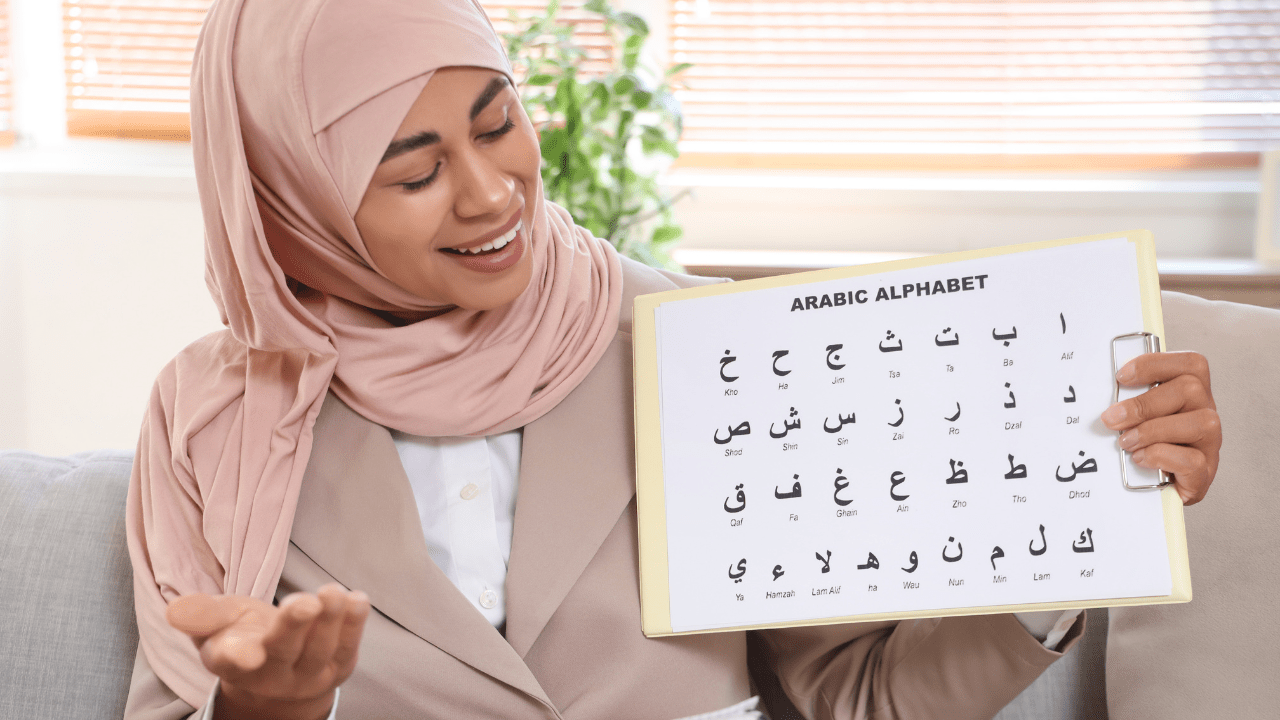
Comprehensible input flips the deal. You get meaning from hour one, and the language assembles itself underneath, the way Dr. Stephen Krashen has described for four decades and the way every native speaker, including me, actually learned Arabic. If you want the fuller research picture behind this, LingQ has a good comprehensible input guide that lays out the theory in more depth. Nothing about Arabic exempts it from that research. Arabic only asks for more hours of it, which makes an enjoyable method more necessary, not less.
Should You Learn Modern Standard Arabic or a Spoken Dialect First?
Here’s the thing nobody explains early enough. Arabic operates on two levels. Modern Standard Arabic carries the news, books, and formal speech across 22 countries. The spoken varieties, Levantine, Egyptian, Gulf, and the rest, carry daily life, family arguments, jokes, and songs. They’re not separate languages. They’re two registers of one language, and every Arab moves between them without thinking about it.
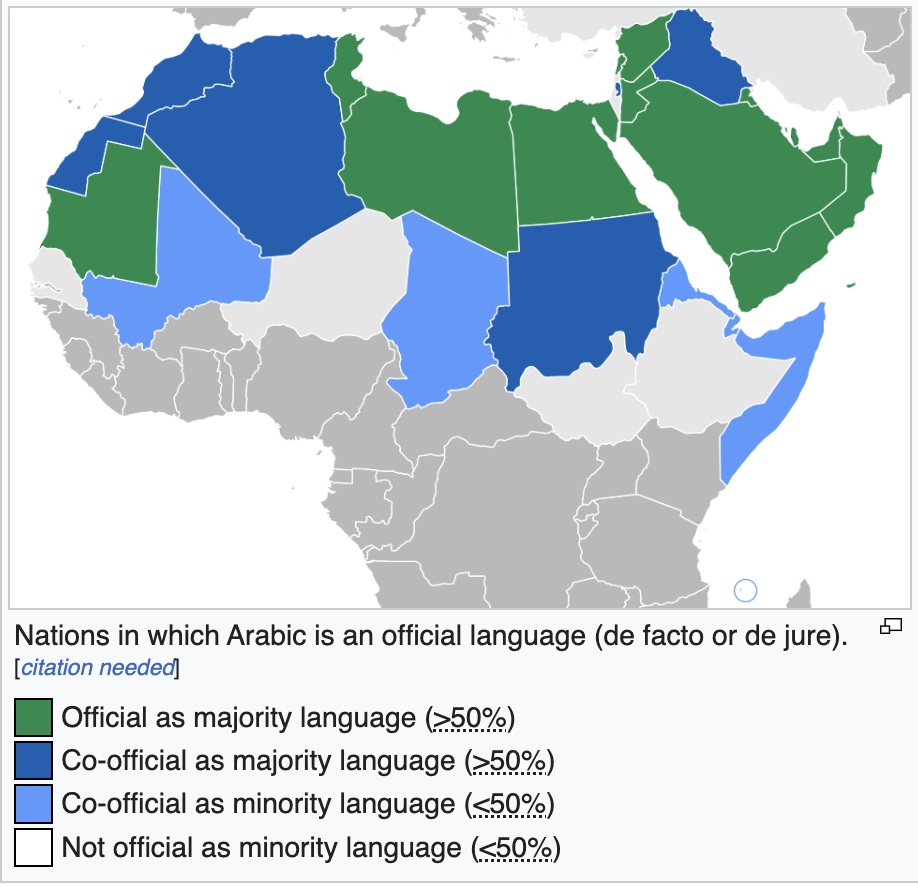
For a learner, the practical advice is simpler than the endless online debate suggests. If your goal is people and conversation, lead with a spoken variety. Levantine travels especially well across the region. If your goal is media, literature, and formal understanding, lead with MSA. And know that if you stay with Arabic long enough, you’ll want a foot in both, because that’s how the language is actually lived.
Whichever you choose, don’t let the decision delay your first hour of input. You can adjust the mix anytime, and the two registers reinforce each other more than beginners expect.
Why You Should Listen Before You Read Arabic
In Spanish or French, you can read from week one because the writing roughly tells you how words sound. Arabic refuses you that shortcut three times over, and this is the single most important adjustment to the input playbook.
First, the script hides its short vowels. Written Arabic mostly records consonants and long vowels, which means reading accurately depends on already knowing the words. Reading Arabic isn’t decoding. It’s recognizing language you already own, which makes it a middle-game move rather than an opening one.
Second, text lives in the MSA register. Read from day one and you’re locked into formal Arabic before your ears have met either register.
Third, Arabic has sounds English never gave you, and your accent forms in your ears long before your mouth gets involved. Hundreds of hours of listening builds the sound categories that make ع and ح and ق real to you. Reading those letters early, with English guesses filling the gaps, builds an accent you’ll spend years unlearning.
So the Arabic-specific rule is this: listen from your very first hour, and treat the alphabet as a casual side quest around week three. The letters take two weeks when the language underneath them is alive, and months of pain when it isn’t.
What should you listen to? Content engineered for learners at your level, where you can follow 80 to 90 percent of the meaning through visuals and context. That comfort isn’t a nice-to-have. It’s the mechanism itself. This is exactly the gap LingQ’s library of graded and native content is built to fill.
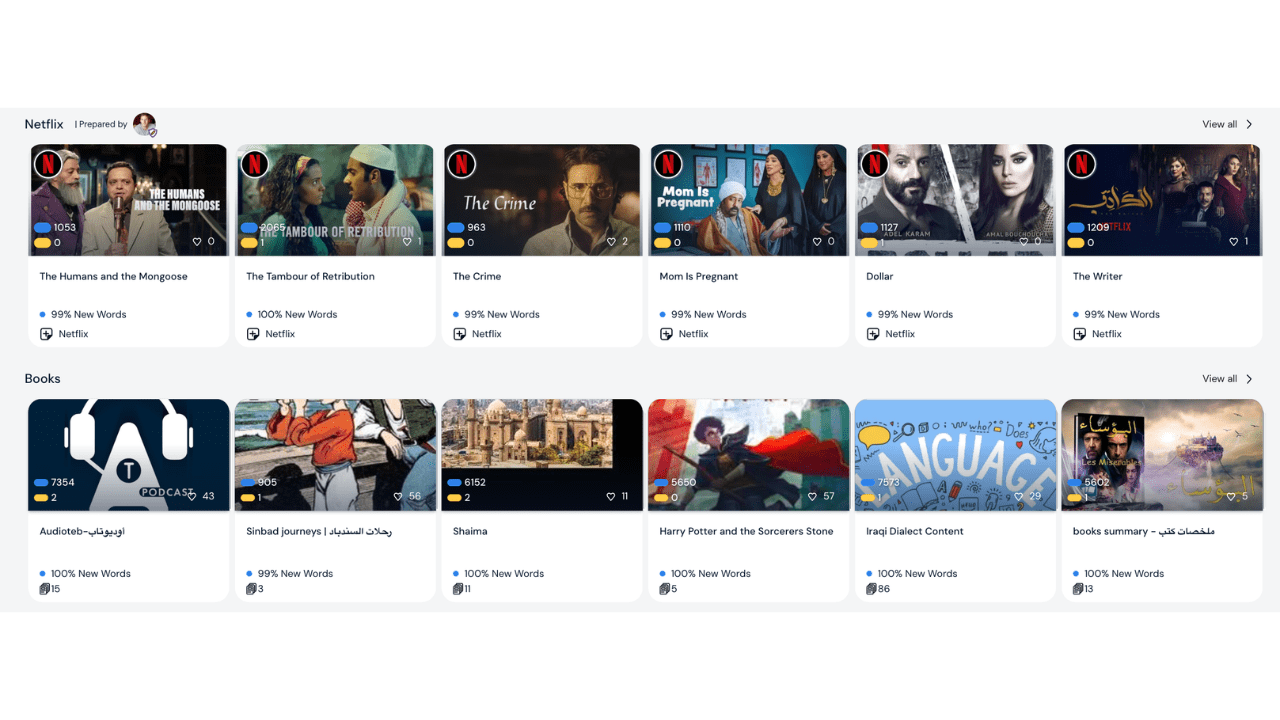
We suggest starting with the Arabic Mini Stories, where you will see the basic patterns of the language in everyday situations. There is lots of repetition, perfect for getting your brain used to the language. You can search by level in the Arabic Library, import videos from YouTube/Netflix/Prime/etc., and tap any word you don’t know as you go.
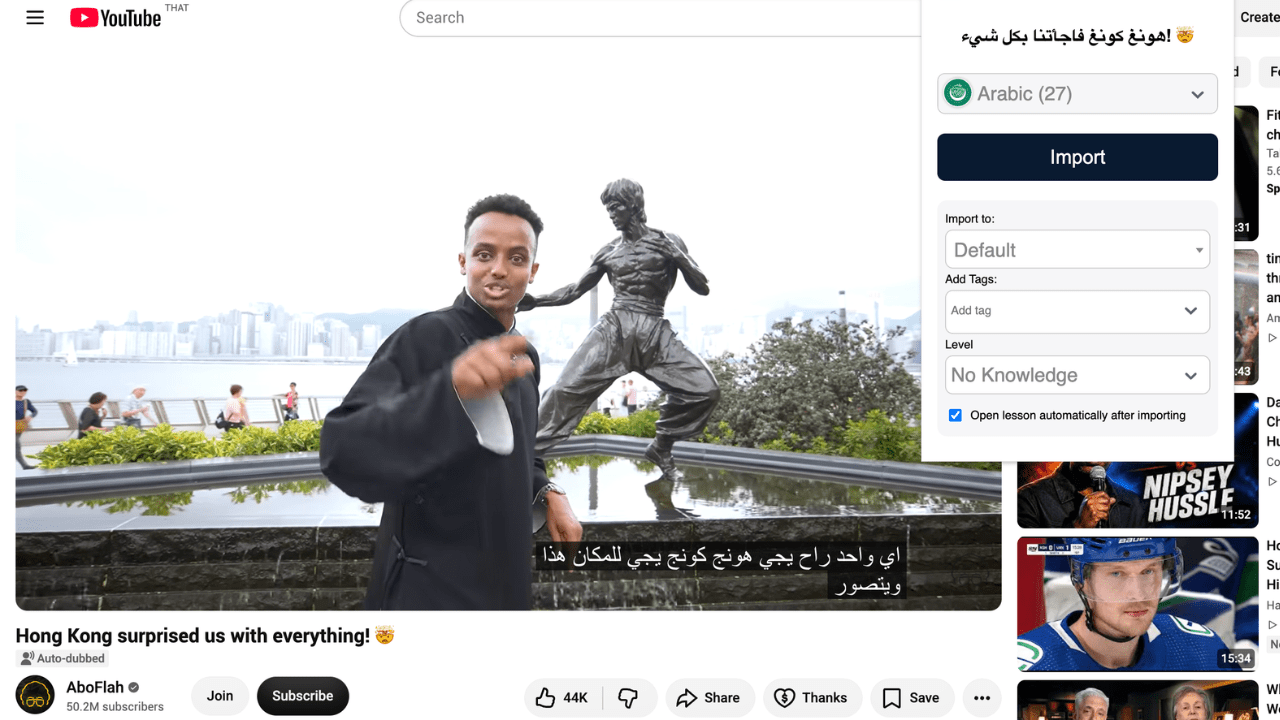
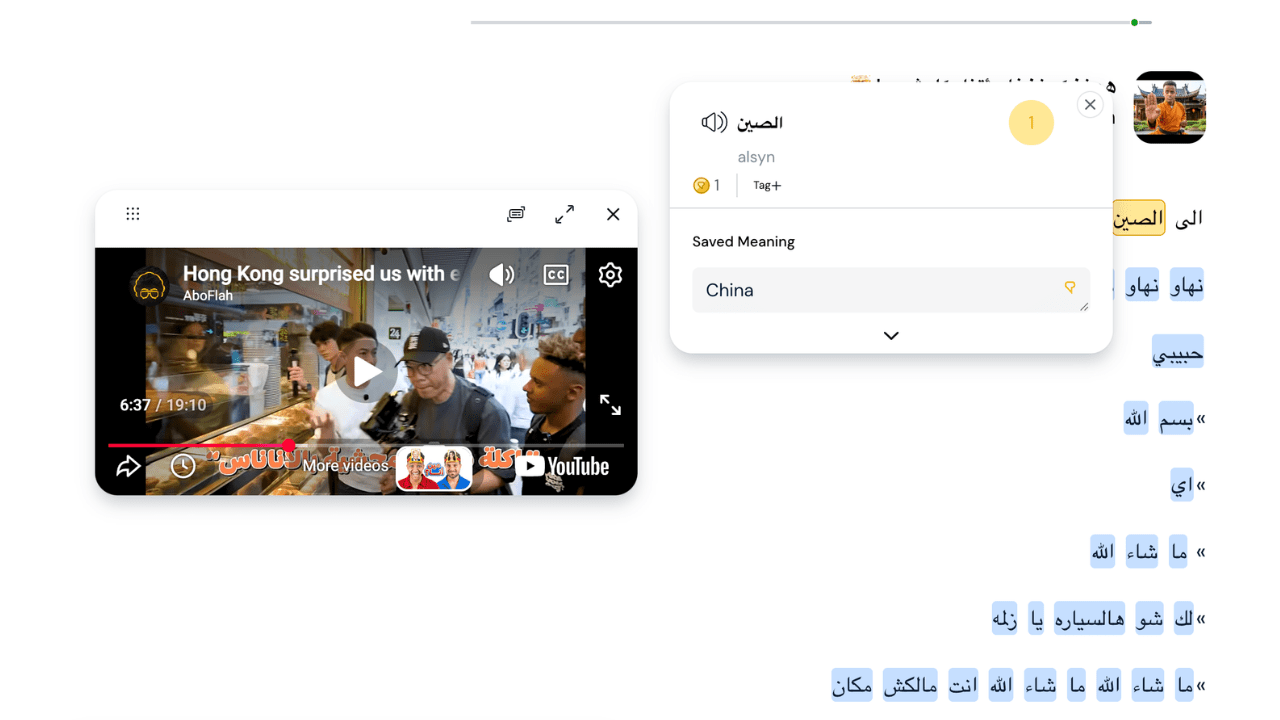
Words will turn from blue (new/unknown) to yellow (learning) to white (known) as you are exposed to them in future content.
When Should You Start Reading Arabic?
Now the good news about that difficult script: it rewards you enormously for arriving with vocabulary.
Once your acquired words reach roughly the 1500 mark, somewhere in your early hundreds of hours of listening, reading stops being decoding drudgery and becomes the cheapest input volume you can buy. No production schedule, no video length, any topic on earth. From that point on, a serious Arabic learner should be reading daily.
This is the stage where LingQ genuinely earns its place in an Arabic routine. Being able to import content you care about, tap the words you don’t know, and watch your known word count climb turns Arabic text from a wall into a ladder. Start with familiar and graded material rather than the news, lean on vowelized texts early while your word recognition matures, and let your listening hours keep running alongside, because your ears remain the foundation for pronunciation and for the spoken register no book will hand you.
Ears first. Eyes at the threshold. Both forever after.
When Should You Start Speaking Arabic?
The question I’m asked most is when to start speaking, and my answer surprises people: later than you think, and you’ll be glad.
Speaking is the result of acquisition, not the cause of it. Marvin Brown’s Automatic Language Growth program in Thailand demonstrated decades ago that learners who stay silent until speech emerges naturally come out cleaner than eager early speakers, because forced early output rehearses guesswork into habit. Let comprehension run far ahead. One day, Arabic answers will start forming in your head before you decide to produce them. That’s the signal.
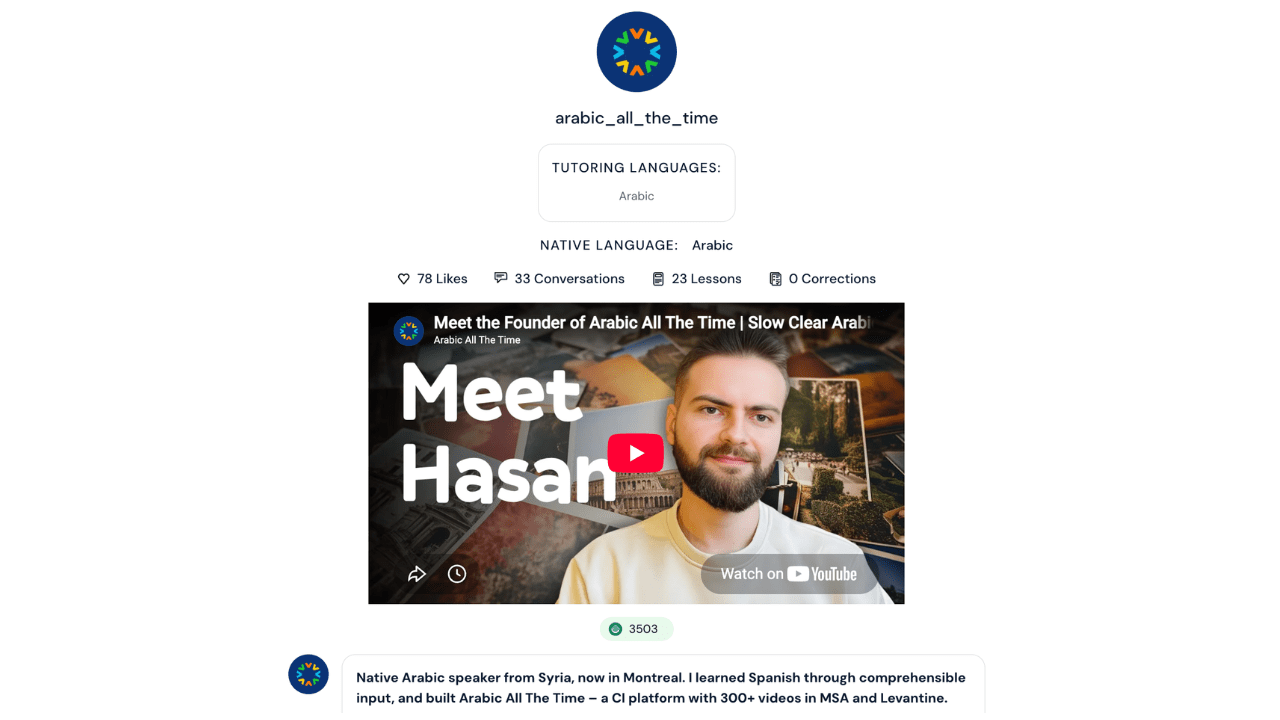
When it comes, make your first outings low-pressure ones. My favourite format is crosstalk, a conversation where each person speaks their own language, you in English, the native speaker in Arabic. All the input, none of the performance anxiety. You can even chat with me on LingQ.
How Long Does It Really Take to Learn Arabic?
Here’s what I tell every learner, because someone should. It feels slow at first. Around 20 to 50 hours, patterns start clicking. Around 200 to 300, familiar topics start feeling natural. The plateaus you’ll hit at various points are word frequency mathematics, not personal failure. Your first thousand words repay you constantly, and every thousand after is rarer, so equal effort produces quieter gains while the acquisition continues underneath. If that plateau feeling sounds familiar from other languages too, LingQ cofounder Steve Kaufmann has a good breakdown of why that happens and what to actually watch instead.
The only honest progress meter is this: every month or two, go back and replay the very first thing you ever understood in Arabic. It will have mysteriously become easy. Nothing changed in the recording.
And yes, the road is roughly three times the Spanish road. That’s precisely why the method matters. Nobody grinds flashcards for 1,500 hours. But watching and reading things you genuinely enjoy for 1,500 hours? People do that by accident. Choose the path you can love for that long.
Your First 90 Days Learning Arabic
- Pick your register, spoken, MSA, or both, and find content you comfortably follow 80 to 90 percent of. When in doubt, start easier.
- Listen 20 to 30 minutes daily, anchored to the same moment of your day. Grow toward an hour as it gets comfortable. The Arabic mini Stories are a great place to start.
- In weeks two to four, pick up the alphabet casually on the side. No pressure, no gate.
- Skip the flashcards and grammar apps. When you have extra energy, the highest yield move is always another video at your level.
- As your vocabulary approaches the reading threshold, add daily reading and let it multiply everything.
Start your first 90 days on LingQ now
Arabic isn’t harder to acquire than the language you learned last. It’s longer to acquire, and the difference matters, because length is a problem that enjoyment solves. The same input road that carried you through Spanish or French runs all the way to Damascus.
Ahlan wa sahlan when you start walking it.
Frequently Asked Questions
Arabic is classified by the US Foreign Service Institute as one of the hardest languages for English speakers, requiring an estimated 2,200 class hours to reach professional proficiency, roughly three times the hours needed for Spanish or French. The difficulty isn’t the language itself as much as the way it’s traditionally taught. A comprehensible input approach, starting with meaning instead of grammar and scripts, makes the process far more enjoyable even though it doesn’t shorten the total time required.
It depends on your goal. If you want to speak with people and hold real conversations, start with a spoken variety, Levantine is widely understood across the Arab world. If your goal is reading, media, or formal contexts, start with Modern Standard Arabic. Long term learners typically end up comfortable in both, since the two registers reinforce each other.
Later than most learners expect. Speaking is the natural result of enough comprehension, not something to force early. Programs built around delayed speech, like Marvin Brown’s Automatic Language Growth research in Thailand, have shown that learners who wait until speech emerges naturally tend to develop cleaner pronunciation and grammar than those who push themselves to speak from day one.
Written Arabic omits most short vowels, so reading accurately depends on already knowing the word, not decoding it phonetically. Reading also defaults to the formal MSA register, so starting there before you’ve built listening comprehension in either register can leave you without functional spoken skills. Most learners get far more value from reading once their vocabulary reaches roughly 1,500 words.
Content built for your current level, where you can already follow 80 to 90 percent of the meaning through context and visuals. This is the entire mechanism behind comprehensible input, and it’s why leveled, learner-directed content works better early on than authentic native media, which usually assumes vocabulary and speed beginners haven’t built yet.
Author Bio

Hasan Alhamwi is a Syrian-Canadian civil engineer based in Montreal and the founder of Arabic All The Time, the comprehensible input video library for Modern Standard and Levantine Arabic, with a new video released every day. He acquired Spanish through 700 hours of pure input, then built the Arabic path that didn’t exist. Steve interviewed him about the project on the Learn Languages with Steve Kaufmann podcast earlier this year.