
Por vs Para – The Ultimate Guide
 North
21 Oct 2025
North
21 Oct 2025
You finally think you’ve mastered Spanish… and then “por” and “para” show up.
Why is it gracias por venir but este regalo es para ti? They both mean “for,” right? So what’s the deal?
You’re not alone — “por vs para” is one of the most confusing grammar points for Spanish learners. But once you understand the logic behind them (and see them used by real native speakers), it finally clicks.
The Big Picture: Por vs Para in One Sentence
Think of it this way:
- Por = the journey or cause
- Para = the destination or goal
| Preposition | Core idea | Example | English |
|---|---|---|---|
| Por | Because of / through / by means of | Viajamos por España. | We traveled through Spain. |
| Para | For the purpose of / toward / in order to | Viajamos para conocer España. | We traveled to get to know Spain. |
When you think in terms of why or where it’s headed, you’ll stop second-guessing yourself.
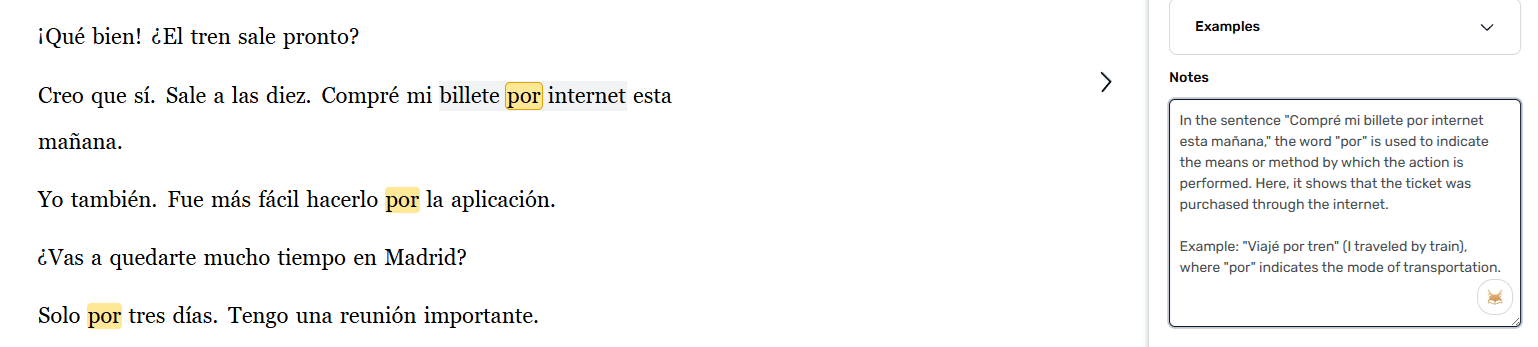
If you’re learning Spanish with LingQ, you’ll never have to be confused about why one word was used instead of the other. With LingQ’s AI-powered “Explain It” capability, you can find out exactly how any word is being used in a particular sentence. No more needing to scratch your head – Instant explanations are at your fingertips!
Common Uses of “Por” and “Para” (and How Natives Really Use Them)
Por often explains why or how something happens — a reason, cause, or medium.
| Use | Example | Meaning |
|---|---|---|
| Cause / reason | Lo hice por ti. | I did it because of you. |
| Duration | Estudié por dos horas. | I studied for two hours. |
| Means / method | Hablamos por teléfono. | We talked on the phone. |
| Exchange | Te cambio mi café por tu té. | I’ll trade my coffee for your tea. |
| Movement through | Caminamos por el parque. | We walked through the park. |
Para points forward — it’s about the goal, the recipient, or the direction of an action.
| Use | Example | Meaning |
|---|---|---|
| Purpose / goal | Estudio para aprender español. | I study to learn Spanish. |
| Recipient | Este regalo es para ti. | This gift is for you. |
| Destination | Salgo para la oficina. | I’m leaving for the office. |
| Deadline | La tarea es para mañana. | The homework is due tomorrow. |
| Comparison | Para un niño, lee muy bien. | For a child, he reads very well. |
If you want to see a bunch of these examples in one beginner-friendly lesson, look no further than Por vs Para: Beginner Dialogue 1, one of thousands of lessons available in the LingQ Spanish Library. If you sign up for LingQ you’ll be able to listen to crystal-clear audio and access all of LingQs features from inside that lesson.
Por vs Para in Pop Culture: Learn with Real Netflix Series
Find the lesson linked above to be a bit too easy? One of the best ways to absorb natural Spanish prepositions is through real shows like La Reina del Sur.
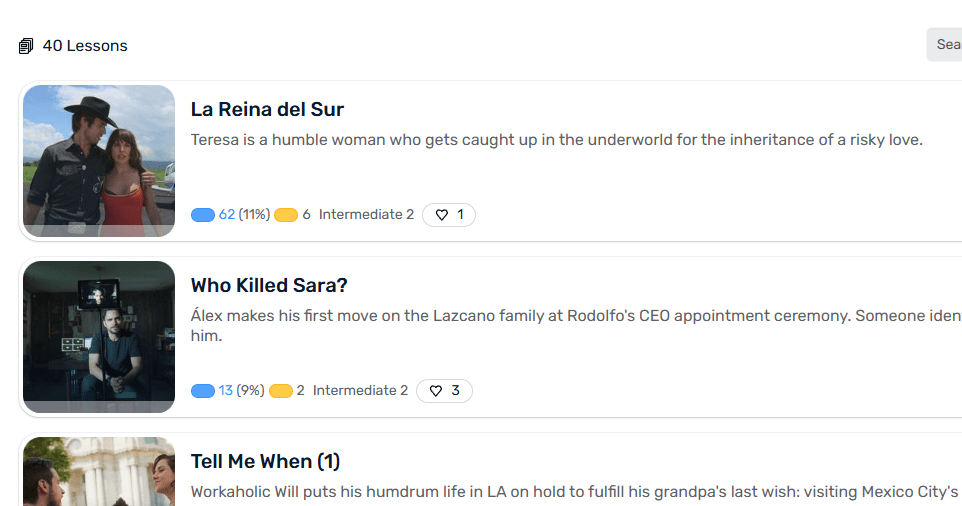
Find out how people speak in real Spanish conversations all while binging your new favourite show. If you’re reading the show’s transcript in LingQ, you’ll learn hundreds of new words in the blink of an eye – By having fun while you learn, time will pass quickly and soon you’ll have concepts like “por” and “para” down to a science. One full season of a show can make considerable progress for you when you consider just how long it might take you to learn Spanish.
Learn “Por” and “Para” Naturally (Not by Memorization)
After signing up for LingQ you’ll have access to a huge Library of Spanish content created by native speakers. For just about any topic you might want to learn you can find a lesson in LingQ that works perfectly for you. In addition to the Netflix and LingQ-produced lessons mentioned above, you can find any number of courses from YouTube language teachers, books, comedy channels, news articles, podcasts, and more – If it exists in digital format, it can be imported into LingQ!
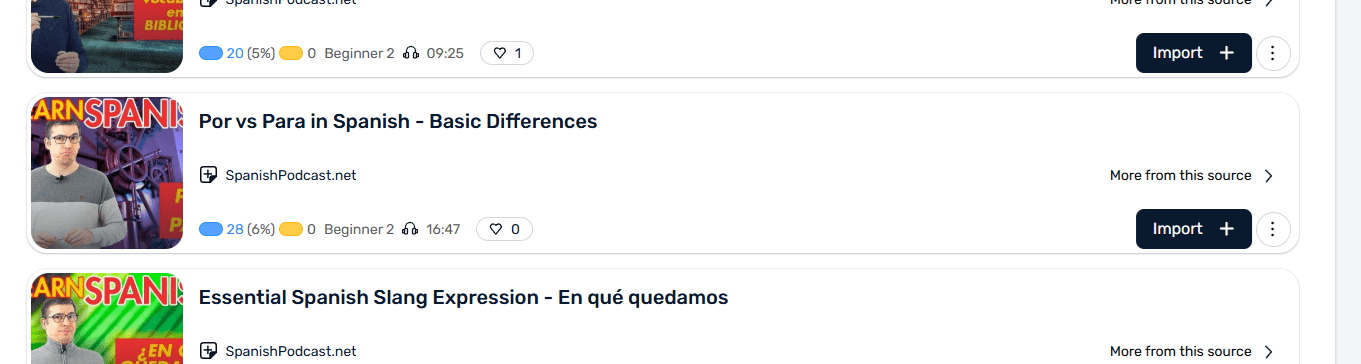
With LingQ lessons you can hear and read these tricky words over and over again in real contexts. This will help you learn how to use them just like native speakers, so say goodbye to endless grammar exercises! Any number of other topics you might be interested in, like when to use Ser and when to use Estar, can be found right in the LingQ Library.
You Don’t Learn Grammar — You Absorb It
Spanish prepositions like “por” and “para” aren’t rules to memorize — they’re patterns you internalize through exposure. That’s exactly what LingQ helps you do:
- Read and listen to real Spanish (shows, podcasts, YouTube).
- Click any word for instant translation.
- Build your vocabulary naturally.
- Learn grammar by feel, not flashcards.
So the next time someone says “Gracias por venir” or “Esto es para ti,” — you won’t think twice. 😉
👉 Start learning real Spanish with LingQ — free trial today
Bonus: Want to take your Spanish further?
North is LingQ’s Content Manager and a lifelong language learner who maintains a standing streak of reading one book in a foreign language each week.
Twenty minutes a day beats a weekend of drilling.
Read and listen to things you’d have read anyway — LingQ counts every word you pick up along the way.
- 5M+ learners
- 4.7★
- Free to start


You might also like