The Egyptian and Hittite Peace Treaty | Lost Treasures of Egypt
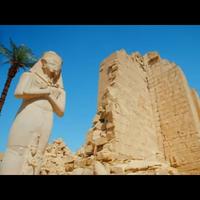
NARRATOR: In Luxor's Karnak temple,
Colleen is hunting for clues that
explain Ramses' rise to power.
Ramses was a mighty warrior and general
who fought in many campaigns and expanded Egypt's
borders to the east and south.
But the temple walls suggest that's not the only reason
he became so powerful.
This is a remarkable document.
It's the actual text to a peace treaty.
NARRATOR: This 3,300-year-old wall holds 38 lines
of hieroglyphic inscriptions that lay out in detail
the world's first peace treaty, an unprecedented promise
of alliance between Ramses and his mortal enemies,
the Hittites.
It's amazing to see the text of an actual treaty.
This is the document that two great powers signed--
Egypt on one hand, and the Hittites on the other.
NARRATOR: This proves that Ramses didn't just fight wars,
he ended them, too.
Peace allowed Egypt to prosper and for Ramses to get
richer and more powerful.
This tells us how neither the Hittites nor the Egyptians
could attack one another.
And if they were attacked by a third party,
they would come to their ally's aid.
NARRATOR: The Egyptian-Hittite peace treaty,
or the Treaty of Kadesh, meant Ramses
could finally end his 20-year war with the Hittites.
Wars are quite costly.
So by having peace, Ramses is guaranteeing stability
and prosperity in his reign.
NARRATOR: This allowed Ramses to focus on gathering wealth
and building temples and monuments that celebrated
his mighty achievements.
COLLEEN DARNELL: A lot of pharaohs, including Ramses,
used propaganda.
But in the case of the peace treaty,
these are real terms with a real foreign king.
So this shows Ramses wanted everyone to know
that he was a great diplomat.
NARRATOR: Ramses demonstrated himself
to be the ultimate king.
And his choice of Karnak to proclaim as such
was no accident.
COLLEEN DARNELL: I think Ramses is showing the peace treaty
here at Karnak precisely to contrast
with his military exploits.
He does what he needs to do to preserve order
on behalf of Egypt's gods.
NARRATOR: Ramses was a warrior king and a diplomat
who ruled over an extraordinary period of peace and prosperity.
[music playing]
