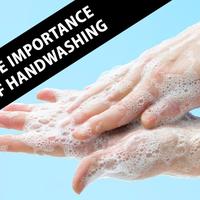
The importance of handwashing: 6 Minute English - YouTube
Hello. This is 6 Minute English from BBC Learning
English. I'm Neil.
And I'm Georgina. I've got a puzzle for
you, Neil. Ready?
Sure.
OK. It's a riddle. I'm as light as a feather
but no one can hold me for very long.
What am I?
Hmmm… as light as a feather but no one can
hold you… No idea. What are you?
Your breath.
Ah, yes, I see. OK, I've got one for you
- I'm so big I'm everywhere but so small
you can't see me. What am I?
You're everywhere but I can't see you?
Hmmm, tricky… I give up.
The answer is – germs! With the outbreak
of coronavirus, people around the world have
rediscovered the importance of fighting germs
to stop the spread of disease.
In this programme we'll be the discussing
the importance of handwashing in the prevention
of germs and viruses. And we'll start off
by meeting the first person to realise that
keeping hands clean can really help prevent
diseases being passed on.
Ah… do you mean the19th century Hungarian
doctor, Ignaz Semmelweiss? He was
known as the ‘saviour of mothers' for
keeping maternity wards
germ-free and he had a very interesting
life. But do you know what happened to him
in the end? That's my quiz question.
Was it: A. He won the Nobel prize,
B. He ended up in hospital for mentally ill
people, or
C. He started the first company to produce
hand soap.
Dr Semmelweiss sounds like a scientific hero
so I'll say, a) he won the Nobel prize.
OK. We'll find out later if you were right.
What's for sure is that Ignaz Semmelweiss
was a hero to Val Curtis, a director at the
London School of Hygiene and Tropical Medicine.
Here she is talking to BBC Radio 4's
Science Stories:
Semmelweiss is kind of my patron saint.
Handwashing has been my life for the last
thirty years working on trying to improve hygiene,
mostly in developing countries and he
was really the first to identify the importance
of keeping hands clean in the prevention
of the transmission of infection. And
since the beginning of my career
working in public health I've been
trying to understand how diseases get spread
and what the best way of preventing it is,
and handwashing jumped out as being the most
important means of preventing infections,
particularly in developing countries.
Val's work is all about improving hygiene
- practices for maintaining health and preventing
disease, especially through cleanliness.
And she was clearly influenced by the work
of Dr Semmelweiss because she calls him her
'patron saint' - a kind of guide and protector
believed to give special help or inspiration.
But Dr Semmelweiss is also a good example
of science communication. Getting the message
out so people understand the importance of
hygiene is difficult. And ‘wash your hands'
jumped out - or made a strong impact - as
a simple message to communicate.
Here's Val again:
It wasn't until we wrote a paper in 2003
that showed the evidence that handwashing
could save a million lives that actually people
started to take it seriously and handwashing
became a big important issue internationally.
So for me the lesson from Semmelweiss is:
don't scream and shout and accuse people
of doing things wrongly but patiently get
the data out there and tell your story in
a positive way.
The idea that handwashing is an essential
part of hygiene is supported by scientific
evidence - the facts and information used
to show that a belief is true - in this case,
Val's belief that handwashing could help
save a million lives.
So, handwashing has become an important
global issue - or topic of discussion - especially
in places without access to clean sanitation
and toilets.
Val also mentions that if you want people
to listen to your message, it's better to
present the evidence in a positive, scientific
way instead of screaming and shouting - speaking
in a forceful or even angry way to convince
people you're right.
Right, people don't listen if you scream
and shout at them - they just think you're
strange.
Which brings me back to today's quiz question.
Remember, I asked you what happened to
Dr Semmelweiss in the end?
…and I said a) he won the Nobel prize.
Well, I'm afraid the answer was b) he
ended up in hospital for mentally ill people.
Today we've been talking about handwashing,
one of the single best ways to improve personal
hygiene - the prevention of disease by keeping
clean. Recently, handwashing has become
a top global issue - a subject or topic people
are thinking and talking about.
Scientific evidence - the facts and information
used to prove ideas true or valid - shows
that handwashing jumped out - or was easily
noticed - as one of the most important methods
to stop the spread of infection.
The work of 19th century scientist
Ignaz Semmelweiss was so inspiring that
even today, some doctors consider him
the patron saint of hygiene - an
expression referring to a protecting or guiding
saint believed to give special help or inspiration.
But communicating the message of
‘wash your hands' to people around the
world is hard, especially if you just scream
and shout - or try to convince someone by
talking to them in a forceful or
argumentative way.
OK, Neil, the scientific evidence has convinced
me - I promise to make sure I regularly wash
my hands.
That's all from us today but join us again
soon for more topical discussion and vocabulary
here at BBC Learning English's 6 Minute English.
Stay safe and remember to wash your hands!
Bye for now.
Bye!
