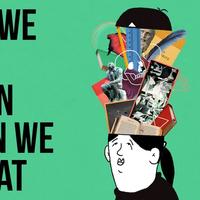
Why We Only Learn When We Repeat
One of the most obvious but striking things about a modern education is that you go through
it only once. You show up every day for a number of years, get filled up with knowledge
and then, once you're twenty-one or so, you stop – and begin the rest of your life.
Before modern education took off, the mightiest educational systems in the world were religions.
It was religions that taught us about ethics, purpose and the meaning of life. And one of
the interesting aspects of their pedagogy was that they were obsessed with repetition.
For them, it was absurd to imagine ever learning anything if you went through it only once.
The whole basis of religious education rested upon repetition. Five times a day, as a Muslim
one was to rehearse the central tenets of Islam; seven times a day as a Christian Benedictine
monk, one was to revisit the lessons of scripture. As an orthodox Jew, 300 days a year were marked
out for commemoration and ritual repetition of ideas in the Torah, while as a Zen priest,
one would be inducted to sit cross-legged and meditate up to twelve times between daybreak
and nightfall. Religions had what one might term a sieve view of the mind: that anything
one pours in will quickly be lost in our perforated memories. By contrast, modern education adheres
to an implicitly bucket-like theory of the mind: one pours in the contents and, bar accidents,
they'll stay there pretty much across a life-time. That's why we'll think nothing
of earnestly declaring a book a favourite – and deigning to read it only once. Far
less naively and far more generously, religions prefer to imagine that anything you tell someone
in the morning will, by two in the afternoon, be well on the way to evaporation and will
be pretty much gone by nightfall. Repetition is the only way of ensuring that something
will stick. Once you've finished reading a favourite holy text, the story of Moses
for example, you head straight back to the beginning and start again, with the bull rushes
and the baby infant. We pay a heavy price for our lack of interest in rehearsing lessons
and ideas. There are all kinds of things we badly need to keep in our minds: the better
parts of our nature that speak to us of being patient, of remaining gentle, of striving
for forgiveness, of pausing to appreciate, of straining to understand what at first seems
unbearably foreign… We've been taught these things once, of course. But it was a
while ago now. Possibly when we were seven. And so, naturally, they're not at the front
of our minds as we career through our lives, smashing into things and people, raging and
blaming, slandering and hating. There's equal, and possibly far greater wisdom to
be found in the secular as opposed to the religious sphere, but those who dispense it
are far too hopeful about the functioning of our minds. They choose to tell us just
once, possibly in quite a low voice, about all the things that matter; maybe in a beautiful
but very dense poem or in quite a slow moving novel we once read fitfully over a summer
two decades ago. And then they expect us to keep it all in mind our whole lives long – and
we're surprised that the march of human craziness goes on unabated. We should not
abandon our most precious insights to the lax guardians of our memories. We need to
steal the idea of repetition from religions – and create our own catechisms, our own
midnight prayers, our own cycles of rehearsed knowledge. We need to make the most important
ideas vivid in our minds on a constant basis. We should never be done with school. We should
daily be re-immersed in the great truths: that we will die, that we must understand
ourselves, that we must love, that others are sad rather than mean… Many of us are
done with religion; but we shouldn't be done with what religions knew so well of our
minds: that nothing stays active in them, unless we rehearse and repeat with every new
dawn. We need to keep coming back – Not least: here.
At The School Of Life we believe in developing emotional intelligence.
To that end we have also created a whole range of products to support that growth.
Find out more at the link on the screen now.
