Nick: Today I'm talking to my friend Paul about, umm, a personal journey, uhh, that he shared with people in a book. Umm, and it's a kind of a ‘rags to riches' story, if you could call it that. Do you think that's, uhh, fair enough Paul?
Paul: Yeah, it's definitely transformation, yeah. Umm, the money aspect doesn't really come into it, so technically, I suppose, it's not really rags to riches, but definitely, umm, moving from one place, which wasn't particularly pleasant or fruitful to, uhh, a far better one.
Nick: And so this was quite a quick transformation, I guess in the end.
Paul: Uhh, well actually I'd say the opposite.
Nick: Oh is that right?
Paul: Because in the beginning when I first found out that I was to lose my job, umm, I didn't really have any skills other than the one that I was employed to use. Of course I was losing that job and didn't particularly like that job, (despite) great people. Umm, so I realised that I needed to do a few things and one of those things was to get myself some good skills and become fairly decent at them.
Nick: OK.
So in the … in your book you talk about being on Brighton Beach in England, this sort of famous beach in England, and was that the moment when you were just standing there thinking, ‘Right, I've got to … I've really got to do something.' Paul: It was, literally that, yeah. I thought, ‘I've got to wake up here and stop bumbling around.' I was having fun and life was good, but I wanted to … I knew I could achieve something if I put my mind to it. I never really, uhh, did that though, so I didn't know what I could achieve specifically, or what skills I needed or indeed wanted.
Nick: And so did you just … at that point, did you just have this idea that you wanted to make changes, but did you know the changes you wanted to make or did you just have the will?
Paul: I had the will, yeah, exactly right. I knew that I had to, uhh, make some changes, didn't really know which changes specifically. So I began by asking myself some big questions - VIQs, I call them in the book: very important questions. Like, ‘What did I want more of? Less of? What skills did I want? What was I good at that I thought I could develop?' And so on from there.
Nick: OK, and so how did you then put those into action?
Paul: Umm, that's a good question, what did I do? I just … uhh, I knew the Internet was the way forward for me and I didn't really understand how, but I'd always … one of the answers I came up with was, umm, I wanted to develop my writing skills because I'd always enjoyed writing and always believed that I was OK at it. Umm, I'm being, I suppose, slightly modest there. Everyone's got their skill and that was mine, and I wanted to, uhh, to develop that. So I wanted to look at the various, uhh, types of writing that people get paid for, umm, everything from novelists to the thing I eventually, sort of, stumbled upon, which was copy writing.
Nick: OK.
Paul: So yeah, looked into that and went from there.
Nick: And you obviously, within your family background, there's a history of journalism and things like that, right?
Paul: There is, yeah, yeah. My Dad was sports writer … sorry, sports editor at Reuters for 18 years, and, umm, yeah, he taught me one or two bits about subbing, sub-editing. I had a letter when I was in my mid-teens. I can't remember who it was to, or indeed what it said. But I showed him this side of writing and he said to me, ‘You can lose that comma, you can change that, that whole paragraph you've already said in the earlier paragraph,' and I looked at it, and it was a third of the length that it originally had been. And two things struck me. One was, ‘That's my letter, you know, what have you done with my letter?' And the second thing that struck me was, you know, ‘You're good, and I need to, uhh, heed this lesson.' Nick: OK, and then you identified copywriting as something you wanted to do, and then what did you do from there?
Paul: So from there, I, umm, continued to learn as much as I could about the commercial aspects of the Internet and how businesses use writing and copy and various, uhh, techniques within copy to get what they want, you know, to get people to do certain things. Umm, things like lots of, umm, techniques and methods that have come from, umm, direct mail and direct copywriting, umm, from years and years ago, decades ago. Umm, such as the call to action, you know, just asking people or suggesting, you know, or telling people what you want them to do. So it's this idea of having a dead end at the end of a webpage. Do you let people just read what you put and they don't know what to do so they click back or go anywhere else, or you get them to the end of the page and you say, ‘Sign up here to read more, uhh, buy this, click here to download it.' What is it that you want people to do, and then you have to put that there.
Nick: OK.
And so then what did you do from that point on? Did you start your own websites?
Paul: Yeah I remember I signed up to receive all the free ebooks I could, and podcasts, and webinars, and, uhh, email courses that I could and one of those emails said, ‘What do you know? ', as in, ‘What can you teach others?' And that's when I really thought, ‘Well English I suppose is the thing that, uhh, I know that other people could benefit from,' so yeah, that became the beginning of my first site which was called, and is called, the englishlanguageexpert.com, and I put together a few ebooks for it, and an email-based, umm, course, with just some simple, easy lessons on there, and it's relatively successful, you know. It gets visits from hundreds of countries around the world and, uhh, fairly decent numbers, uhh, not compared to some sites, but more than others. But I enjoy it, and I enjoy the fact that, you know, what I've put out there helps people.
Nick: No, that's great. And so was that what led you then back towards more into the journalism field again, because now you're doing a lot of sub-editing work?
Paul: Yeah, so when I lost that job, uhh, in 2006 - I knew about it in 2005, and it happened, uhh, almost a year later - and then I fell back into TV because, you know, lots of reasons, which I won't go into here and now, but I ended up back in another full-time job in television and I was determined to make that one, umm, shorter, uhh, a shorter stay and when I left, I would be leaving to go and do the writing, the writing side of it.
So fast-forward a few years and I took voluntary redundancy in 2013 and again I asked myself, ‘Who do I want to write for? What kind of work do I want to do?' Umm, and the football world cup - I'm a big football fan - and the world cup was the following year in Brazil (2014), and I thought, ‘Well that's too soon, they'll have covered that, they'll have it sorted.' Umm, but the (2016) Olympics at that point, obviously, three years away, uhh, I quite fancied the idea of going to Rio. So this is the one and only time I kind of used my Dad's, umm, legacy and name and, umm, the clout that he had which I hadn't realised that he had when he was alive, that all, umm, came to me really after he'd died, but, umm … so I found the name of someone to contact, umm, that person was very helpful, and, umm, then I got a call from that same person a day or two later suggesting I go to Nanjing and the Youth Olympics the following summer, which I did. I really enjoyed it, great people, and, umm, from that I got hired to work at the European Games in Baku, summer 2015, and here I am with you in Rio.
Nick: OK, that's great. So you had, you know, you targeted this event three years ago and here you are.
Paul: Indeed.
Nick: And so the … Baku is an interesting one because that forms the title, or is it the subtitle, of your book?
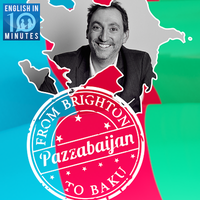
Paul: Yeah, the kind of sub-title, and I'll explain the title. So the book's main title is Pazzabaijan. Umm, so called because I've been known as Pazza by friends at home since I was about 17. I'm 44 now. So when I returned from Azerbaijan, the title was there for me, waiting, and I think I had the title some months before I even went there. Umm, but then it dawned on me that this is the end of a story and the beginning is clear, the middle's clear, and it kind of, I don't want to say it wrote itself ‘cause it was hard work writing it, but it was all in my mind and I'd written some bits previously for various blog posts, so I just had to piece things together, edit it, get the cover designed, format it and do the other bits.
Nick: OK, so it's Pazzabaijan, and then…
Paul: Pazzabaijan, uhh, yeah: from Brighton to, uhh, to Baku.
Nick: That's great, so you can really see that whole journey. And you were telling me a couple of days ago that the reason … one of the reasons you wanted to write it was as a kind of an instruction for your daughters.
Paul: Yeah … because my Dad was, uhh, very successful in his work and he travelled a lot and my parents divorced when I was quite young, so I didn't, umm … and as I said, you know, I didn't know the full extent of his, umm, of his career and the influence and impact he had, and I wanted to do the opposite for my girls. So yeah, I wanted to, and continued to want, to share the knowledge I have and, uhh, and who I am as much as I can with them.
Nick: OK, that's great, so hopefully the journey continues for you and for them.
Paul: Thanks very much.
Nick: Alright, thanks Paul.
Paul: Thanks Nick.
