An Introduction to Aristotle's Politics - A Macat Politics Analysis.
Welcome to the Macat Multimedia Series.
A Macat Analysis of Aristotle's Politics. What role should the political community and politics play in enabling society to live virtuously?
The Greek philosopher Aristotle wrote the work we call Politics in around 350BC to tackle the question.
It was part of a larger treatise that together, dealt with the ‘philosophy of human affairs'. Aristotle said that ‘man is – by nature – a political animal'.
He thought that politics is an organism which requires all of its principal parts – including the family structure – to survive. Aristotle believed that the dominant Greek political model at the time – the City State – was created organically.
Rather than it being constructed artificially, he thought, it evolved naturally. Aristotle saw the city as being a natural community; one that functioned as a ‘partnership' between citizens and rulers – a community that helped its citizens to pursue ‘noble actions'. To demonstrate how Aristotle thought that politics worked in ancient Greece, let's go underwater…
Fish in the ocean.
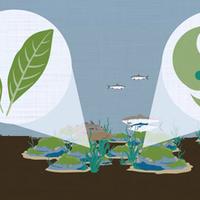
All the fish swim around separately. They are individuals, not part of any larger group. As individual fish, each must look out for its own wellbeing – it must protect itself against predators and ensure a constant access to food. With so much effort being put into basic survival, the fish have less opportunity to pursue other needs such as reproducing.
One by one, the fish discover a plentiful supply of sea vegetation that can nourish and sustain them. Because this patch of vegetation contains the food and nutrients the fish need to survive, they each make an independent decision to congregate around the area.
Soon, the fish start to come into contact with each other. If we apply Aristotle's theory under these conditions, the fish would have a natural tendency to cluster and form shoals. After all, there's safety in numbers – grouping together means there's less chance of an individual being eaten by a predator.
There's also an increased chance of procreation – the more fish there are, the more potential mates there are for the fish to pass on their genes. For the fish, voluntarily forming a shoal increases their chances of survival and improves their quality of life – just as Aristotle believed ancient Greeks naturally formed ‘society' to reap the benefits of communal living.
It is thought that only around a third of Aristotle's ideas and work has survived – but what does continues to be widely studied in academia to this day.
A more detailed examination can be found in the Macat Analysis.
