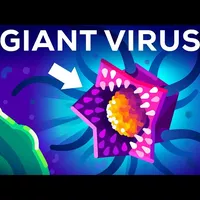
This Virus Shouldn't Exist (But it Does)
hidden in the microverse all around you there's a merciless war being fought by the true rulers
of this planet microorganisms amoeba protists bacteria archaea and fungi compete for resources
and space and then there are the strange horrors that are viruses hunting everyone else not even
alive they are the tiniest most abundant and deadliest beings on earth killing trillions every
day not interested in resources only in living things to take over also we thought turns out
there are giant viruses that blur the line between life and death and other viruses hunting them
considerably smaller than your cells or even bacteria viruses are nothing but a hull a tiny
bit of genetic material and a few proteins no metabolism no way to propel themselves no will
or ambition they float around aimlessly and hope to stumble upon a victim to infect and take over
viruses are so simple that we're not sure if they should count as living things or not
some scientists argue viruses are alive others think that the cells they infect are the actual
living viruses hybrid organisms called viral cells and the viral particles are more like seeds
or spores and many others think viruses are just dead material the origin of viruses is a mystery
because how can something that needs victims to make more of itself emerge in the first
place there are many ideas viruses may have been essential steps in the emergence of life or maybe
they started out as escaped dna from cells that became really good at making copies of themselves
maybe they are the descendants of truly lazy parasites that let others do all the work for
them the current thinking is that viruses probably emerged multiple times from different origins
but we simply don't know for sure yet whatever the truth is viruses are the most successful beings on
this planet there's an estimated 10 000 billion billion billion viruses on earth if we put them
all next to each other they would stretch for 100 million light years 500 milky way galaxies wide
very recently viruses became even weirder when scientists found a completely new type
giant viruses nicknamed gyrus not only did it break all sorts of records but questioned many
assumptions we had about their nature gyruses even come with their own parasites virophages
viruses that hunt other viruses which seemingly makes no sense at all and since we identified the
first one in 2003 it seems like these giants are everywhere we look in the oceans in water
towers in the guts of pigs and the mouths of humans and they're even weirder than we thought
gyruses look funny like hairy geometric forms or mini pickles much larger than
all viruses we knew before which explains how they could hide in plain sight for centuries
scientists saw them under their microscopes and just thought they had to be bacteria
it's like suddenly discovering there are elephant-sized ducks everywhere
most gyruses we've found so far hunt amoebi and other single-celled beings when they find a victim
they connect with it and use its natural processes to enter the cell like all viruses their goal is
to misappropriate the victim's infrastructure and procreate imagine a mouse crawling into your mouth
and using your guts and bones and fat tissue to build a mouse factory
the gyrus unloads its attack proteins and genetic material and rearranges the cell from the inside
its structural elements protein production machinery and large amounts of mitochondria
for energy are changed to become an actual factory called viroplasm some gyruses even
construct a membrane to shield them from the cell's antiviral defenses once finished the
viroplasm begins to assemble new gyruses using the victim up from the inside until it's filled up
finally the invader usually orders the cell to self-destruct and releases new gyruses to look
for new prey but what makes gyruses special is not their modus operandi or their size even
it's that they are much more complex than thought possible for a virus your cells have around 20
000 genes a typical bacterium has a few thousand genes the coronavirus has around 15 hiv or the flu
around 10. the number of genes alone is certainly not everything the tomato for example has 35
000 genes but generally we think of life as a complex system so below a certain complexity level
something may be closer to dead material rather than a living organism but gyruses
can have hundreds or even thousands of genes blurring the line between living and dead things
and it's not just the numbers that are special but also what these genes do we used to think of
viral genes as the simplest of instructions just enough to overcome the defense of their victims
and make new viruses but many gyrus genes are completely unique basically mystery genes
even more confusing a huge selection of their genes that are actually hallmarks of living
things genes that regulate nutrient intake energy production light harvesting replication or are
just necessary to keep cells alive some recent studies have even suggested that some gyruses
with very complex genomes may be able to maintain a basic level of metabolism on their own which if
true will shake up what we thought of viruses even more we still don't know anything for sure
but one idea about gyrus genes is that they might fundamentally alter the physiology and evolution
of their victims by integrating their own genomes and merging with them into chimeric organisms
or the other way around take some host genes with them and be changed themselves for billions of
years gyruses may have been existing alongside and infecting cells exerting an unseen influence
on the development of life not just as a parasite but jerking evolution in different directions by
mixing genes around in all directions which brings us to another unique thing about them virophages
the viruses hunting gyruses the concept itself is a bit mind-boggling how can a thing that might be
dead hunt another thing that might be dead too let's look at one of them the viruphage sputnik
is hunting a gyrus called mama virus that itself is hunting amoebi sputnik is a tiny
minimalistic virus that doesn't even have the genes and tools to replicate itself
what it does have is the ability to hijack the viroplasm factories of mama viruses so virophages
need their victim the gyrus to infect their victim an amoeba first and then they can parasitize it
a memovirus viroplasm infected by sputnik can only produce very few new gyruses and among these many
are deformed and broken unable to infect further cells instead it makes loads of new sputnik
viruphages other virophages are even more subtle when they infect a viroplasm they just integrate
their genetic code into the newly produced gyruses like sleeper agents the next time one of these
infiltrated gyruses successfully infects a cell it produces mostly viruphages instead of gyruses
gyruses are not completely defenseless though a few years ago the world was in
awe when scientists discovered crispr a bacterial defense system against viruses it turns out some
gyruses have a system that might be similar a sort of gyrus immune system against virophages
in turn virophages can also be used as an antigyrus defense mechanism by living cells
some protests have been found that integrated the genetic code of virophages into their genome and
kept it when the protists were infected by gyruses they used the code to create virophages themselves
to take over the gyrus factories in the end the protists would still be killed by the gyrus
infection but instead of releasing gyruses to kill its buddies it released virophages to hunt them
the amazing thing about everything we've told you in this video is that we're still very much at the
beginning it's not even been 20 years since the discovery of gyruses and virophages there is so
much going on in the microverse life is not an isolated event but a ping pong game of trillions
of organisms and viruses so when you feel down and like there's not that much new to discover think
of gyruses and all the other elephant-sized ducks all around us invisible until we look more closely
but how do you learn to look at the world like a scientist
the best way is by trying things out for yourself our friends from brilliant are the perfect coaches
to turn your curiosity into practical skills brilliant is a problem-solving website and app
that makes science accessible with a hands-on approach more than 60 interactive courses give
you the tools to crack problems in maths computer science and engineering in a way that feels more
like playing a game than doing homework lessons will surprise you with storytelling code writing
tasks and interactive challenges basically using whatever keeps you interested and entertained
the focus is on you having fun learning something will happen almost without you noticing it
and tiny step by tiny step you'll build up your long-term understanding of science and
get closer to your stem goals to start looking at the world of science for a different perspective
go to brilliant.org nutshell and sign up for free and there's an extra perk for kurzgesagt viewers
the first 200 people to use the link get 20 percent off their annual membership
which unlocks all of brilliant courses in maths science and computer science at quartz gazant
we love to get to the bottom of things brilliant can help you go on that deep dive
you
