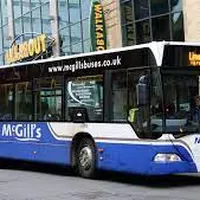
Gettting the Bus
Watch the video on YouTube and then read the story.
This is Gina. She is from Syria. She lives in Kilwinning. She is going to get the bus to Irvine.
Getting the bus is an eco-way to travel. Eco is something good for the planet and nature. Gina doesn't drive so she can take the bus and she doesn't need to walk, which takes a long time, or get a taxi, which is expensive, or wait for someone to give her a lift.
Bus stops are usually near busy roads and have a sign, a timetable and sometimes a shelter. There will maybe even be a bench to sit on.
Gina can search on Google Maps to see where the nearest bus stop is.
She can also use Google Maps to look for the bus times.
It's a good idea to also look at the timetable at the bus stop and check that the times on Google are correct.
When Gina gets on the bus, she will need to pay the fare. She can check fares on the bus company website but it might be easier to ask the driver. It's a good idea to ask if there is a return fare or an all-day ticket. Sometimes the all-day ticket is cheaper than the return! Gina says, I'm going to The Carrick in Irvine. Which is cheaper, the return ticket or the all-day?'
In the past you needed to use cash on the bus but now it is normal to pay by cash or card. For some bus companies, they also have an app Gina can download. Then she can buy books of tickets and save money.
Gina goes to google play on her phone. She downloads and sets up the app.
She buys 5 tickets for the price of 4.
As Gina is travelling by bus to a new place for the first time, it's helpful to put the journey into Google Maps. Then she can see where she is as she travels, and she knows when to get off. If Gina doesn't use Google Maps, she can ask the driver: ‘Can you please tell me when my stop is?'. She should sit near the front so she can hear when it's time!
When it's time to get off, Gina looks for a button on the handrails that stays ‘stop'. She presses this so the driver remembers to stop the bus!
