The DOCTOR Acronym in Spanish: When to Use Ser (and PLACE for Estar)
 Tyler Tolman
14 Jul 2026
Tyler Tolman
14 Jul 2026
You have studied Spanish for months. You know the vocabulary. And then a sentence appears and you freeze: ser or estar? Both mean “to be.” Both are everywhere. And the rules feel impossible to remember. They are not. Two acronyms, DOCTOR and PLACE, are all you need.
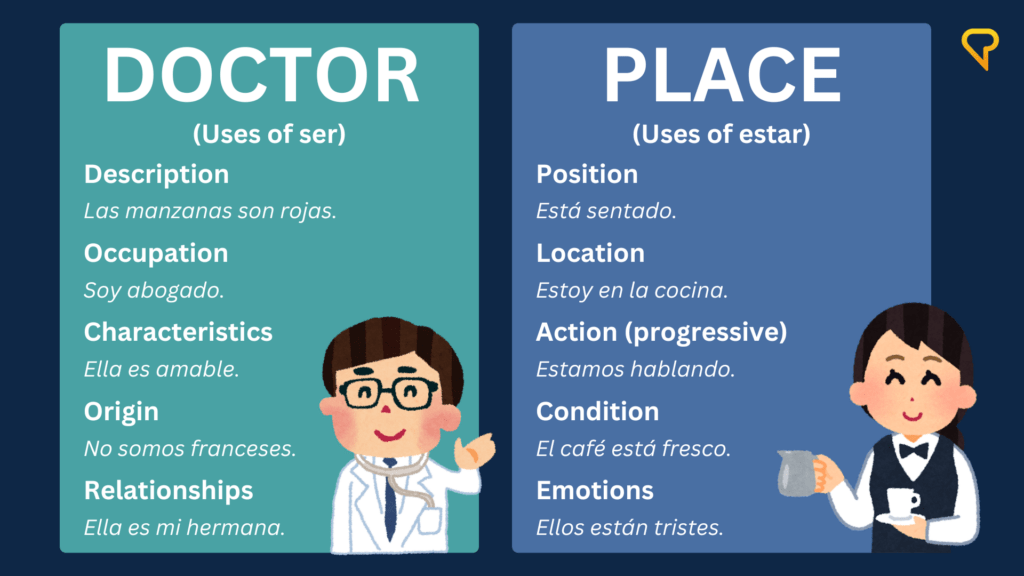
Here is a breakdown of the acronyms with examples for each use.
What Does DOCTOR Stand For in Spanish?
DOCTOR is a mnemonic for the six main uses of the Spanish verb ser. Each letter represents a category:
| Letter | Meaning | Example |
|---|---|---|
| D | Description | Ella es alta. — She is tall. |
| O | Occupation | Soy estudiante. — I am a student. |
| C | Characteristics | El agua es fría. — Water is cold. |
| T | Time / Telling time | Son las tres. — It is three o’clock. |
| O | Origin | Somos de México. — We are from Mexico. |
| R | Relationships | Es mi hermano. — He is my brother. |
Breaking Down Each Letter
D — Description
Use ser to describe the inherent qualities of a person or thing. This includes physical appearance, personality, and size.
María es inteligente y trabajadora.
María is intelligent and hardworking.
El edificio es muy alto.
The building is very tall.
Description with ser covers qualities that define what something or someone is like in general, not how they happen to be at a particular moment. Try not to overthink this. If the quality isn’t imminently about to change, use ser.
O — Occupation
Use ser to state someone’s job, profession, or role.
Mi padre es médico.
My father is a doctor.
Somos profesores.
We are teachers.
Note that in Spanish you do not need an article before the profession when using ser. You say es médico, not es un médico, unless you add an adjective. In that case, you’d say “Mi padre es un médico terrible.“
C — Characteristics
Use ser for inherent or defining characteristics of things, including material, composition, and purpose.
La mesa es de madera.
The table is made of wood.
Esta sala es para reuniones.
This room is for meetings.
This overlaps with description, but it specifically addresses how to say what something is made of or what it is used for.
T — Time / Telling Time
Use ser to express the time, day, or date.
¿Qué hora es? Son las cinco de la tarde.
What time is it? It is five in the afternoon.
Hoy es martes.
Today is Tuesday.
La fiesta es el viernes.
The party is on Friday.
This is one of the clearest rules: any time you state what time it is or what day it is, use ser.
O — Origin
Use ser to talk about where a person or thing comes from.
Soy de Canadá.
I am from Canada.
Este vino es de España.
This wine is from Spain.
Origin also covers nationality. El vino es español. Yo soy canadiense.
R — Relationships
Use ser to describe the relationship between people.
Es mi novia.
She is my girlfriend.
Son mis abuelos.
They are my grandparents.
Eres mi mejor amigo.
You are my best friend.
This includes family relationships, friendships, and any connection between people.
DOCTOR vs PLACE: The Full Picture
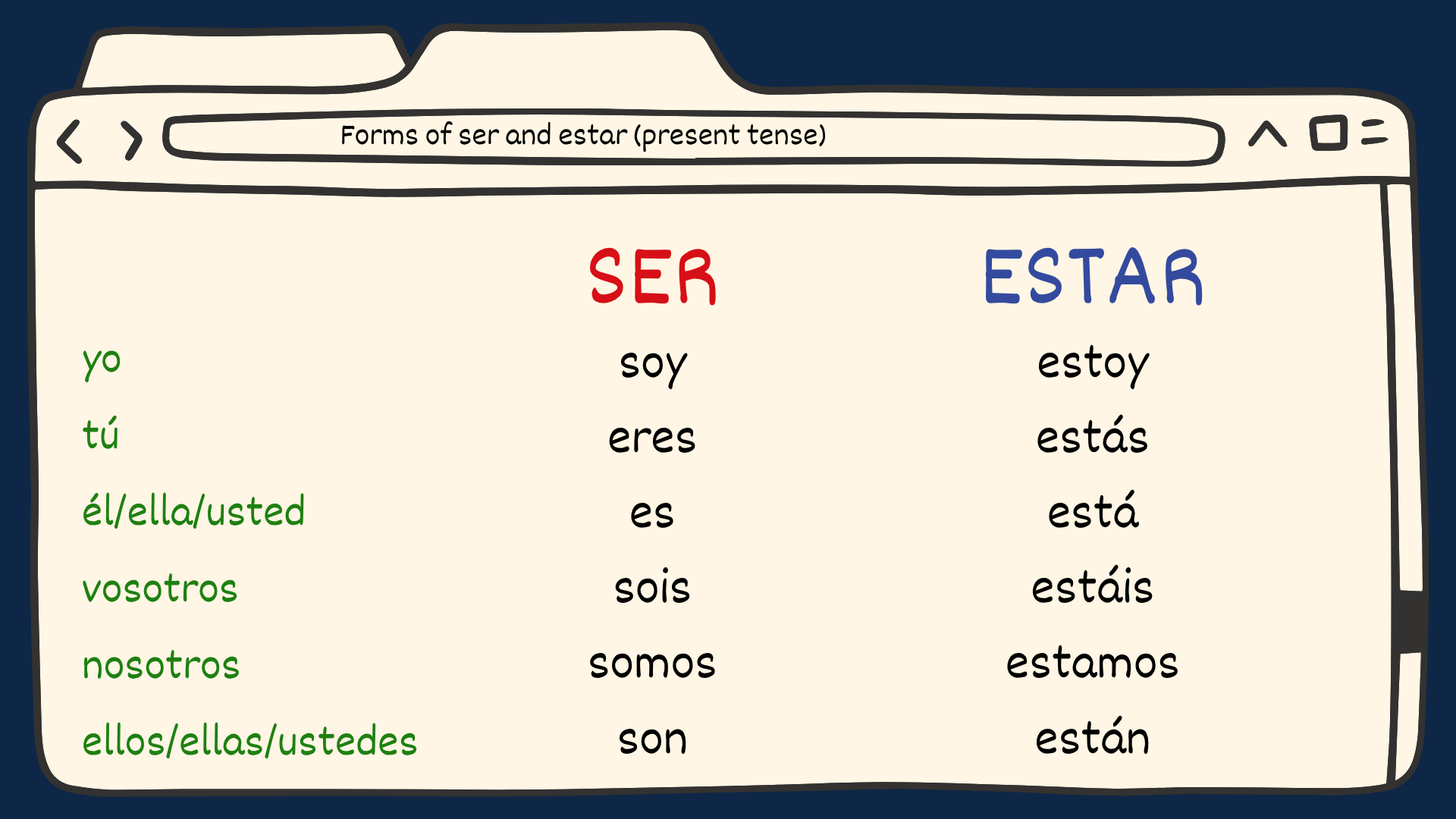
DOCTOR covers ser. There is a matching acronym for estar: PLACE.
| Letter | Meaning | Example |
|---|---|---|
| P | Position | Está sentado. — He is sitting. |
| L | Location | Estamos en Madrid. — We are in Madrid. |
| A | Action (progressive) | Está comiendo. — He is eating. |
| C | Condition | Estoy cansada. — I am tired. |
| E | Emotion | Están felices. — They are happy. |
The key distinction most teachers summarize as “ser is permanent, estar is temporary” is a useful starting point but not always accurate. Here’s a clearer, more flexible take.
Ser describes what something is, estar describes how something is or where it is.
For a more in-depth breakdown with more examples, see the full ser vs estar guide on the LingQ blog.
Quick Reference: When to Use Ser
| Use | Question to ask | Example |
|---|---|---|
| Description | What is this person/thing like? | Es simpático. |
| Occupation | What does this person do? | Es enfermera. |
| Characteristics | What is this made of / used for? | Es de plástico. |
| Time | What time / day / date is it? | Son las doce. |
| Origin | Where is this person/thing from? | Es de Argentina. |
| Relationships | How are these people connected? | Es mi primo. |
Quick Reference: When to Use Estar
| Letter | Meaning | Example |
|---|---|---|
| Position | How is the person/thing situated? | Está debajo de la mesa. — It’s under the table. |
| Location | Where is the person/thing? | Está en el baño. — It’s in the bathroom. |
| Action | What is the object/thing doing right now? | Estás llorando. — You are crying. |
| Condition | What is the imminent state? | La sopa está caliente. — The soup is hot. |
| Emotion | How does the person feel? | Estamos satisfechos. — We are satisfied. |
Common Mistakes with Ser and Estar
Even with DOCTOR and PLACE in mind, a few patterns trip up learners consistently.
Using ser for emotions
Emotions belong to PLACE (the E in PLACE stands for Emotion), so they always take estar. A common mistake is saying es feliz when you mean someone is happy right now. The correct form is está feliz. Note that ser feliz does exist in Spanish but means something closer to being a happy person by nature, which is a different claim.
Using estar for events
Location takes estar in almost every case, but events are the exception. The party, the meeting, the concert: these all use ser to express where they take place. La reunión es en la sala de conferencias (the meeting is in the conference room). Learners who have memorised “location equals estar” often get caught out by this.
Using estar for occupation
Occupation is the O in DOCTOR, so it always takes ser. Estoy estudiante is a very common mistake among beginners. The correct form is soy estudiante. The same applies to all professions: es profesora, es ingeniero, soy médico.
Confusing estar muerto with the permanent rule
If ser is for permanent things, why does death use estar? Está muerto (he is dead) uses estar because it describes a condition of the body, which falls under the C in PLACE. This is exactly why the permanent/temporary rule breaks down. The acronyms are more reliable than trying to judge how long something lasts.
This is why memorising rules in isolation rarely sticks. As Steve Kaufmann explains in this video, grammar drills do not make you fluent. Reading and listening to real Spanish, where you encounter ser and estar in natural context hundreds of times, is what actually builds the intuition.
How to Actually Remember This
Memory aids like DOCTOR and PLACE work best when you encounter the words in real context. The acronyms can help you get situated, but you’ll ultimately want to develop your own sense of intuition for when to use which verb.
Every time you read or listen to Spanish and notice es or son, try to identify which DOCTOR category it falls into. The same goes for uses of estar. After enough comprehensible input, you’ll grasp the patterns and stop relying on the acronyms.
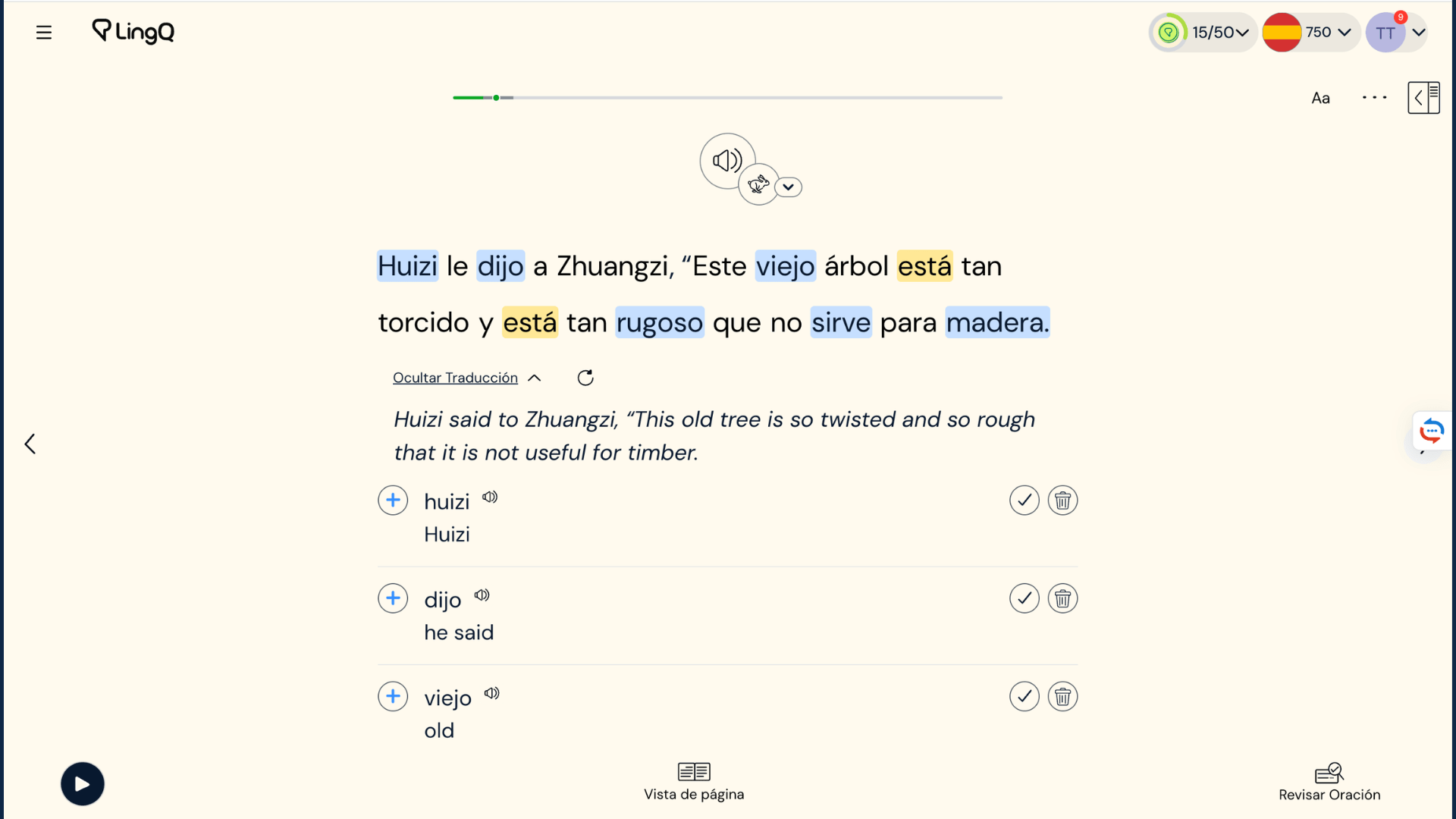
LingQ is built exactly for this kind of immerseive, contextual learning. Import any Spanish content, from podcasts and news articles to YouTube videos, and read along with instant word lookups. Every time you encounter ser or estar in a real Spanish sentence, the context helps the rule stick far better than a grammar drill would.

As long as you enjoy the process and remain curious/observant, you’ll internalize the uses of ser and estar soon enough. Start reading real Spanish on LingQ.
Once you have DOCTOR and PLACE locked in, you are ready for more expressive Spanish. Spanish pick-up lines are a surprisingly good next step — they are full of ser and estar used naturally in context, and the sentences are short enough to analyse one at a time.
FAQs
DOCTOR is a mnemonic for the six main uses of the Spanish verb ser: Description, Occupation, Characteristics, Time, Origin, and Relationships. These are the six situations where ser is used instead of estar. For example, es médico (he is a doctor) uses ser because it describes occupation, and es de México (she is from Mexico) uses ser because it describes origin.
PLACE is a mnemonic for the five main uses of the Spanish verb estar: Position, Location, Action (progressive tenses), Condition, and Emotion. For example, está sentado (he is sitting) uses estar for position, and estoy cansada (I am tired) uses estar for condition.
This is the most common explanation for ser vs estar, but it is not fully accurate and it causes confusion. Occupation can change (es médico uses ser), emotions are temporary but use estar (estoy feliz), and death is permanent but uses estar (está muerto). A more reliable guide is the DOCTOR and PLACE acronyms, which tell you exactly which verb to use based on the category of meaning rather than how long something lasts.
Location almost always uses estar: estamos en Madrid (we are in Madrid). The exception is events. When stating where an event takes place, use ser: la fiesta es en mi casa (the party is at my house). If you are describing where a person or object is at a given moment, use estar. If you are describing where an event happens, use ser.
Yes, and the meaning changes depending on which verb you use. Es aburrido means he is a boring person (a characteristic, using ser). Está aburrido means he is bored right now (a temporary condition, using estar). The same applies to ser listo (to be clever) vs estar listo (to be ready), and ser malo (to be bad or evil) vs estar malo (to be sick). This is one of the most useful distinctions to learn because it comes up constantly in real Spanish.
Writer Bio

Tyler is an American language teacher and language learner. He’s taught Spanish, French and Latin in the K-12 system since 2018. Tyler also speaks Thai and Italian. Currently, he’s learning German and Polish on LingQ!
Twenty minutes a day beats a weekend of drilling.
Read and listen to things you’d have read anyway — LingQ counts every word you pick up along the way.
- 5M+ learners
- 4.7★
- Free to start


You might also like