
Best Korean Dramas on Netflix for Learning Korean
 Tyler Tolman
10 Jun 2026
Tyler Tolman
10 Jun 2026TL;DR
The best Korean dramas on Netflix for learning Korean are the ones that you actually enjoy. For beginners, consider slow-paced romances like Crash Landing on You and Hometown Cha-Cha-Cha. Intermediate learners can handle Itaewon Class or Vincenzo. Advanced learners should watch Stranger or Mr. Sunshine. Passive watching is useful, but it teaches very little. Importing the Korean subtitles into a tool like LingQ makes for deeper comprehension and a more interactive experience.
Which Korean Drama Should I Watch to Learn Korean?
This is authentic material, and it’s probably best suited for intermediate and advanced learners. Pick a show that interests you. You should want to click “Next Episode”. Watch it with Korean subtitles, not English ones. Import the subtitles into LingQ to look up unknown words, save them for review, and track your growth. Afterwards, rewatch the same episode. You’ll be surprised by how much you understand post-LingQ.
How K-dramas Help You Learn Korean
K-dramas are comprehensible input. It’s a fun, engaging way to immerse yourself in the language. Stephen Krashen’s research in the 1980s consistently shows that adult learners acquire languages best through extensive, consistent exposure to content they can mostly understand. Watching K-dramas is an effective way to learn Korean because:
- The audio entails Korean spoken at a natural conversational pace.
- The visual context (facial expressions, scenes, situations) facilitates understanding.
- Episodes are long enough (60-90 minutes) to produce significant cumulative exposure.
- The content is interesting and feeds your intrinsic motivation.
- Repeated phrases (greetings, family terms, common reactions) reinforce themselves over time.
K-dramas alone are not enough for an absolute beginner. You need a foundation in Hangul and basic vocabulary first. Once you have that, even slower-paced dramas like Hometown Cha-Cha-Cha become a powerful input source. The Korean Mini Stories on LingQ are the natural starting point, then K-dramas open up as you progress.
Ranking K-dramas by Difficulty
All of the series included in this post are authentic, native-level resources. However, for language learners, there is a variance in difficulty attributed to three factors:
- Genre: Some series are easier to follow due to a simpler plot or predictable story arc.
- Vocabulary: Some shows use uncommon, technical, or period-specific words.
- Dialect and Register: Some series use standard Seoul Korean while others emphasize regional, historical, or specialized variants.
A beginner can watch and enjoy shows with slower dialogue that consists of everyday vocabulary. It might not be ideal as study material, but it’s still accessible and enjoyable. Other series simply require a more advanced level to understand references, follow the plot, and remain engaged throughout.
Best Korean Dramas for Beginners
We chose these series due to their slower speech, simpler vocabulary, and contemporary settings. Especially if you can read Hangul comfortably and follow basic conversations, these shows might be easier to follow.
1. Crash Landing on You (사랑의 불시착)
- Genre: Romantic drama
- Episodes: 16, around 70-90 minutes each
- What to expect: Yoon Se-ri is a South Korean fashion mogul. Life is smooth until she gets swept across the border while paragliding. She lands in North Korea and is rescued by Ri Jeong-hyeok, a military captain who risks his life to hide her.
2. Hometown Cha-Cha-Cha (갯마을 차차차)
- Genre: Romantic comedy
- Episodes: 16, around 70 minutes each
- What to expect: A big-city dentist looks for a fresh start and decides to open a practice in a small, seaside village. Soon enough, she crosses paths (and eventually falls for) the town’s unofficial handyman. He’s handsome, but also an unemployed jack-of-all-trades.
3. Romance Is a Bonus Book (로맨스는 별책부록)
- Genre: Workplace romance
- Episodes: 16, around 65-75 minutes
- What to expect: Due to ageism, Kang Dan-i struggles to re-enter the workforce after an illustrious career as a writer. Ultimately, she decides to omit her prestigious background from her resume to land a job with a book publisher. Coincidentally, the editor-in-chief is her childhood friend.
Best Korean Dramas for Intermediate Learners
There’s nothing wrong with predictable, more light-hearted content. Regardless, with a higher level in Korean, you may benefit from the richer plots and broader vocabulary of these series.
4. Itaewon Class (이태원 클라쓰)
- Genre: Business drama with revenge plot
- Episodes: 16, around 70 minutes each
- What to expect: An ex-con opens a restaurant in Seoul’s Itaewon neighborhood. Alongside his friends, he pursues his business ambitions as well as his revenge against a powerful family responsible for his father’s death.
5. Vincenzo (빈센조)
- Genre: Dark comedy and legal thriller
- Episodes: 20, around 75-90 minutes
- What to expect: Vincenzo Cassano, a Korean-Italian mafia affiliate, returns to Seoul in search of 1.5 tons of gold. In the process, he crosses paths with a group of building tenants. A corrupt mega-corporation plans to demolish the building, and Vincenzo decides to use his tactical skills to derail them.
6. It’s Okay to Not Be Okay (사이코지만 괜찮아)
- Genre: Romantic drama with mental health themes
- Episodes: 16, around 75 minutes each
- What to expect: The series touches on trauma, loss, and healing. Moon Gang-tae is a compassionate psych ward worker who devotes himself to others and his autistic older brother, neglecting his own needs in the process. Gang-tae’s brother is quite the fan of a particular children’s book author. Meanwhile, the children’s book author is quite the fan of Gang-tae.
7. Teach You a Lesson (참교육)
- Genre: Action drama with institutional corruption themes
- Episodes: 12, around 50 minutes each
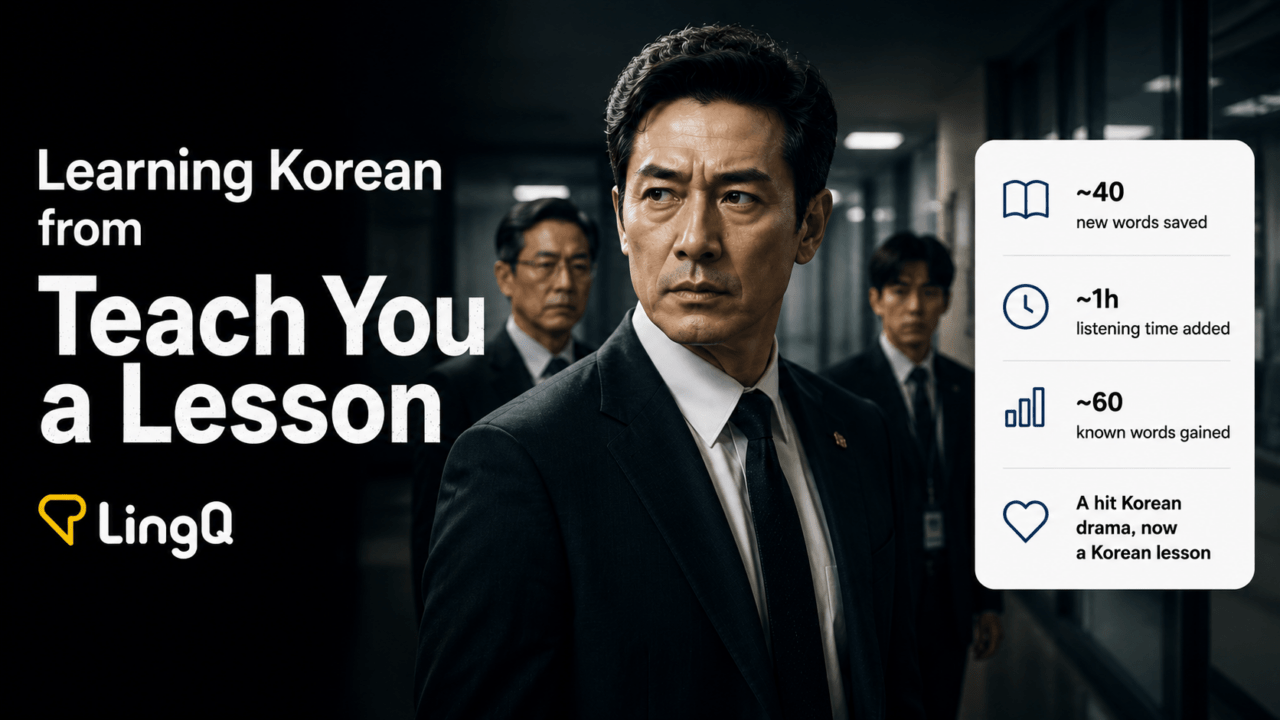
- What to expect: The show follows a squad within a government bureau built to respond when bullies and abusers slip through the cracks of the normal system. Expect a constant back-and-forth between two registers: stiff, formal language from officials trying to sound proper, and blunt, no-nonsense speech once the squad actually confronts someone. That contrast alone makes it a genuinely useful watch for hearing how formality shifts in real Korean. See how I turned this show into a Korean lesson →
Best Korean Dramas for Advanced Learners
At this level, you can not only follow native-speed Korean comfortably, but also handle a much wider variety of genres and complexity. Challenge yourself with shows that have a specialized vocabulary, non-contemporary settings, or explore new topics that pique your interest.
8. Stranger / Forest of Secrets (비밀의 숲)
- Genre: Legal and crime procedural
- Episodes: 16 per season, around 70 minutes each
- What to expect: Prosecutor Hwang Si-mok and police lieutenant Han Yeo-jin team up to crack murder cases and unravel corruption within the government and corporate conglomerates. Si-mok lost his ability to empathize after a childhood brain surgery. Therefore, Yeo-jin serves as his moral compass.
9. Mr. Sunshine (미스터 션샤인)
- Genre: Historical romance and drama
- Episodes: 24, around 80 minutes each
- What to expect: Set in early-1900s Korea, the show uses period-specific vocabulary, formal honorific structures, and slower, more deliberate speech. The series follows Eugene Choi, a boy who escapes to the United States. He returns to Korea as a U.S. Marine Corps Captain and uncovers Japan’s plan to colonize his homeland.
10. Squid Game (오징어 게임)
- Genre: Survival thriller
- Episodes: 9 in season 1, around 60 minutes each
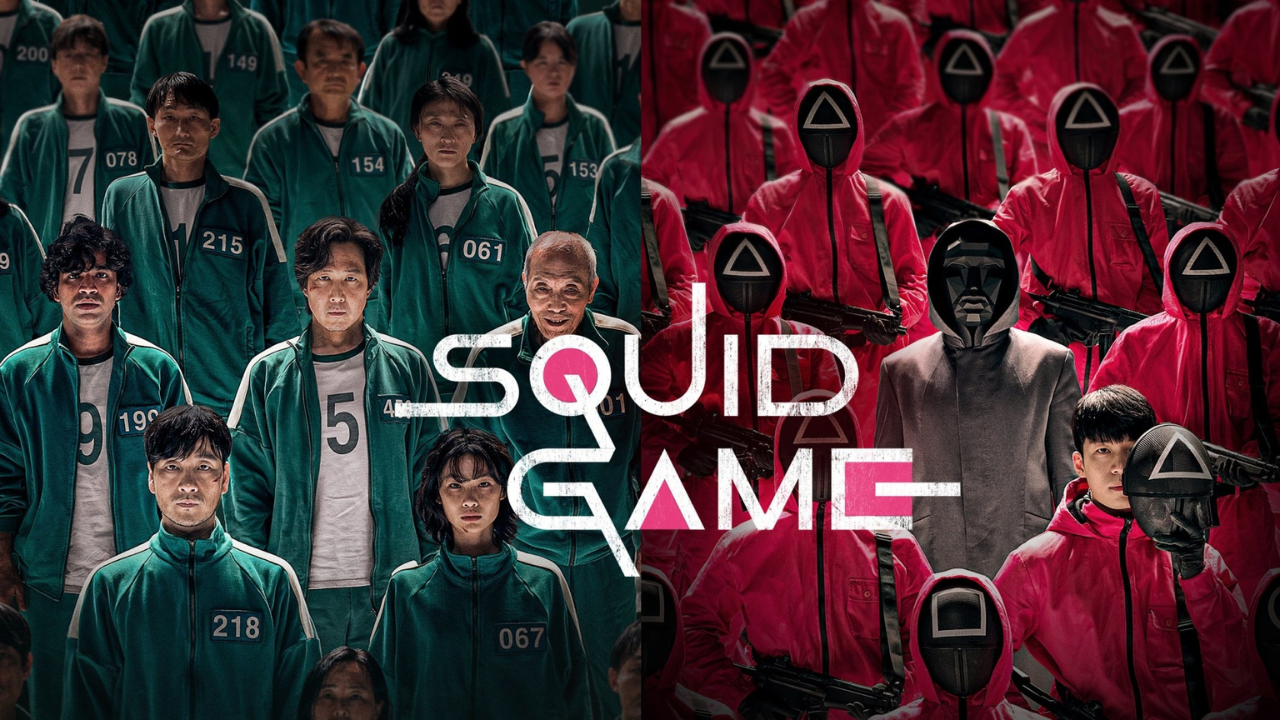
- What to expect: Currently one of the most popular Korean series out there, Squid Game is a dystopian thriller in which people risk their lives in a deadly competition for financial gain. The contestants are desperate, competing in a series of seemingly innocent children’s games. There’s a massive cash prize, but losing entails brutal, on-the-spot execution.
How to Use Netflix with LingQ
Watching a Netflix show immerses you in the language, but it’s a more passive experience. LingQ allows you to capture the Korean dialogue, take a closer look, and strengthen your comprehension of native-level content. The workflow is straightforward:
- Find a Korean show that interests you. If the series is on Netflix, you should have no trouble finding the subtitles.
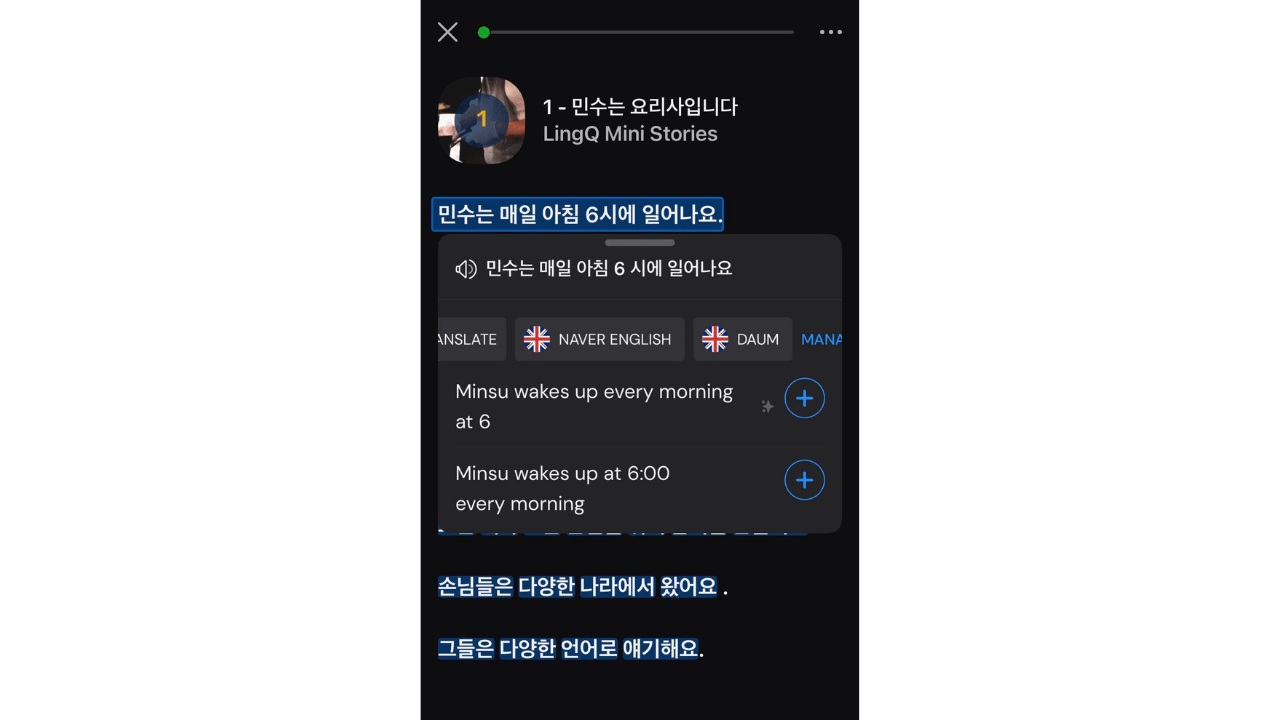
- Import the subtitles directly into LingQ as a new lesson.
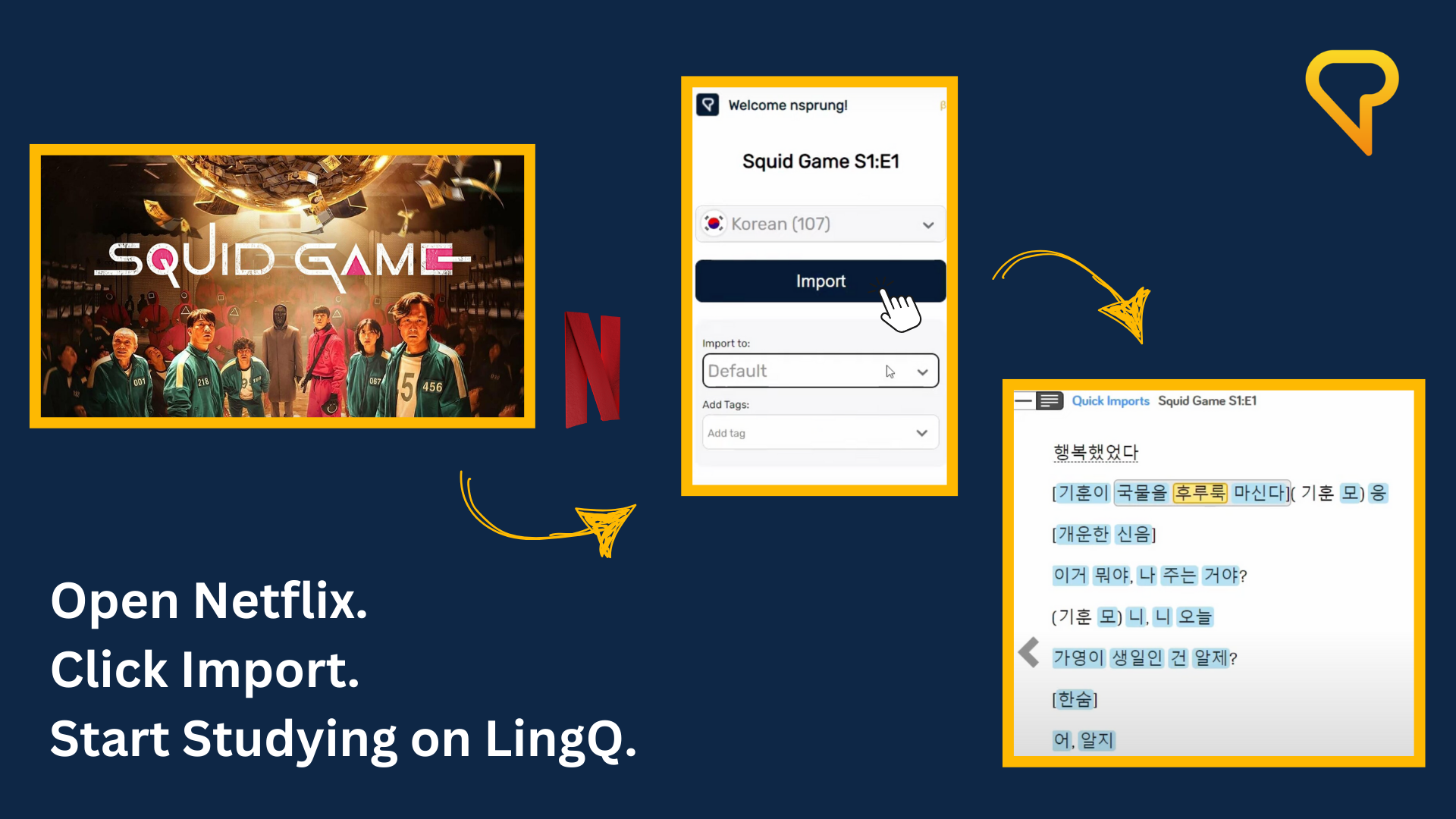
- Watch the episode, but read along with interactive subtitles.
- Tap any unknown word in LingQ to see an instant, context-based translation. Save it for review.
- Rewatch the same episode a second time. See how much more you understand.
- Review your saved words as needed throughout the week.
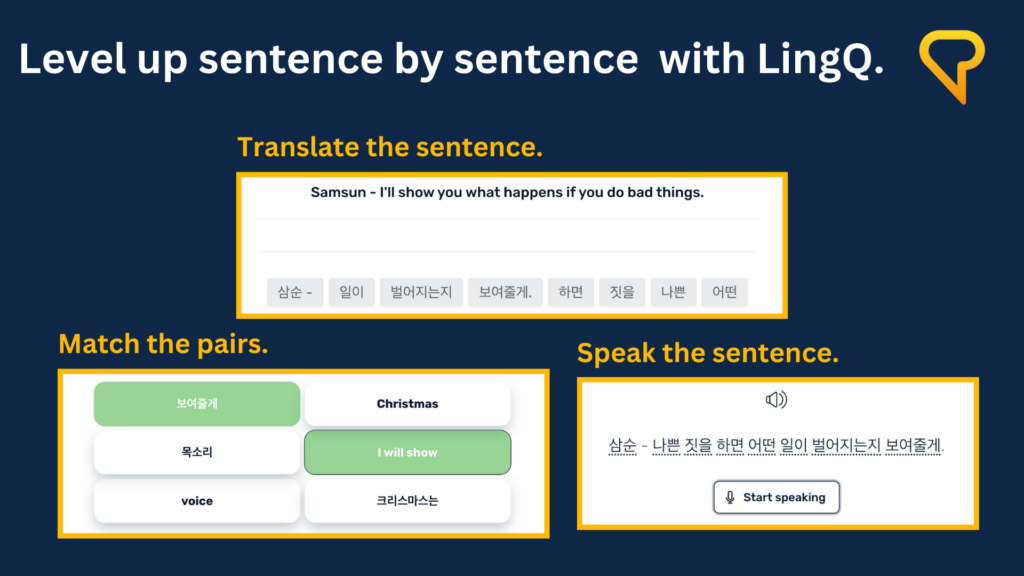
This is the difference between learning a few catchphrases and building a truly extensive vocabulary. A single 70-minute K-drama episode contains thousands of words. The potential for learning is so much greater if you’re able to seize the language quickly and with ease. An episode of a K-drama can be far richer than any textbook lesson.
LingQ supports Korean as one of its core languages, with built-in Korean Mini Stories for absolute beginners, structured vocabulary tracking, and vast libraries of content across different media, genres, and levels.
Tips for Learning Korean with K-dramas
- Use Korean subtitles, not English. English subtitles help you follow the show. Korean subtitles help you follow the show and reinforce reading comprehension.
- Rewatch episodes. Native speakers can process the dialogue immediately. You’ll likely need to repeat an episode for stronger comprehension.
- Pause and look up words strategically. There will be a lot of new vocabulary. If you’re reading the transcript on LingQ, look up as many words as you like. If your goal is to just watch the episode, limit yourself to five active lookups. You need to enjoy the content.
- Learn Hangul. If you cannot read the Korean alphabet yet, that’s the prerequisite. Our guide to the Korean alphabet walks you through it. It’s famously said that you can learn Hangul within a few hours.
- Don’t aim for 100% understanding. Comprehensible input research suggests around 80% comprehension is the optimal range for acquisition. Pushing for full understanding kills the enjoyment that keeps you watching.
- Watch what you genuinely enjoy. Motivation matters more than the “correct” choice of show. If a romance bores you, switch to a thriller. Sure, the genre may be linguistically more difficult. But what matters is that you want to watch the series in its entirety.
FAQs
For absolute beginners, consider series with a simple, predictable plot. Hometown Cha-Cha-Cha is one of the most accessible options on Netflix, with slow dialogue and everyday vocabulary.
Yes, but passive watching is not enough. Watching a series with Korean subtitles, interacting with the content, yields much greater results. Tools like LingQ make this possible.
Watch K-dramas with Korean subtitles, not English ones. Korean subtitles let you see the words being spoken, and strengthen your reading comprehension. Gradually, you may no longer need subtitles.
Find a Korean series, import the subtitles into LingQ as a new lesson, and watch the episode while following along with the interactive transcript. This enables you to instantly look up words and save them for later review with minimal interruption.
Yes and no. Some K-dramas use modern, standard Korean that mirrors what you’d hear in Seoul today. Others highlight a certain historical period and incorporate older grammatical structures and period-specific vocabulary.
Ready to start learning Korean from the shows you already love?
LingQ lets you turn a favorite pastime into an effective language-learning method. Explore Korean language and culture through K-dramas, and use the tools you need to maximize results. With Korean as one of LingQ’s core languages, you’re sure to make great progress.
Writer Bio

Tyler is an American language teacher and language learner. He’s taught Spanish, French and Latin in the K-12 system since 2018. Tyler also speaks Thai and Italian. Currently, he’s learning German and Polish on LingQ!
Twenty minutes a day beats a weekend of drilling.
Read and listen to things you’d have read anyway — LingQ counts every word you pick up along the way.
- 5M+ learners
- 4.7★
- Free to start


You might also like