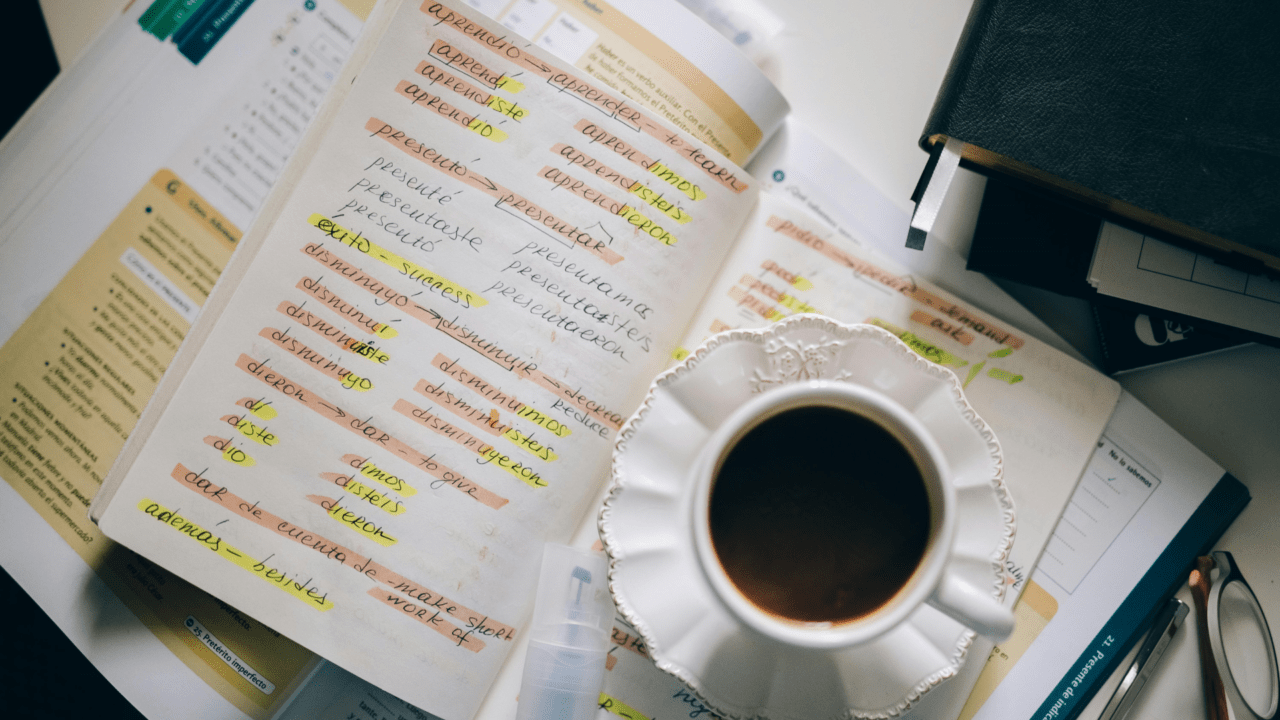
Hajo Kok started learning Spanish in 2016 with no teacher, no class, and no plan beyond a Steve Kaufmann YouTube video. Ten years later he has 13,000 known words.
TL;DR
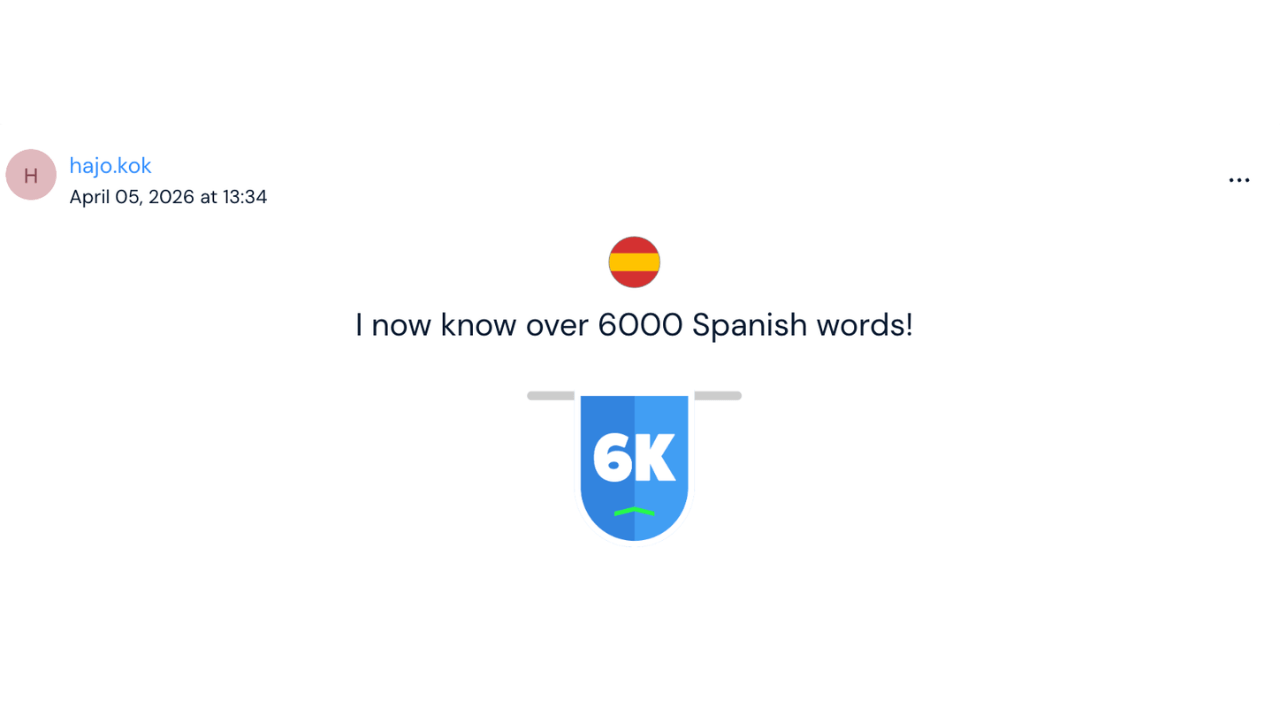
Hajo Kok started learning Spanish from zero in 2016. Ten years later, with no formal class and no teacher, he has built over 13,000 known words on LingQ. He considers himself fluent, though he says there are still gaps in his vocabulary that show up when he reads literary novels.
Hajo never enrolled in a Spanish class. He went from Duolingo (which he found “too incohesive and passive”) to LingQ, then to Argentina, and the rest happened through ten years of listening, reading, and refusing to stop. His current Spanish routine is about 20 minutes every three days. He’s in maintenance mode, with active study time now going to Turkish, Polish, and Arabic.
His story is one answer to a question Spanish learners ask constantly: how many words do you need to be fluent, and is it possible to get there without a class?
The short answer
The Foreign Service Institute classifies Spanish as a Category I language for English speakers, requiring around 600 to 750 hours of focused study to reach professional working proficiency. That’s the fastest of any language for English speakers.
Vocabulary thresholds for Spanish look roughly like this:
Level
Active vocabulary
What you can do
Beginner (A1-A2)
~1,000-2,500 words
Order food, ask basic directions, exchange pleasantries
Intermediate (B1-B2)
~3,000-5,000 words
Hold real conversations, follow podcasts at moderate speed
Upper intermediate (B2-C1)
~5,000-8,000 words
Read novels and news, follow native-speed dialogue
Advanced (C1-C2)
~8,000-12,000 words
Comfortable in any topic, professional contexts
Educated native speaker
~15,000-20,000+ words
Full cultural and idiomatic range
Hajo is at 13,000+. He got there over ten years, mostly through self-directed listening. The picture below is what that level of input looks like, told through his actual experience.
Why Spanish?
The first pull was the sound. Hajo liked the way Spanish sounded. He had been listening to Reggaeton, and he was planning a trip to Latin America. That was enough.
He first heard about LingQ from a video by LingQ cofounder Steve Kaufmann, who has learned 20+ languages. In his own words: “I remember a video of Steve Kaufmann which felt sincere, authentic, and low entry level.” He signed up.
Starting from zero
Hajo had no Spanish before LingQ. He believes some English vocabulary helped him recognize words here and there (roughly a third of English vocabulary shares Romance roots), but he describes his actual Spanish progress as “a long process.”
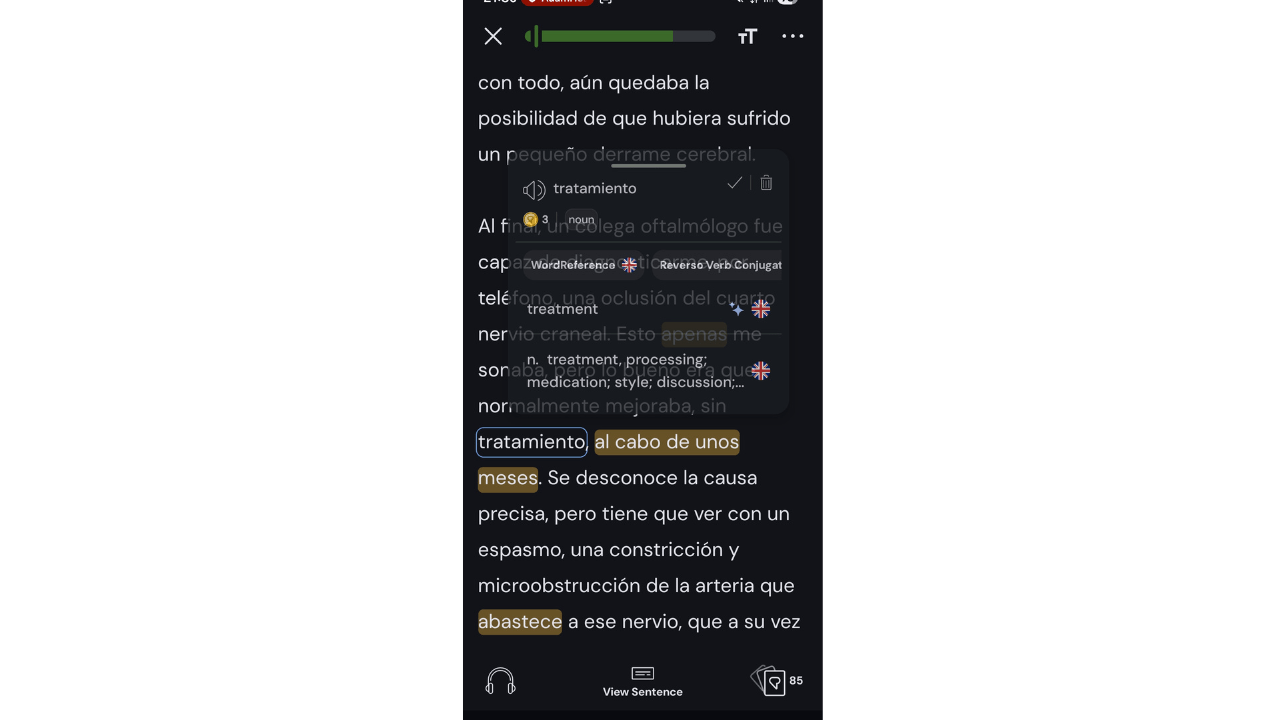
Hajo didn’t deliberately choose to skip Spanish classes. He just never enrolled in one. He started on his phone with Duolingo, but found it “too incohesive and passive.” LingQ struck him as a different model:
“LingQ uses live speech at higher speed which helps for the cohesion of the language.”
That distinction (between drilling isolated phrases versus immersing in real sentences) is what got him started, and what kept him going.
If you want to know which words are worth prioritizing first, rather than just watching your count climb, see our breakdown of the 1,000 Spanish words that matter most.
The Argentina catalyst
A few years into his self-study, Hajo went to Argentina. Argentina is one of the few Spanish-speaking countries where English fluency is rare outside of tourist zones, which means the language stops being optional very quickly.
“I made a lot of progress going to Argentina where people simply only speak Spanish. One has to learn.”
This is the closest thing in Hajo’s story to a single click moment. Up to that point his Spanish was theoretical. After Argentina it wasn’t.
What 10 years of input-based Spanish looks like
Concrete measures help readers calibrate their own progress.
Measure
Hajo’s number
Known words on LingQ
13,000+
Years on LingQ
Since 2016 (about 10 years)
Current Spanish routine
~20 minutes every 3 days (maintenance)
Total languages maintained
5 (Spanish, French, Italian, Portuguese, German)
Languages actively learning
3 (Turkish, Polish, Arabic)
Longest Anki streak
343 days
Current LingQ streak
0 (moving house)
Comprehension level (his words)
“Quite fluent, but there are still gaps in vocabulary which I notice when reading a novel. The descriptive nouns and adverbs are less frequent in speech.”
Content types
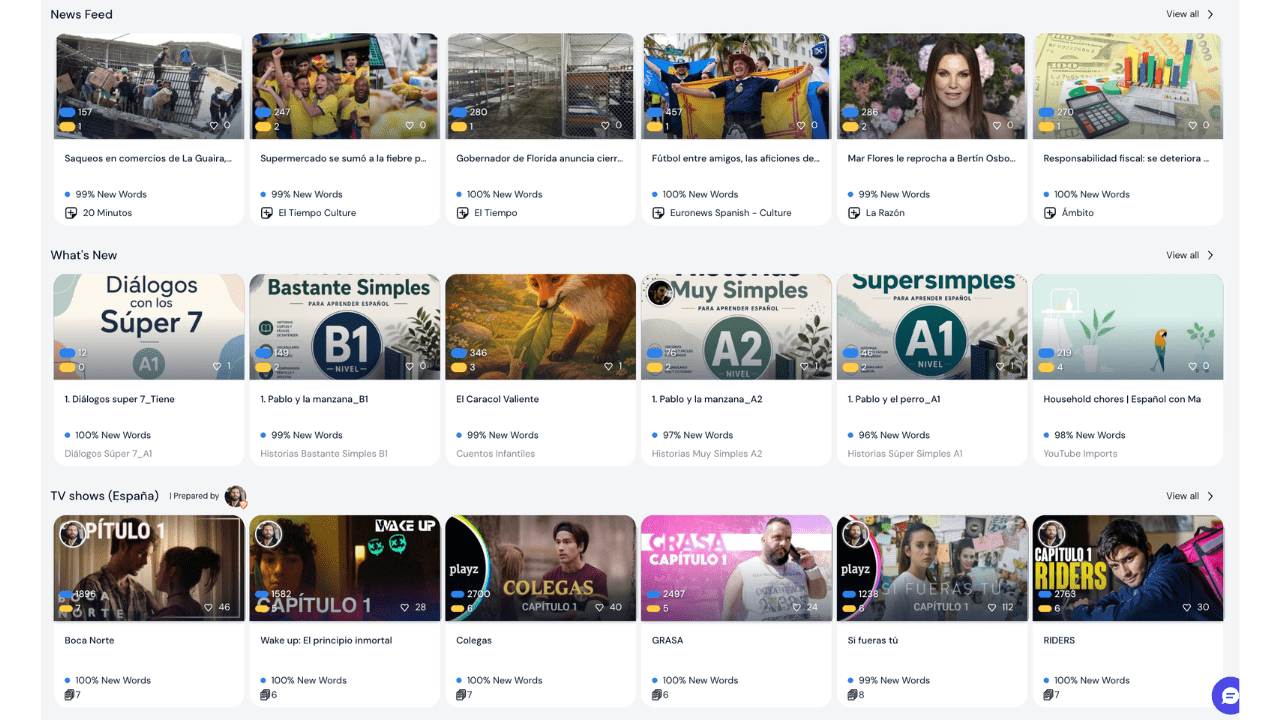
Podcasts, books, Netflix, YouTube, Reggaeton, LingQ on weekends
Speaking practice
Strangers, travel
Catalyst moment
Trip to Argentina
The most accurate version of Hajo’s Spanish level is his own description: “I would consider myself quite fluent in Spanish but there is still plenty of room for improvement. There are still quite some gaps in my vocabulary which I notice when reading a novel. The descriptive nouns and adverbs are less frequent in speech.”
That sentence is what 13,000 words actually feels like from the inside. Not “I speak Spanish like a native.” Not “I’m finally done.” Something more honest: comfortable in most things, still finding gaps in the harder things.
Maintenance mode, and what comes after fluency
This is the part most “how I learned Spanish” articles skip: what happens when you actually reach fluency. The answer, in Hajo’s case, is that the daily intensity drops, and the active study time goes somewhere else.
Hajo currently maintains five languages (Spanish, French, Italian, Portuguese, German) and actively studies three (Turkish, Polish, Arabic). For the active three, he aims for 30 minutes a day, every day, tracked in a habit tracker. For maintenance languages including Spanish, the target is at least 20 minutes every three days through podcasts, books, Netflix, and speaking with strangers when the opportunity comes up.
A common assumption is that fluency means you’re “done.” Hajo’s actual routine suggests the opposite. Fluency means the language is now stable enough to hold its own ground while you build the next one. Spanish doesn’t need three hours a day from him anymore because Spanish is no longer the language he’s pushing on.
The hard parts
The hardest moment in any language, Hajo says, is the one where the word is right there on your tongue and won’t come out.
“You feel the struggle, the silence and the patient face of the other person. I have learned to embrace it though, smile about it, try to explain it with body language. After that I look up the word and it sticks forever. The struggle helps immensely with the growth.”
Most language learning articles skip this part. They sell you on the joy of communication. They don’t tell you about the silence between trying to find the right word and actually finding it. Hajo has settled into a relationship with that silence, and he says it’s where the real learning happens.
What he’d tell someone starting Spanish today
Hajo’s advice lines up with how he actually learned.
Find content you love.“Whether it’s cooking, travel vlogs, books.” Motivation runs out quickly when you’re forcing yourself through content you don’t care about. The pace of an episode of a show you genuinely want to watch is the pace at which your brain will absorb the language.
Use AI-generated subtitles to open up content.“Nowadays with the AI that creates good subtitles you can practically import all the content from YouTube which is amazing.” You no longer need official transcripts for material to be usable as study content.
Don’t wait for comprehension before starting to listen.“Even if you don’t understand a lot, listen to the videos each day, extract flash cards, and soon it will click.”
Give your brain four months. This was his most striking insight:
“For languages like Turkish or Arabic the brain simply needs 4 months to settle in, but it’s worth the wait.”
Four months of feeling like the language is gibberish is normal. The patience to keep going past that point is what separates people who reach 13,000+ words from people who quit at 200.
What kept him going for ten years
Hajo’s longest Anki streak is 343 days, which he says he’s proud of. His current LingQ streak is zero because he’s in the middle of moving house. Both of those numbers are part of the same picture: ten years of accumulated comprehensible input, with the occasional reset.
This is worth saying clearly. The breaks didn’t ruin the progress. The streak resets didn’t undo the 13,000 words. Time spent in the language is yours forever. Even when life forces you to take a break, the language doesn’t disappear, and re-engaging is faster than starting fresh.
FAQs
How many words do you need to be fluent in Spanish?
For functional fluency at B2 level (comfortable in most everyday situations), most learners need 3,000 to 5,000 active words. For advanced fluency that lets you read novels, follow professional contexts, and handle nuanced conversation, expect 8,000 to 12,000 words. Educated native speakers know between 15,000 and 20,000 words. Hajo Kok has built over 13,000 known words on LingQ through self-directed study, putting him solidly in the advanced range without a formal class.
How long does it take to learn Spanish?
The Foreign Service Institute estimates around 600 to 750 hours of focused study for English speakers to reach professional working proficiency, the fastest of any language category. In practice, most adult learners reach conversational fluency (B1) in 6 to 12 months of daily input and advanced fluency (B2-C1) in 2 to 4 years. Self-directed input-based learners often reach higher vocabulary levels over a longer timeline, with consistency mattering more than daily volume.
Can you learn Spanish on your own without a class?
Yes, and many of the most accomplished adult Spanish learners do exactly this. The advantages of self-study are flexibility, content choice, and the ability to invest more time per day than any class would deliver. The disadvantages are the absence of structured speaking practice and accountability. Hajo’s experience suggests that travel to a Spanish-speaking country, even briefly, accelerates the process substantially by removing the option of falling back on English.
Is LingQ good for self-study Spanish learners?
Hajo’s path from Duolingo to LingQ is a common one for learners who outgrow the gamified phone-app approach. In his words, Duolingo felt “too incohesive and passive,” while LingQ uses “live speech at higher speed which helps for the cohesion of the language.” For input-heavy learners who want to use real Spanish content (podcasts, novels, YouTube), LingQ is built around that workflow.
How many hours a day should I study Spanish?
There’s no universally correct answer. Hajo’s current routine is 20 minutes every three days, but he’s in maintenance mode after ten years of accumulated input. For active learners targeting B2 or higher, 30 minutes to an hour of focused daily input is a sustainable target. Consistency matters more than daily volume, and breaks (even of weeks or months) don’t undo your progress.
Do you need to speak Spanish out loud to be fluent?
Speaking and listening are different skills. High-volume input builds listening and comprehension faster than it builds production. Hajo’s speaking practice came largely from immersion in Argentina, not from formal speaking drills. For most self-study learners, occasional conversation practice through tutors, language exchange partners, or travel is enough to bridge from passive comprehension to active speaking.
Ten years is a long time. It is also ten years of listening to music you liked, reading things that interested you, and spending time in a country you wanted to visit. Hajo did not grind his way to fluency. He just never stopped. That is the whole secret.
Curious what 13,000 words of Spanish would feel like?Try LingQ free →
Twenty minutes a day beats a weekend of drilling.
Read and listen to things you’d have read anyway — LingQ counts every word you pick up along the way.


 Elle
25 Jun 2026
Elle
25 Jun 2026