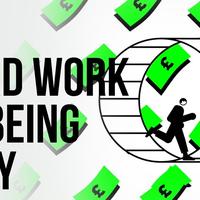
The Hard Work of being Lazy
At times, perhaps without quite knowing why, we slip into a resolutely ‘lazy' mood.
We're simply not able to write anything new or can't face setting up more meetings.
We don't want to clean the fridge or go out to befriend prospective clients. All we
have an appetite for, it seems, is to loll on the sofa and maybe dip randomly into a
book, wander down to the shops and buy a packet of biscuits or spend an hour or so soaking
in the bath. We might, at an extreme, merely want to sit by the window and stare at the
clouds. For a long time.
In such states of mind, we're rapidly liable to be stigmatized as profoundly (and incorrigibly)
‘lazy' by friends or - more painfully - by our own conscience. Laziness feels like
a sin against the bustling activity of modernity; it seems to bar us from living successfully
or from thinking in any way well of ourselves. But, to consider the matter from another perspective,
it might be that at points the real threat to our happiness and self-development lies
not in our failure to be busy, but in the very opposite scenario: in our inability to
be ‘lazy' enough.
Outwardly idling does not have to mean that we are neglecting to be fruitful. It may look
to the world as if we are accomplishing nothing at all but, below the surface, a lot may be
going on that's both important and in its own way very arduous. When we're busy with
routines and administration, we're focused on those elements that sit at the front of
our minds: we're executing plans rather than reflecting on their value and ultimate
purpose. But it is to the deeper, less accessible zones of our inner lives that we have to turn
in order to understand the foundations of our problems and arrive at decisions and conclusions
that can govern our overall path. Yet these only emerge - shyly and tentatively - when
we are feeling brave enough to distance ourselves from immediate demands; when we can stare
at clouds and do so-called nothing all afternoon while in fact wrestling with our most profound
dilemmas.
We need to distinguish between emotional and practical hard work. Someone who looks extremely
active, whose diary is filled from morning till night, who is always running to answer
messages and meet clients may appear the opposite of lazy. But secretly, there may be a lot
of avoidance going on beneath the outward frenzy. Busy people evade a different order
of undertaking. They are practically a hive of activity, yet they don't get round to
working out their real feelings. They constantly delay the investigation of their own lives.
They are lazy when it comes to understanding particular emotions. Their busy-ness may be
a subtle but powerful form of distraction.
Our minds are in general a great deal readier to execute than to reflect. They can be rendered
deeply uncomfortable by so-called large questions: What am I really trying to do? What do I actually
enjoy and who am I trying to please? By contrast, the easy bit can be the running around, the
never pausing to ask why, the repeatedly ensuring that there isn't a moment to have doubts
or feel sad or searching. Busy-ness can mask a vicious form of laziness.
Our lives might be a lot more balanced if we learnt to re-allocate prestige, pulling
it away from those with a full diary and towards those wise enough to allow for some afternoons
of reflection. We should think that there is courage not just in travelling the world,
but also in daring to sit at home with one's thoughts for a while, risking encounters with
certain anxiety-inducing or melancholy but also highly necessary ideas. Without the shield
of busy-ness, we might bump into the realisation that our relationship has reached an impasse,
that our work no longer answers to any higher purpose or that we feel furious with a family
member who is subtly exploiting our patience. The heroically hard worker isn't necessarily
the one in the business lounge of the international airport, it might be the person gazing without
expression out of the window, and occasionally writing down one or two ideas on a pad of
paper.
The point of ‘doing nothing' is to clean up our inner lives. There is so much that
happens to us every day, so many excitements, regrets, suggestions and emotions that we
should - if we are living consciously - spend at least an hour a day processing. Most of
us manage - at best - a few minutes - and thereby let the marrow of life escape us.
We do so not because we are forgetful or bad, but because our societies protect us from
our responsibilities to ourselves through their cult of activity. We are granted every
excuse not to undertake the truly difficult labour of leading more conscious, more searching
and more intensely felt lives.
The next time we feel extremely lazy, we should imagine that perhaps a deep part of us is
preparing to give birth to a big thought. As with a pregnancy, there is no point hurrying
the process. We need to lie still and let the idea gestate - sure that it may eventually
prove its worth. We may need to risk being accused of gross laziness in order one day
to put in motion projects and initiatives we can feel proud of.
Our online shop has a range of books and gifts that address the most important and often neglected areas of life.
