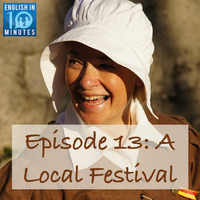
Nick: Today Wendy and I are talking about a festival that they have here in Geneva right around this time of year, and it's called L'Escalade in French.
And it's a really important festival for the local people here and it's, uhh, related to the identity that people have as Genevans or genevois as they call it in French. And so, what's the Escalade all about? Wendy: Well, it's the commemoration of an historic event that took place in 1602, uhh, on the night of December the 11th in 1602, and so at that time Geneva was its own republic, basically, it's own little tiny country of just one city, a city-state.
And it was attacked by, uhh, an invading army of the, uhh, savoyards in French, so they were from Savoy, which is … was a kingdom. It's part of France now but at that time it was also its own kingdom. And, uhh, so the savoyard soldiers came to Geneva to attack the city and scale the walls and capture the city for itself. Nick: And I think it was a surprise attack, right?
Wendy: Yes.
Nick: The Genevans weren't aware that it was coming.
Wendy: No.
Nick: And so they were taken by surprise, and it was the middle of the night, and so the city was where the old city of Geneva is now, so you have these, uhh, bastions or these walls surrounding it, and so the savoyards came to scale these walls.
Wendy: Umm-hmm.
Nick: And then the Genevans heroically defended their walls, and there's all sorts of stories of how they were able to do this.
The most famous story, or a very common story, is about a local woman who, uhh, had soup that she was cooking, I guess, and she tipped it … uhh, tipped the big cauldron of soup over the walls and that burned several of the attackers and that was a kind of turning point, or it's a memory that people have because it shows how every person in the city was doing what they could do with what was available to them, uhh, to help defend the city. Umm, and you see this kind of theme of pouring hot things on attackers in other myths and other legends in different cities and things like that, but that's, uhh, certainly a legend that's very much still alive today. Wendy: Yes, and that particular legend is a big part of the celebrations, the way that people celebrate the Escalade.
So you have these chocolate cauldrons, these big pots, they're in the shape of a big pot but they're made out of chocolate, and inside you have vegetables, because it was a vegetable soup, supposedly, that this woman, uhh, poured on the heads of the savoyard soldiers. So you have little vegetables that are made out of marzipan, out of almond paste, and, uhh, on the evening of the Escalade, uhh, someone will break this, uhh, cauldron, and then all of the marzipan vegetables come out and people get to eat them. Nick: Right, and so in all the supermarkets and all the shops and things leading up to Escalade, and we're seeing them now, umm, you have huge stands where you can buy … where you can buy these chocolate cauldrons, all different sizes, and it's a big thing that all the local families do, and, uhh, everybody really gets into it.
And I think it's a really important festival for the local people, for their identity, because Geneva, like you said, was this republic, and it actually, technically still retains this title of republic. And so it's the only canton in Switzerland that's both a canton and a republic. And it's … I don't know, it's a little bit silly in a way because it's only the name of the republic, it doesn't self-govern any more than any other canton, but it seems to be important … or was important, at least, at that time, that it retained this title of republic in addition to the title of canton. And so this episode, this, uhh, event that happened in 1602 is a big part of that republic aspect of Geneva. Wendy: Yeah, it's a big part of the identity, uhh, of Genevan citizens, because it was very much these citizens themselves who defended their own city, their own republic.
Umm, like you said, it was a surprise attack, so it wasn't two armies battling it out on the battlefield. It was this invading army on the one hand and then the citizens of the city on the other hand, who were defending their city and, you know, getting out of bed in the middle of the night and jumping up and grabbing their guns or their pot of soup or whatever they could find, uhh, to defend themselves. And they managed to defeat this very well-equipped army, uhh, even though they themselves were not soldiers, for the most part. Nick: And so, in order to celebrate this great victory that they had, we have this festival for two days over a weekend every year.
It takes place on the weekend that's closest, uhh, to the 11th and 12th of December, which was the day, as you mentioned, that this happened on. And it's really great! So you go to the old city, where these events happened, and that's where it all takes place. And there's a group, umm, who are called the Company of 1602, and they're the people who are in charge - it's a society, and they're the people who are in charge of putting on this festival every year. And they do an amazing job. And it's one of those things where people only get to enjoy the Escalade for two days every year, but these people are working throughout the whole year, I think, in their spare time, trying to do everything to make the preparations for this festival. And we've seen some of their events, some of their dinners and things that they've held, and they're all very proud of it and things like that. And so they have some people who are in costume from 1602, so it's not quite medieval but it's, uhh, a little bit beyond that, so kind of around, uhh, the Renaissance era if you like, a little bit later perhaps. And so they have quite a few hundred - 300, is it? Or more? Wendy: Uhh, I don't know the exact number, but yeah … uhh, I think maybe more than 300.
Nick: Maybe it's 800.
Wendy: Yeah, yeah, I think 800.
Nick: And so there are 800 people who are in costume throughout the whole weekend.
And so you go in the old city and there's people serving soup and serving mulled wine and doing different, uhh, displays and little exhibitions and things. So you'll have soldiers who will fire cannons, and they're all dressed up, and it's really great just to walk around and you see all these activities going on and the whole city comes out to watch. Wendy: Yeah.
No I love the Escalade. It's one of my favourite times of year in Geneva because it really is a unique event, uhh, that you don't see anywhere else and, uhh, I love being surrounded by all the people who are dressed in the historical period costumes. It really makes you feel like you've stepped back in time, and you're, you know, experiencing a different time in history. Nick: And you can really see the passion and the patriotism that they all show.
It's not something that people feel like they're forced into doing. The people .. the 800 who are in their costumes are really proud and delighted, and sometimes you see little kids and they're with their parents, and now the kids are in the … this Company as well, and so they have the costumes as well. And then on the Sunday evening, just as it gets dark, they have a parade of all of the uniformed … all of the costumed people, and they go throughout the old town, and virtually the whole city lines up along this parade route to watch them go past. And they have torches, and, it's very nice as the … as darkness sets that you see this parade of people in these historical costumes, uhh, parading through the city. Wendy: Yeah, yeah, and, uhh, there are individual characters.
A lot of the people who are in costumes just have kind of, uhh, generic costumes, you know, from the period, so, what a typical man or woman of that time might wear. But then you also have individual characters, and I can't remember all of them, but for example, Mere Royaume is the name of the woman who supposedly, umm, threw the soup down on the heads of the savoyard soldiers. So there is a woman who's dressed up as Mere Royaume. Uhh, there's someone who's dressed up as, I think, the, umm, the executioner, who would then go on to execute the savoyard soldiers who were captured. Uhh, so you have all these different, uhh, individual characters who you can identify. If you know the story really well you can identify them in the parade, so it's a lot of fun to watch. Nick: And I think the other thing that's really nice is that people like us who aren't from here but who now live here also can enjoy it and get into it and it makes us feel a little bit more connected with the city that we live in.
Wendy: Yeah, definitely.
