The Mystery of Earth's Disappearing Giants | IN OUR NATURE
I want you to imagine for a moment that you've
been instantly transported through time. 50,000 years in the deep past,
what you see would shock you. In North America, you gaze upon
short-faced bears, larger than a grizzly. Mastodons. Dire wolves. Saber-toothed cats.
In Australia, you'd be eye to eye with a gargantuan wombat
and see monitor lizards half as long as a bus. In South America, sloths as tall as elephants,
automobile-sized armadillos. Rodents the size of small bears.
In Europe, towering arc cattle, wooly mammoths, even lions, hippopotamuses, and hyenas.
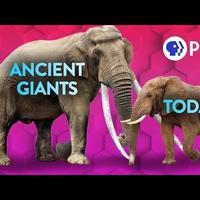
And in Asia, an elephant that stood a full head above today's largest African bulls.
During Earth's glacier covered Pleistocene Epoch, every continent was home to mammalian giants,
the megafauna, species that dwarf their relatives alive today. But during the last 50,000 years,
these giant mammals, plant and meat eaters alike, have gone extinct on every continent except one.
Today, Africa is home to nearly all giant land animals left on Earth. The mystery is why?
These giant animals are so awesome. I wish that they were still here. It's not fair.
Why did they have to disappear? I always heard That it was our
fault. Humans and our spears hunted mammoths and all that stuff to death.
Well, there's definitely a correlation between when humans arrive in a place and when its
megafauna disappear. The earliest anatomically modern homo sapiens, they show up around 300,000
years ago in Africa. It wasn't until around 50 to 70,000 years ago though, that we first left
Africa in big numbers. First to Asia and Europe, then to Australia, and finally the Americas. So
compared to human origins, human expansion across the globe it just happened so fast.
According to archeological evidence, less than a thousand years after the first humans that
crossed the Bering land bride, they were already at the tip of South America. So outside of Africa,
at least, the megafauna must've been like, "Wow, there's suddenly humans here." Just like that. But
at the same time, humans hunting every large animal on five continents to just nothing,
it seems too simple. Yeah. There's theories to
explain the extinction of megafauna and they've been debated really fiercely for decades.
I think what we really need though, is a time capsule.
Lucky for you, Trace, we actually have one and it's in the last place you would expect.
Right here in Los Angeles. Plot twist! I thought it was just influencers.
I've been working with Ranch La Brea fossil since like 2010. I guess you could say that I got stuck.
That's Mairin. She's a scientist here at the La Brea Tar Pits, which includes a museum
and a research site that's active in lots of different ways. This is the best place
on earth for understanding the ice age extinction. This thing
is absolutely incredible. We are looking down into a giant pit. It's bubbling.
There are odors. It's exciting. There's pollen. I don't know what's happening.
There are also sounds as the gases bubble up to the surface, make this [inaudible 00:03:46] sound.
Yeah. Yeah.
It's clearly still a really dynamic place. How did all of this come to be?
These tar pits were here since before the city of Los Angeles was established and they've
actually been here over the last, at least, 55,000 years.
Back then, the tar pits, or more accurately, asphalt seeps oozing up and out of the ground,
were concealed under water or leaves and anything unlucky enough to go
in was also unlikely to get out. So wait, it's like quicksand? The
tar just gets them, sucks them in, and preserves their remains like a giant vat of sticky pickles?
Yeah, pretty much. The green flag over there marks a
saber-toothed cat shoulder blade. What?
Yeah. And the blue flag marks a giant ground sloth pelvis or hip bone.
Can you imagine giant ground sloths being here in Los Angeles today? That in itself
is mind blowing to me. [crosstalk 00:04:45].
And then saber cats. I'm sorry. It's like you have a whole party here of all these different animal.
Paleontologists love it when fossils are stacked like a sandwich. They're easier to understand and
place in time. But because of this seeping, moving asphalt and the fact that California is still a
really tectonically active place, over thousands of years the fossils in this soup pot get all
jumbled and mingle-mangled. This sticky trap is still sticking today. Just like it was when all
these other cool animals were walking around. I love me a good fossil sandwich with a side of
oozy tar soup. Yum. Even 2000 years in the future, I think they would
find a really interesting record of life today. Wow. Maybe plastic or trash even.
To remove the fossils from the sticky resting place, staff and volunteers
have to use airplane degreaser. And afterwards, they're sorted and placed in these collections
where researchers can look at them firsthand. That seems like a mammoth effort.
That was a megafauna mega funny folks. Yeah. This is like putting together a puzzle.
One that is a million pieces and it's all stuck, covered in like GAC and sticky stuff.
GAC. GAC.
GAC. On the left we have our giant grand sloths and
on the right here, we have other large herbivores. For example, right now we're passing by bison.
We are talking shelf after shelf of ancient ice age bison, ground slots, mastodons, tapirs,
hundreds of thousands of fossils grouped by species and anatomical element.
Whole shelf Of baculum. That's penis bone.
So these aren't all from one individual. These represent dozens if not hundreds of different
individuals. Exactly.
That's this bone here. [inaudible 00:06:36] right over here.
That's huge. And this is from a camel? From a camel who lived in North America.
So that's the big question, they were here and then they weren't. What happened?
What happened? Maybe the secret is here
in this very drawer. Maybe this bone right here. This bone right here.
Could hold the secret of why we don't have camels anymore.
Narrator, unfortunately, it didn't hold the secret.
I want to get back to the big, important question here. Why don't we today have
camels and all these other cool animals anymore? How do all these bones pulled from this tar pit
tell us why megafauna disappeared? Yeah. Let's back up and take a look
at the competing ideas as to why these absolute units went extinct.
Scientists studying the decline of megafauna at the end of the Pleistocene first focused their
attention on North America. Partly because of large troves of fossils like those at La Brea but
partly because that's just where the scientists were from. The sudden arrival of humans in North
America and this sudden disappearance of large mammals seemed too closely timed to be a mere
coincidence. Likewise, megafauna extinctions in Australia and on Pacific islands were also
timed closely with early human settlement. Scientists, like Paul Martin, concluded that
humans armed with a new stone weapon technology known as Clovis points swept through the Americas
decimating the large mammal population. It became known as the Blitzkrieg or Overkill hypothesis.
The problem was we now know there were humans in most parts of North America for thousands of years
before Clovis point technology showed up and we just haven't found any of the large
collections of remains that suggest early Americans were hunting on this scale. So
Overkill has become more of a no overkill idea. There was a second idea which also blames our
species. A slower, drawn out extinction only partially due to hunting combined with early
humans changing the environment through setting fires, deforestation, habitat loss,
and negative effects from the critters we brought with us, like cats and rats and dogs and things.
This may explain the extinctions of giant island dwelling birds, like dodos and moas,
but again, there's little evidence that the first humans in the Americas changed the environment to
this degree. The fossils at La Brea are helping paint a different picture of the extinction of
Pleistocene giants. So are they only
pulling out giant extinct species? No, that's the cool thing. They're
not. They've recovered coyotes, bobcats, foxes, skunks, and badgers. Species we still have today.
So here we have our typical coyote skull, for example. It's the same species of coyote that
we have today, Canis latrans, but found in deposits that could be 55,000 years old.
Okay. So wait, let's put the giants aside for a minute and instead of looking at why megafauna
disappeared, I think it's interesting to think about what survived, all the medium things. What
happened to let these regular fauna persist? Think about it, compared to a giant cave bear
or American lion, if you're a raccoon or a skunk, you eat less, probably reproduce
faster and likely have more available habitat. A badger takes up way less space than a mammoth.
It seems like the fossils should be able to tell us was this some big extinction tidal
wave that affected all of the species or were the big stuff already just about to kick the
bucket and something pushed them over the edge? So the clues that can lead us to those answers,
aren't the fossils we've been talking about. In fact, they're not animal fossils at all.
Well, here we are. This is the Wait.
Paleobotany collection. These four cabinets?
Well, there's some more but Okay.
this is part of it. Here's some of the wood that's preserved.
Oh my gosh. Yeah. It's a beautiful
brown texture because of the asphalt that stains it. This is from juniper and that's probably
the most common wood fossil that we have here. They find plants at La Brea too. And what's so
cool about all the plants they find here, they have modern relatives, meaning they still exist.
Look at these. So these are oak leaves and they're just perfectly preserved, right?
They look exactly just like the leaf litter. Okay, you can hold this one.
Oh my gosh. They look just like something you would find on the sidewalk on a fall day.
Exactly. You'll notice these fossils are quite a bit smaller. They're all in their own vials.
They're tiny. I'm seeing this one. It's in a pill capsule.
Yeah, exactly. It's so tiny. Every time
I see stuff stored in pill capsules I have the like the innate urge to just swallow it.
These are from Pit 91. They're from the top of Pit 91. So this is probably
right around the time of the extinction. So this is a pretty significant specimen.
It is. It actually is. Yeah. Wow. I could be ingesting the
You could. mysteries of the universe.
These plant microfossils, from bits of leaves to seeds and pollen grains,
stuff so small you need a microscope to see them. These micro plant parts
paint an even more detailed picture of what was happening than even those large
mammal fossils do. But finding these itsy bitsy, teeny weeny bits of leafy greeny, isn't easy.
It's like Looking for a literal pine needle in a tar pit.
Yeah, but what's so cool is that those really small bits can be big clues.
How did these fossil plants and their remnants fit into this bigger story?
In order to understand the ecosystem at all, you have to start with the primary producers.
How does changing climate affect animals? It affects them through the plants that they
eat, that they live in, their habitats. Really understanding the plants and what happens
because of the climate to the plants is key to understanding the response to the animals later.
So let's say you find pollen from ragweed, junipers pines,
daisies, and sunflowers that would indicate this region had a dry arid climate, not unlike today.
Okay, but how do you go from pollen to the extinction of gigantic mammals?
Maybe they sneezed to death. No Trace, but you can compare these microscopic
plant fingerprints over time to see how the plant species change. And that's a really good indicator
of the overall climate. What scientists at La Brea have noticed is that the plant species did
in fact start to change about this same time these megafauna disappeared from the tar pits,
right around 12,000 years ago. Which was also just a few thousand years after
humans show up in North America. Now that is quite a coinkydink.
I know, but it's more than that. The plants tell us at the end of the Pleistocene, Earth's climate
was changing drastically likely affecting what giant animals could eat, where they could live,
and how they could move from one place to another. Okay. So that makes sense. The effects of a
changing climate is likely a big reason why Earth's megafauna went extinct. So
does that mean that it wasn't humans fault? Not necessarily. Humans still probably had
an impact here. For example, we've got evidence at the tar pits of more fires, but why? Because
it's getting hotter and drier or because people were setting them or something else?
Obviously alien space lasers and very large magnifying glasses. I
know it's not either of those things. This is what I mean when I say that
extinction is a messy business. Right? Nature is pretty resilient, short of like an asteroid
or something. Extinctions are usually just not caused by one thing. I think with these complex
systems you have to change a few things in huge ways or a lot of things in pretty big ways between
people and plants and animals and the climate. Our current best understanding of what happened in
North America is also kind of messy. It probably wasn't just one thing but many disruptions
of a complex web of interactions. Decreasing habitats, human impacts, global climate change,
these trends are really familiar to us today. This past that we've been talking about was really
not so long ago in the scale of life on Earth, at least. Understanding how things played out then
can inform our future and there's. That combination of factors that wiped out so many
prehistoric megafauna species; climate change and humans killing them and changing their habitat.
These are the same challenges facing Africa's giants today. Only all those factors are taking
place at scales and speeds that just dwarf the changes of the past. Our impacts reach every
corner of the planet today and it's playing out faster than at any time since our species evolved.
We need to understand that while our impact may be larger than other species on Earth,
we aren't the only species on Earth. Right? To find a place that's still so full of
it's rich megafauna, is so rare nowadays. It's very much something that hooks you in place in
the world. To see the sense of scale, just how large the savanna is and all the megafauna and
these incredible vistas. I don't know. There's something very humbling about that. Putting
it in a grander sense of scale, this is where humanity developed. This is the cradle of mankind.
Think about that. The earliest human ancestors descended from their Australopithecine
predecessors right here in the rift valley of east Africa, nearly 3 million years ago.
That is an incredible sense of connection. This is kind of where we evolved. Isn't that cool?
And this gets at one possible reason why African megafauna made it. For more
than a hundred thousand years, Africa's giant species were co-evolving with us,
with homo sapiens. And they lived alongside our specie's ancestors before that.
Early humans in Africa, they certainly hunted these giants and modified the habitat in big
ways. But living alongside humans for so long coevolving that could have given Africa's
megafauna a resilience that the other giants just didn't have. Outside of Africa, human's
sudden global expansion combined with rapid climate change at the end of the Pleistocene
might've meant that evolution couldn't keep up. There's a lesson in the past hidden in those
tar pits. If the environment changes too fast, things disappear on massive scales
And the story locked in those plant fossils that ancient climate change happened over
tens of thousands of years, the climate changes we're seeing today, they're happening on the scale
of decades and they're even more severe. That really puts into perspective how
quickly our climate is changing today. Megafauna aside, places like the tar pits
are offering more supportive evidence of how our climate slowly shifted in the past in comparison
to this rapid shift, we're seeing today. Big things disappeared more than once on
five different continents. We have to understand that that can happen again.
There's really nowhere else on earth that you find the scale of animals in number, but also,
like I said, in size. It would be cool if there was elephants walking around everywhere, but
we've changed the planet in ways that just doesn't seem to be able to support what we
see here. I think that's just what makes it even more special. It's something to
remind us of how much of the world used to be. To be able to study these ecosystems with the
megafauna intact gives us a much better understanding of how environments change
and we could lose all of this. Think for a second about how we're trying to
protect the surviving giants today. We're drawing lines on maps, creating these protected places,
but that's not enough to protect these species and these ecosystems. Because the challenges that
we're facing today, they don't pay attention to those borders. And think about the risks of losing
these ancient migrations, these deep animal cultures, these long lasting relationships,
highly developed skills and senses. The ways of surviving in this place and all of these places,
it'll take tens of millions of years to restore the biodiversity that has disappeared from Earth,
just since the dawn of our species. These are things that are
built into them with millions of years of evolution
to do the things that they do in this place. Changing that in a few human years
is asking a lot, maybe too much of these species. So you may not be able to go to Africa yourself
or fix climate change on your own, or save every species from extinction with your own hands,
but there has never been a better time for individuals to make a positive impact.
So true. Volunteers help protect that Mission blue butterfly. And scientists
climb trees to understand how to save forests. Passionate people listen to birds singing during
a pandemic. All of these people do their part and we don't know how big our impact might be.
But we have to try because the only way to find the answers is to keep looking for them.
When I was at La Brea, I saw just how much there is to still learn about our place in all of this.
It kind of blows my mind. A hundred years ago, the people who were initially excavating these pits
could probably not have any idea that you'd be able to
look at this on literally such a granular scale. Yeah. I'm the only other person that's ever looked
at this. So you're the second person in the world. What?
In the history, in the whole record of time to see these specimens.
That's pretty amazing. I can discover a new species today. Here on camera.
You probably already did and you just didn't know it.
