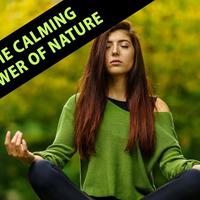
Have you ever had ecotherapy? Listen to 6 Minute English - YouTube
Neil: Hello, this is 6 Minute English.
I'm Neil.
Georgina: And I'm Georgina.
Neil: Georgina, what do you do
to cheer yourself up?
Georgina: Having a walk usually helps -
especially if it's in the countryside.
Neil: Yes, being in all the green
open space can certainly help us
relax and de-stress - getting back
to nature can be a tonic
when you're feeling down.
Georgina: A tonic is something that
makes you feel happier and healthier.
I'll drink to that!
Neil: Me too. But connecting with
the natural world is particularly
beneficial to people with mental health
issues such as clinical depression.
And it's something that's being
called 'ecotherapy'. More on that in
a moment but here's a question for you
to answer, Georgina.
Georgina: OK, Neil. Fire away.
Neil: Well, seeing or even hugging trees
is a form of therapy, but how high
is the world's tallest tree
thought to be? Is it...
a) 65.8 metres, b) 115.8 metres,
or c) 185.8 metres?
Georgina, any ideas?
Georgina: Not a clue - but let's go for
the highest figure of 185.8 metres.
Neil: Are you sure? Well, we'll have
to wait until the end of the programme
to find out.
Now, the mental health charity, Mind,
describes ecotherapy as a formal type
of treatment which involves doing
outdoor activities in nature.
However, there's not one simple definition,
it just relates to doing activities outdoors.
Georgina: Yes, it can involve doing
many things, such as outdoor yoga
or horticulture - another name for
gardening. It doesn't involve taking
medication, but instead it just develops a
person's relationship with nature.
Neil: It's something Patricia Hasbach
knows a lot about
She's a clinical psychotherapist
and told the BBC Radio programme
Health Check how ecotherapy can help.
Does she say it can
help everyone?
Patricia Hasbach: I often think about
ecotherapy as another tool
in the therapist's toolbox.
It's not a panacea. It's not going to erase
somebody's pain or grief.
But it is a powerful tool, you know.
Traditionally therapy has stopped
at the urban boundary.
Neil: So it's interesting that she describes
ecotherapy as a tool - something that can
be used to achieve something else.
Here is can be used to help improve
someone's mental health.
Georgina: Ah, but she says it's not
a panacea - so not something
that will solve everything - it won't
erase or get rid of someone's pain.
But going beyond what she calls the
'urban boundary', and into the
natural world, means there is another
method for helping people.
Neil: Now, as we've mentioned,
ecotherapy can take on many forms -
doing art in a forest or running on
a beach are all therapeutic.
They're things that makes you feel better
or healthier.
Georgina: Well, I think that's clear, but
what is it about the outdoors that affects us?
Neil: A good question, Georgina.
It seems from research that our busy
brains are always on guard,
but when we get into nature it gets a
break, there's not so much to be on the
lookout for and we can relax.
Georgina: Well, it does seem the negative
symptoms of urban life can benefit from a
dose of nature - a dose is
an amount of something.
Let's get a good explanation
from an expert.
Environmental psychologist
Birgitta Gatersleben also spoke
to the BBC Health Check programme
and gave two reasons - one of them,
she explained, was something
called 'biophilia'.
Birgitta Gatersleben: Biophilia, very briefly,
is really an innate positive response that
people have with life and life-like features.
The idea that nature reminds us of life, and
if we (are) exposed to the natural
elements then our sort of
negative feelings get almost
immediately replaced
with positive emotions.
Neil: Birgitta Gatersleben there explaining
biophilia - which is a passion
for or empathy
with the natural world and living things.
Georgina: She said biophilia is innate,
which means is a quality that
you're born with.
So basically, most of us were born
to connect with nature - nature
reminds us of life and
gives us good, positive emotions.
Neil: Naturally. OK. Well, Georgina,
maybe getting today's quiz question
right will give you positive emotions.
Earlier I asked you how high
the world's tallest tree is thought
to be. Is it...
a) 65.8 metres, b) 115.8 metres,
or c) 185.8 metres?
What did you say?
Georgina: I said c) 185.8 metres.
Neil: Oh dear, I'm afraid that's far too high!
The correct answer is 115.8 metres.
Never mind. The tree, named Hyperion,
is a type of redwood and was
found in California in 2006.
Georgina: Well, that's still very tall,
and would be great to see.
Neil: Now we've just got time
to recap some of the vocabulary
we've discussed, starting with 'tonic'
which can be a fizzy drink you mix with
an alcoholic drink, but in the context
of therapy it can mean something that
makes you feel happier and healthier.
Georgina: Horticulture is the study
or activity of growing garden plants -
in other words, gardening.
Neil: A panacea is something
believed to solve everything.
Georgina: If something is therapeutic,
it makes you feel better or healthier.
Neil: We also discussed biophilia, which is
a passion for or empathy with the natural
world and living things.
Georgina: And innate means a quality that
you naturally have - you're born with it.
Neil: Well, as you know I have
an innate quality for presenting this
programme - but now it's time to go.
Please join us next time, and don't forget
to check us out on your favourite
social media platform, on our app and
of course the website
bbclearningenglish.com. Goodbye.
Georgina: Bye!
