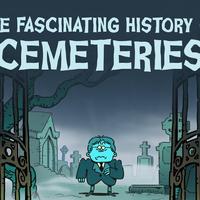
The fascinating history of cemeteries - Keith Eggener
Spindly trees,
rusted gates,
crumbling stone,
a solitary mourner—
these things come to mind when we think of cemeteries.
But not so long ago,
many burial grounds were lively places,
with blooming gardens and crowds of people
strolling among the headstones.
How did our cemeteries become what they are today?
Some have been around for centuries,
like the world's largest, Wadi al-Salaam,
where more than five million people are buried.
But most of the places we'd recognize as cemeteries are much younger.
In fact, for much of human history,
we didn't bury our dead at all.
Our ancient ancestors had many other ways of parting with the dead loved ones.
Some were left in caves,
others in trees
or on mountaintops.
Still others were sunk in lakes,
put out to sea,
ritually cannibalized,
or cremated.
All of these practices,
though some may seem strange today,
were ways of venerating the dead.
By contrast, the first known burials
about 120,000 years ago
were likely reserved for transgressors,
excluding them from the usual rites
intended to honor the dead.
But the first burials revealed some advantages over other practices:
they protected bodies from scavengers and the elements,
while shielding loved ones from the sight of decay.
These benefits may have shifted ancient people's thinking
toward graves designed to honor the dead,
and burial became more common.
Sometimes, these graves contained practical or ritual objects,
suggesting belief in an afterlife
Communal burials first appeared in North Africa and West Asia
around 10 to 15,000 years ago,
around the same time as the first permanent settlements in these areas.
These burial grounds created permanent places to commemorate the dead.
The nomadic Scythians littered the steppes
with grave mounds known as kurgans.
The Etruscans built expansive necropoles,
their grid-patterned streets lined with tombs.
In Rome, subterranean catacombs housed
both cremation urns and intact remains.
The word cemetery, or “sleeping chamber,”
was first used by ancient Greeks,
who built tombs in graveyards
at the edges of their cities.
In medieval European cities,
Christian churchyards provided rare, open spaces
that accommodated the dead,
but also hosted markets, fairs, and other events.
Farmers even grazed cattle in them,
believing graveyard grass made for sweeter milk.
As cities grew during the industrial revolution,
large suburban cemeteries replaced smaller urban churchyards.
Cemeteries like the 110-acre Père-Lachaise in Paris
or the 72-acre Mt. Auburn in Cambridge, Massachusetts
were lushly landscaped gardens
filled with sculpted stones
and ornate tombs.
Once a luxury reserved for the rich and powerful,
individually marked graves
became available to the middle and working classes.
People visited cemeteries for funerals,
but also for anniversaries, holidays,
or simply an afternoon outdoors.
By the late 19th century, as more public parks and botanical gardens appeared,
cemeteries began to lose visitors.
Today, many old cemeteries are lonely places.
Some are luring visitors back with tours,
concerts, and other attractions.
But even as we revive old cemeteries,
we're rethinking the future of burial.
Cities like London, New York, and Hong Kong
are running out of burial space.
Even in places where space isn't so tight,
cemeteries permanently occupy land
that can't be otherwise cultivated or developed.
Traditional burial consumes materials
like metal, stone, and concrete,
and can pollute soil and groundwater
with toxic chemicals.
With increasing awareness of the environmental costs,
people are seeking alternatives.
Many are turning to cremation and related practices.
Along with these more conventional practices,
people can now have their remains shot into space,
used to fertilize a tree,
or made into jewelry,
fireworks,
and even tattoo ink.
In the future, options like these may replace burial completely.
Cemeteries may be our most familiar monuments to the departed,
but they're just one step
in our ever-evolving process
of remembering and honoring the dead.
