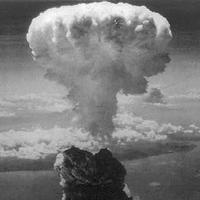
What Price Victory, August 6, 1945 (Part 2)
The planned invasion of Japan was known as Operation Downfall. It was broken down into two major operations: Operation Olympic, the invasion of Kyushu, the southernmost of the main Japanese islands. The operation would begin on X-Day, Thursday, November 1st, 1945. Operation Coronet was the planned invasion of the Kanto Plain south of Tokyo. Y-Day was set at March 1st, 1946. The southern third of Kyushu would be used as the staging area for this invasion.
The resources being set aside for these two operations were unlike anything seen up to that point in the war. The landing force for Olympic would consist of 331,000 American soldiers and 99,000 Marines. Coronet could consist of roughly the same number of Americans, many of them belonging to divisions that had fought in Europe. Three divisions of U.S. Marines would participate in each landing; that was the entire Marine Corps as it existed in 1945. These numbers do not include the tens of thousands of British, Australian and New Zealand troops which would have taken part in Operation Coronet.
In the air would have been the Fifth, Seventh and Thirteenth Air Forces of the U.S. Army Air Corps, along with the Eighth Air Force just transferred from Europe. With them would have been the Tiger Force of the RAF Bomber Command and the Australian First Tactical Air Force. The waters surrounding the invasion beaches would have contained the largest naval armada ever assembled. The U.S. Third, Fifth and Seventh fleets, comprised of 56 aircraft carriers, 20 battleships, over 50 cruisers and hundreds of smaller warships would have been joined by the entire British Pacific Fleet made up of 6 fleet carriers and their escorts. This represented 90% of the world's naval ships as of 1945, all concentrated in one area. And this tally only includes the warships. Thousands of cargo ships and troop transports would have been on the scene as well, making the Allied of invasion of Normandy in June, 1944 look small in comparison. The invasion beaches had already been given names such as Cadillac, Zephyr, Mercury, and Packard, all automobile manufacturers.
The Japanese Army had large numbers of troops in Korea and China in 1945, all of them essentially trapped in position with no hope of resupply or rescue. There were, however, hundreds of thousands of soldiers stationed in the Japanese home islands. Tokyo's defense planners, like the Allied war planners, understood the importance of using Kyushu as a base of operations. Thus, they had stationed 600,000 regular army troops there. There were also 5,000 aircraft assigned for use as kamikaze aircraft, the suicide planes that had caused so much trouble for the U.S. Navy during the last year of the war. And although post-war estimates vary, there were as many as 12,000 aircraft set aside in reserve status, although the airworthiness of these planes is questionable.
The Tokyo Plain, the landing area for Operation Coronet, was defended by 560,000 troops. This did not include the vast number of civilians that were being armed with everything from modern rifles to wooden spears. The Japanese Navy, such as it was, still had 350 midget submarines ready for use, 1000 manned torpedoes and over 800 suicide boats. Like the aircraft designated for kamikaze work, the seaworthiness of some of these naval vessels is in doubt. However, the intent was to use them while the Allied invasion fleet was still far out at sea. While the powers in Tokyo knew that they could not ultimately repel an invasion, it was hoped that the operation could be made so costly that Allied leaders would be willing to negotiate a ceasefire, giving the Japanese the ability to negotiate from a position of strength.
For two generations, historians have debated the number of casualties (both dead and wounded) that would have resulted from an Allied invasion of the Japanese home islands. Even military leaders of the day could not agree on a casualty projection. The last study done during the war, created by Secretary of War Henry Stimson's staff, estimated that conquering Japan would cost 1.7 to 4 million American casualties, including 400,000 to 800,000 fatalities, and five to ten million Japanese fatalities. The total number of American deaths, on the low end, would have been more than the total number of American war dead experienced to that point in the war, both in the Pacific and Europe. Keep in mind that while American and Allied forces fought on Kyushu and the Tokyo Plain, the Army Air Corps would have continued to fire bomb Japanese cities, thus increasing the total civilian death toll.
Nearly 500,000 Purple Heart medals were manufactured in anticipation of the casualties resulting from the invasion of Japan. To the present date, all the American military casualties of the nearly 70 years following the end of the Second World War—including the Korean and Vietnam war—have not exceeded that number. There are still so many medals in surplus that combat units in Afghanistan are able to keep Purple Hearts on-hand for immediate award to wounded soldiers. There would also have been political consequences to consider. In early August, the Soviet Union declared war on Japan and invaded parts of Manchuria and the Kuril Islands, the northern part of the Japanese island chain. It is very likely that Josef Stalin would have ordered his forces to continue moving down the island chain as the rest of the Allied forces moved up the chain from the south. It is possible that Japan would today be two nations, much like North and South Korea. The effect that would have had on the world, both economically and culturally, can not be measured.
The debate over the use of nuclear weapons against Japan in August, 1945, will continue as long as those events are remembered by human beings. One can only hope that future events will never be so horrendous as to cause Hiroshima and Nagasaki to fade from our collective memory.
