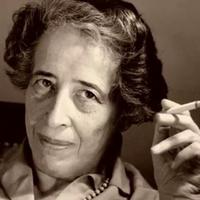
An Introduction to Hannah Arendt's The Human Condition.
Welcome to the Macat Multimedia Series.
A Macat Analysis of Hannah Arendt's The Human Condition. “The [essential purpose] of politics is freedom – and its field of experience is action.”
So says German-born political theorist and philosopher, Hannah Arendt, who wrote her book, The Human Condition in 1958.
It tracks human existence and experience; right from the Ancient Greeks to the modern-day – but focusing specifically on what makes political experiences distinctive. Arendt draws comparisons between two lives – the ‘vita activa'; the life of action and the ‘vita contemplative'; the life of contemplation.
The active life, she says, has three components – labour, work and action.
The first two keep us alive and make the world fit for us – but the third – action – is the one Arendt finds most philosophically important. It gives us the freedom to invent. It allows us to do new things and to pursue them in social settings. In political terms, ‘vita activa' involves not only coming up with new ideas, but putting them into the world.
By doing this in public form with others, Arendt says, man engages in political deliberation and decision-making – and his or her actions become political. So, how can we best understand what Arendt means by “vita active”?
What are the three components of her theory? Let's imagine a mining company, its role and its manufacturing strategy.
Its work is to dig ore from the ground. It is the bare activity of retrieving the raw material. How the company processes this ore to make it saleable on the market – is labour. It reshapes the world to make it ideal for our use. If we think of both these processes in modern terms, they can both be automated by machines.
So where do humans come in? In the third category – action.
Coming up with new ideas and making them a reality. The mining director must decide where to point the machines to drill and where to sell the metal. But this example still doesn't demonstrate Arendt's view of how action works in politics. To do this, the mining director must invent something and act upon it in the public eye – for its own sake. So, he brings together the directors of all the mining companies.
Together they decide to ensure that employees are treated well and the mining industry gives back to the community. Now, rather than ideas being economically driven, this new idea is an end in itself – a political act. Arendt believes that modernity has emphasised the life of work – doing things within an economic framework – and that the sharing of political opinions in public no longer occurs as it did in ancient Greece.
What do you think?
A more detailed examination of Arendt's ideas can be found in the Macat Analysis.
