An Introduction to Eric Hobsbawm's The Age Of Revolution.
Welcome to the Macat Multimedia Series. A Macat Analysis of Eric Hobsbawm's “The Age Of Revolution” 1789 to 1848. What forces shaped the modern world? The Marxist historian Eric Hobsbawm asked and answered this question in his book Age of Revolution 1789-1848.
Hobsbawm wanted to understand why the early 19th century witnessed the appearance of popular sovereignty, nationalism and socialism. He argued they were the products of two upheavals – the French Revolution and the Industrial Revolution.
Hobsbawm devised the concept of ‘dual revolution' – one political, fuelled by ideas, the other economic, fuelled by invention – to explain the creation of a different world. He thought the revolutions were different, but “complimentary rather than competitive.”
Hobsbawm saw this as a period of profound change. He stressed the importance of French focus on equality and liberty – powerful ideas that could never be un-thought. But he believed the dual revolution forged a world made for the rising middle class – the bourgeoisie. It excluded the working class from power. And it was anger at this that spawned socialism.
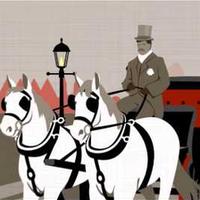
To understand how Hobsbawm saw dual revolution shaping the world, let's go on a journey – to the pre-industrial age. Cart-wheels carve grooves into dirt roads, pot holes fill with rain. Moving anything is hard and expensive. British engineers invent new techniques for better roads. Soon there are motorways. Moving goods becomes easy and cheap. But the roads serve the people who did the inventing. They don't go to working class districts. What about the traffic? The horse and cart – like autocratic monarchies – won't last. Here comes the car – a revolutionary invention by Frenchmen. It's a magnificent idea, although not entirely under the control of its drivers. It's prone to shoot off and crash, and it harms passers by. Still, the idea can't be uninvented, and even as the road network is improving, different countries begin testing their own cars … the revolutionary governments of 1848. Together, the motorway and the car transform the world for the middle classes – but not for everyone. The people who built this stuff can't drive the cars, or use the roads. But look – here's a level crossing. Those road gangs and mechanics have been working on a new – and, Hobsbawm would argue, better idea: the railway. A different form of transportation, just as socialism is different to liberalism and absolutism. Hobsbawm thinks this is the natural response of an exploited class to attempts to shut them off from the transport network – or political power. He might add that cars and the motorway network are undemocratic – and have a built in obsolescence.
Hobsbawm's work on revolution shaped a generation's understanding of the making of the modern world. A more detailed explanation of his ideas can be found in the MACAT analysis.
