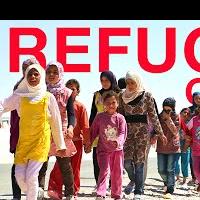
Europe's Refugee Crisis Explained
We don't control where we're born, and wherever that happens to be, is where most of us stay.
Our families, our friends, our spoken language--everything is there. It's what we know. But this year, more than a million people from the countries surrounding the European Union have left the lands of their birth in search of a more peaceful, better life. This is an explanation of the European Migration Crisis.
Europe is used to receiving economically-motivated migrants. But they're not used to being overwhelmed by refugees. A refugee is defined as “a person who has been forced to leave their country in order to escape war, persecution, or natural disaster.”
The brutal civil war against a mad dictator in Syria has caused over four million people to flee that country.
The rise of the Islamic State in Syria and Iraq is causing millions more to flee. But refugees are also from Libya, Eritrea, Afghanistan, Nigeria, Sudan, Senegal, and Somalia. The migrants are heading to Europe because they can live there in peace, their economic prospects are far better, and many of them have friends or family that have already made the journey and who pull them there like a magnet. Germany -- Europe's 80-million-man- economic powerhouse -- is the top destination.
Sweden accepts the most asylum-seekers per capita. Some settle in Italy and France. Others would like to continue on to the UK, but it's a well-guarded island, which makes the journey more difficult. Syria's neighbors: Turkey, Jordan, and Lebanon have over 3.5 million Syrians living there, many in sprawling refugee camps just outside their borders. Once out of Syria, there are several routes people are taking to get to Europe. They cross the Mediterranean into Italy and Greece. Some cross the Black Sea from northern Turkey. Once on the European mainland, the unpassable Alps and more secure borders funnel the migrants through the Balkans to Hungary. From there, busses and trains take them to the German border or other parts of the EU. The situation has reached crisis level now, partially because summertime means the sea and mountains are warm enough to safely cross and the success stories of refugees now settled in Europe has motivated many more this year than in years past to finally make the push.
But that push has also led to 6,000 people drowning in the Mediterranean Sea since the start of 2014. A rate of more than 1% of those who embark on the treacherous journey in unseaworthy boats. These tragedies, images of dead migrants washing ashore, have gripped the world. Refugees are also victimized by degenerate smugglers, like when 71 people perished in Hungary after the driver of a tractor-truck left them locked in his trailer.
Germany has said it could take up to a million asylum seekers this year alone.
This isn't just humane, it's wise, considering Germany's low birth rate, aging population, and shortages of available labor. The UK will allow in 20,000 over five years, while France will accept 12,000 a year for the next two years. Hungary, on the other hand, has built a 4-meter-high fence along its entire 109 mile border with Serbia to force the migrants west into Croatia. The U.S. State Department has said it could accept up to 8,000 Syrian refugees next year, up from the 1,500 total it's brought in so far. The U.S. has provided $4 billion in humanitarian aid. The wealthy Persian Gulf states of Saudi Arabia, the United Arab Emirates, Kuwait, and Bahrain have accepted a grand total of 0 Syrian refugees.
Outside The Box The inability of governments to act effectively to solve the crisis has led to some out-of-the-box attempts to help, including an American and his Italian wife who now patrol the Mediterranean helping to rescue distressed migrants in the 136-foot ship they spent $8 million on.
After the Icelandic government said the country of just over 300,000 could only take in about 50 Syrian refugees, Bryndis Bjorgvinsdottir called out her government to do more and volunteered to house, feed, and clothe a small refugee family. That inspired more than 10,000 other Icelanders joined her on Facebook to offer their homes. How do you think the refugee crisis should be solved?
Is your government doing enough? Make sure to like and share this video to help it spread. And as usual, thank you for watching.
