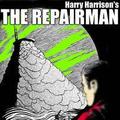
The Repairman #2
To understand the importance of the beacons, you have to understand hyperspace. Not that many people do, but it is easy enough to understand that in this non-space the regular rules don't apply. Speed and measurements are a matter of relationship, not constant facts like the fixed universe.
The first ships to enter hyperspace had no place to go—and no way to even tell if they had moved. The beacons solved that problem and opened the entire universe. They are built on planets and generate tremendous amounts of power. This power is turned into radiation that is punched through into hyperspace. Every beacon has a code signal as part of its radiation and represents a measurable point in hyperspace. Triangulation and quadrature of the beacons works for navigation—only it follows its own rules. The rules are complex and variable, but they are still rules that a navigator can follow.
For a hyperspace jump, you need at least four beacons for an accurate fix. For long jumps, navigators use as many as seven or eight. So every beacon is important and every one has to keep operating. That is where I and the other trouble-shooters came in.
We travel in well-stocked ships that carry a little bit of everything; only one man to a ship because that is all it takes to operate the overly efficient repair machinery. Due to the very nature of our job, we spend most of our time just rocketing through normal space. After all, when a beacon breaks down, how do you find it?
Not through hyperspace. All you can do is approach as close as you can by using other beacons, then finish the trip in normal space. This can take months, and often does.
This job didn't turn out to be quite that bad. I zeroed on the Beta Circinus beacon and ran a complicated eight-point problem through the navigator, using every beacon I could get an accurate fix on. The computer gave me a course with an estimated point-of-arrival as well as a built-in safety factor I never could eliminate from the machine.
I would much rather take a chance of breaking through near some star than spend time just barreling through normal space, but apparently Tech knows this, too. They had a safety factor built into the computer so you couldn't end up inside a star no matter how hard you tried. I'm sure there was no humaneness in this decision. They just didn't want to lose the ship. It was a twenty-hour jump, ship's time, and I came through in the middle of nowhere. The robot analyzer chuckled to itself and scanned all the stars, comparing them to the spectra of Proxima Centauri. It finally rang a bell and blinked a light. I peeped through the eyepiece.
A fast reading with the photocell gave me the apparent magnitude and a comparison with its absolute magnitude showed its distance. Not as bad as I had thought—a six-week run, give or take a few days. After feeding a course tape into the robot pilot, I strapped into the acceleration tank and went to sleep.
The time went fast. I rebuilt my camera for about the twentieth time and just about finished a correspondence course in nucleonics. Most repairmen take these courses. Besides their always coming in handy, the company grades your pay by the number of specialties you can handle. All this, with some oil painting and free-fall workouts in the gym, passed the time. I was asleep when the alarm went off that announced planetary distance.
Planet two, where the beacon was situated according to the old charts, was a mushy-looking, wet kind of globe. I tried to make sense out of the ancient directions and finally located the right area. Staying outside the atmosphere, I sent a flying eye down to look things over. In this business, you learn early when and where to risk your own skin. The eye would be good enough for the preliminary survey.
The old boys had enough brains to choose a traceable site for the beacon, equidistant on a line between two of the most prominent mountain peaks. I located the peaks easily enough and started the eye out from the first peak and kept it on a course directly toward the second. There was a nose and tail radar in the eye and I fed their signals into a scope as an amplitude curve. When the two peaks coincided, I spun the eye controls and dived the thing down.
I cut out the radar and cut in the nose orthicon and sat back to watch the beacon appear on the screen.
The image blinked, focused—and a great damn pyramid swam into view. I cursed and wheeled the eye in circles, scanning the surrounding country. It was flat, marshy bottom land without a bump. The only thing in a ten-mile circle was this pyramid—and that definitely wasn't my beacon. Or wasn't it? I dived the eye lower. The pyramid was a crude-looking thing of undressed stone, without carvings or decorations. There was a shimmer of light from the top and I took a closer look at it. On the peak of the pyramid was a hollow basin filled with water. When I saw that, something clicked in my mind.
