Learn to talk about artificial intelligence in 6 minutes - YouTube
Dan: Hello and welcome to 6 Minute English.
I'm Dan and joining me today is Neil. Hi Neil.
Neil: Hi Dan. What's with the protective gear and helmet?
-
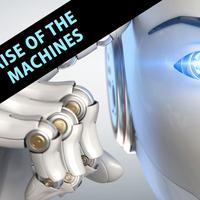
Dan: I'm just getting ready for the inevitable rise of the machines.
That's the takeover
of the world by artificial intelligence, or
AI, which some people predict will happen.
Neil: Inevitable means cannot be avoided or
stopped. Rise of the machines? What do you mean?
Dan: It's our topic in this 6 Minute English.
We'll be talking about that, giving you
six related pieces of vocabulary and, of course,
our regular quiz question.
Neil: That's the first thing you've said
that makes any sense. What's the question?
Dan: The word ‘robot' as we use it today
was first used in a 1920's Czech play ‘Rossum's
Universal Robots'. But before this, what
was its original meaning? a) forced labour
b) metal man c) heartless thing
Neil: I will go for a) forced labour
Dan: We'll find out if you were right or
not later in the show.
Neil: OK Dan. Tell me what's going on.
Dan: I saw a news article written by BBC technology
correspondent Rory Cellan-Jones about the
recent CES technology show in Las Vegas. He
interviewed David Hanson, founder of Hanson
Robotics, who said it was his ambition to
achieve an AI that can beat humans at any
intellectual task.
Neil: Surely it's a good thing!
Better AI and robotics could take over many of the jobs that we don't want to do
, or that are so
important to get 100% right… like air traffic
control. We'd never have another plane crash.
It would be infallible because it would be so clever.
-
Dan: Infallible means never failing.
And that's what bothers me. What happens when its intelligence surpasses ours?
Why should it do what we want it to do?
-
Neil: To surpass something is to do or be
better than it. Dan, you've been watching
too many movies. Robots fighting humanity
is a popular theme. Guess what… humanity
often wins. And besides, we would programme
the computer to be benevolent.
Dan: Benevolent means kind and helpful. But
that's just it, once the intelligence becomes
sentient, or able to think for itself, who
knows what it will do. We humans are not exactly
perfect, you know. What happens if it decides
that it is better than us and wants us out
of the way?
Neil: Don't worry. Asimov thought of that.
Isaac Asimov was an American science fiction
writer who, among other things, wrote about
robots. He came up with three laws that every
robot would have to follow to stop it from
acting against humanity. So we're safe!
Dan: I'm not so sure. A sentient robot could
make up its own mind about how to interpret
the laws. For example, imagine if we created
an AI system to protect all of humanity.
Neil: Well, that's great! No more war. No
more murder. No more fighting.
Dan: Do you really think that humans can stop
fighting? What if the AI decides that the
only way to stop us from hurting ourselves
and each other is to control everything we
do, so it takes over to protect us. Then we
would lose our freedom to a thing that we
created that is infallible and more intelligent
than we are! That's the end, Neil!
Neil: I think that's a little far-fetched,
which means difficult to believe. I'm sure
others don't think that way.
Dan: OK. Let's hear what the Learning English
team say when I ask them if they are worried
that AI and robots could take over the world.
Phil: Well, it's possible, but unlikely.
There will come a point where our technology
will be limited – probably before real AI
is achieved.
Sam: Never in a million years. First of all
we'd programme them so that they couldn't,
and secondly we'd beat them anyway. Haven't
you ever seen a movie?
Kee: I totally think it could happen. We
only have to make a robot that's smart enough
to start thinking for itself. After that,
who knows what it might do.
Neil: A mixed bag of opinions there, Dan.
It seems you aren't alone.
Dan: Nope. But I don't exactly have an army
of support either. I guess we'll just have
to wait and see.
Neil: Speak for yourself. I've waited long
enough – for our quiz question that is.
Dan: Oh yeah! I asked you what the original
meaning of the word ‘robot' was before
it was used in its modern form. a) forced
labour b) metal man c) heartless thing
Neil: And I said a) forced labour
Dan: And you were… right!
Neil: Shall we take a look at the vocabulary then?
Dan: OK. First we had inevitable. If something
is inevitable then it cannot be avoided or
stopped. Can you think of something inevitable, Neil?
Neil: It is inevitable that one day the Sun
will stop burning. Then we had infallible,
which means never failing. Give us an example, Dan.
Dan: The vaccine for small pox is infallible.
The natural spread of that disease has been
completely stopped. After that was surpasses.
If something surpasses something else then
it becomes better than it.
Neil: Many parents across the world hope that
their children will surpass them in wealth,
status or achievement. After that we heard
benevolent, which means kind and helpful.
Name a person famous for being benevolent, Dan.
Dan: Father Christmas is a benevolent character.
After that we heard sentient. If something
is sentient, it is able to think for itself.
Neil: Indeed. Many people wonder about the
possibility of sentient life on other planets.
Finally we heard far-fetched, which means
difficult to believe. Like that far-fetched
story you told me the other day about being
late because of a dragon, Dan.
Dan: I swear it was real! It had big sharp
teeth and everything!
Neil: Yeah, yeah, yeah. And that's the end
of this 6 Minute English. Don't forget to
check out our Facebook, Twitter, and YouTube
pages. See you next time!
Dan: Bye!
Neil: Bye.
