

How to Learn Georgian: A Complete Beginner’s Guide
 Tyler Tolman
29 Sep 2026
Tyler Tolman
29 Sep 2026
TL;DR
Georgian is quite unique: it belongs to a small language family unrelated to any other, has its own beautiful script, an 8,000-year wine culture, and a small but passionate community of learners. It’s harder to learn than most European languages (FSI Category III), but the script is approachable and the language rewards motivation. The fastest way to learn Georgian is through consistent listening and reading with real content, not grammar-first study.
Georgian (ქართული) isn’t very common amongst language learners. It’s not a language people tend to stumble into. If you’re here, you probably already have a reason for learning Georgian. Whether it’s curiosity about the Caucasus, a trip to Tbilisi, a partner, or an obsession with the wine, this language rewards motivated learners.
Here’s how to actually approach learning Georgian. It has its challenges, but it’s far from impossible.
Is Georgian Hard to Learn?
Yes, more so than most languages English speakers attempt. The US Foreign Service Institute places Georgian in Category III, its “hard languages” group, estimating about 44 weeks of full-time study to reach professional working proficiency. That puts it in the same group as Finnish, Hungarian and Russian, and ahead of only the “super-hard” languages like Arabic, Chinese, Japanese and Korean.
Georgian is difficult for two primary reasons: a complex verb system that encodes a huge amount of information in a single word (subject, object, tense, etc.), and intimidating consonant clusters. Georgian words can place several consonants in a row with no vowel between them.
None of this means you can’t learn it. It just means that you should approach learning Georgian with realistic expectations and prioritize the right things from day one.
The Georgian Script Isn’t as Scary as It Looks
Georgian uses its own script, Mkhedruli, 33 rounded letters that date back to the 10th century. It’s a completely unique writing system, and this can be intimidating at first glance. However, here’s the good news: The Georgian writing system is fully phonetic. Once you learn the sounds, you can read anything.
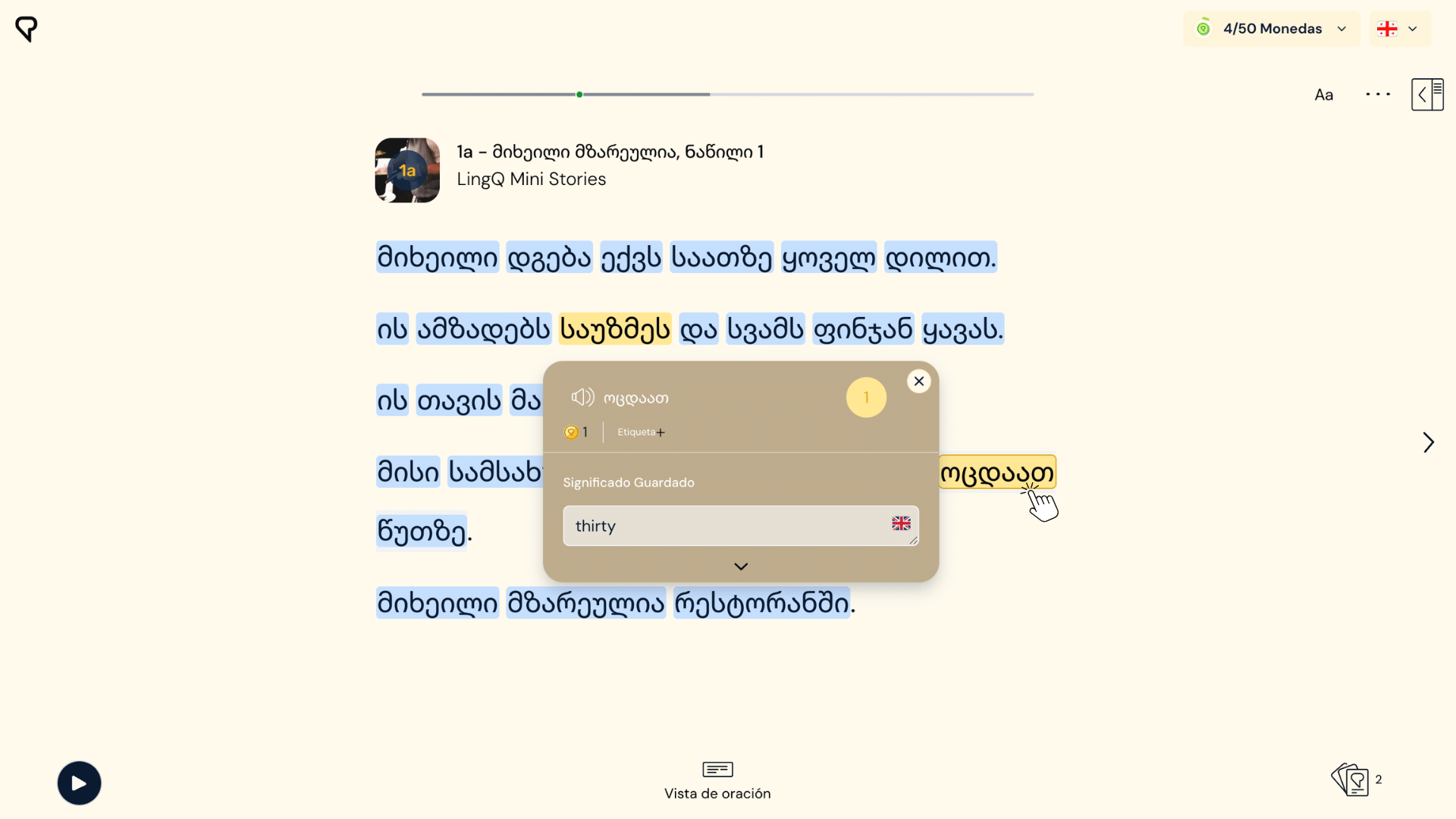
There’s no quick shortcut here beyond spending time with the script. Give the alphabet focused attention for the first week or two. Front-load the effort, familiarize yourself with the script, and build up your reading stamina gradually. Don’t rush past it hoping to pick it up “along the way” or rely on romanization. Georgian becomes dramatically easier once you feel comfortable with the writing system.
What Makes Georgian Worth Learning
Georgian belongs to the Kartvelian language family, a small group of languages spoken in the Caucasus that isn’t related to English, Russian, or any other major language family. This means that you can’t lean on cognates the way you might with a Romance or Germanic language. And yet, that’s part of the appeal for a lot of learners. Learning Georgian feels genuinely new.
Georgia also has one of the world’s oldest wine-making traditions, roughly 8,000 years, still practiced using ancient qvevri clay vessels, alongside a distinctive tradition of polyphonic singing recognized by UNESCO. Georgian food, hospitality culture, and the mountainous landscape of the Caucasus all give you real, rich content to eventually explore once you have enough of the language to engage with it directly.
The Best Way to Approach Learning Georgian
Given how different Georgian is from English, the temptation is to lean hard into formal grammar study from day one. Resist that. The verb system, for example, is not something that you should expect to master through explicit study. Absorb the language naturally through repeated exposure. Intuition is more reliable than memorized conjugation tables.
Here’s the best approach to learn Georgian: get comfortable with the script first, then spend as much time as possible listening to and reading real Georgian, even before you understand most of it. Comprehension builds faster than most learners expect once you’re consistently exposed to natural speech and text together.
Best Resources for Learning Georgian
Georgian doesn’t have the flood of apps and courses that bigger languages do, but there’s more here than most people expect:
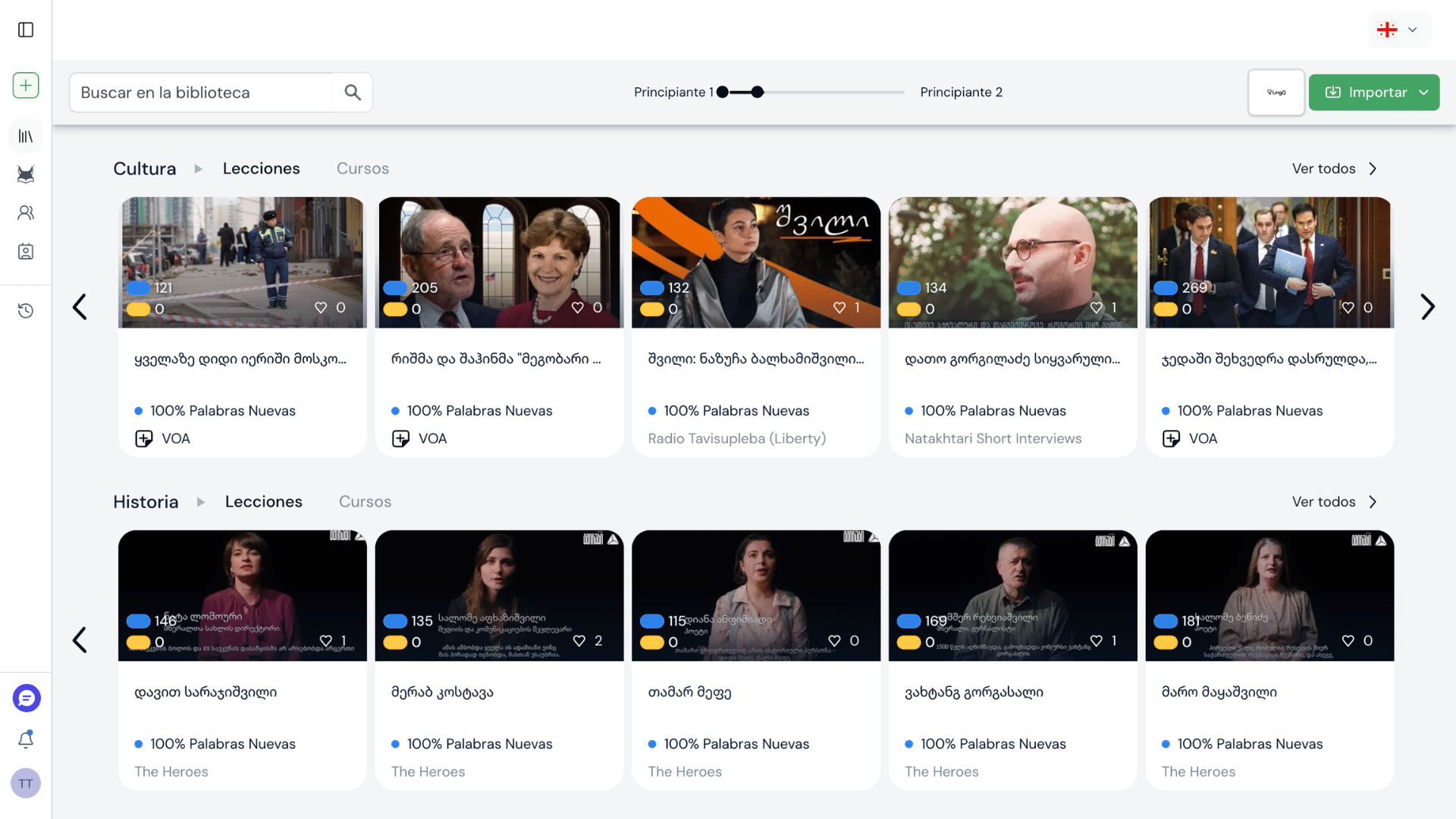
- LingQ’s Georgian library: real Georgian content with full transcripts, so you can read and listen at the same time and build vocabulary from things you’re actually interested in, rather than a fixed course sequence. Check out our Georgian Mini-Stories, designed to guide novice learners towards an intermediate level through high-frequency vocabulary and short, repetitive texts.
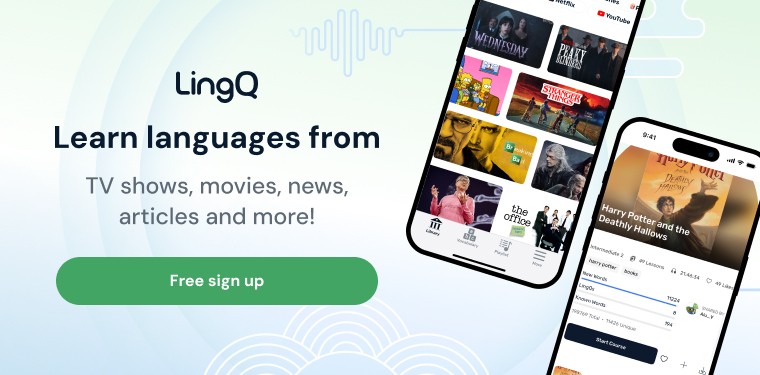
- ATINATI: a YouTube channel dedicated to Georgian art and culture, with beautifully produced videos on Georgian history, museums, artists and national figures. A great way to deepen your connection to Georgian culture as you learn the language.
- Georgian Public Broadcaster: Georgia’s national broadcaster, a solid source of authentic news and cultural programming once you’re past the earliest stages.
- The Georgian learner community: small but genuinely enthusiastic. The LingQ forum’s Georgian resources thread has real learners sharing what’s worked for them, useful because so little is written about learning this language compared to more common ones.
- Learn Georgian with Fexingo: Choose from hundreds of short, clear episodes featuring stories, slow news, and natural conversations in Georgian.
- Ryan Nakao: a YouTube channel for Georgian learners, run by a fellow learner who spent four-plus years in Georgia. Pronunciation tips, beginner vocabulary, learning advice and Georgian folk music, all aimed at helping you progress faster.
How LingQ Supports Learning Georgian
LingQ added Georgian to its library of 50+ languages specifically because of demand from its own learner community, not as an afterthought. Despite limited materials designed specifically for learning Georgian, LingQ transforms real content into custom learning material.
Import your own Georgian content, articles, YouTube videos, anything you find, and turn it into a lesson with word tracking, so your reading and listening always matches what you’re actually interested in rather than a generic course sequence. Interactive transcripts, simultaneous reading and listening, and custom review enable you to approach authentic Georgian content with deeper understanding and more confidence.
LingQ’s Georgian library is a good place to start, whatever’s drawing you to this language in the first place.
FAQs
Yes. The US Foreign Service Institute places it in Category III, its “hard languages” group, at about 44 weeks of full-time study for an English speaker to reach professional working proficiency. The verb system and consonant clusters are the biggest challenges.
Mkhedruli, Georgian’s own unique 33-letter script dating to the 10th century. It doesn’t resemble Latin, Cyrillic, or any other major writing system, but it’s fully phonetic, once you learn the letters, you can read any word correctly.
No. Despite Georgia’s geographic and historical ties to Russia, Georgian belongs to the Kartvelian language family, a small group of Caucasus languages that isn’t related to Russian, English, or any other Indo-European language.
Around 4 million people, mostly in Georgia itself. It’s a genuinely minor language on the global stage, which also means a smaller but often more dedicated and welcoming community of resources and fellow learners.
Focus on the Mkhedruli script first since it’s fully phonetic and pays off fast. Then prioritize consistent listening and reading with real content over formal grammar study, the complex verb system is absorbed more naturally through exposure than memorization.
Twenty minutes a day beats a weekend of drilling.
Read and listen to things you’d have read anyway — LingQ counts every word you pick up along the way.
- 5M+ learners
- 4.7★
- Free to start

