How Long Does It Take to Learn German? Ian’s Journey
 Elle
22 May 2026
Elle
22 May 2026
TL;DR
Ian Tames moved to Berlin from Newcastle in 2015 with no German. He started using LingQ in 2018 and now has a 2,200-day streak. He runs a near-equivalent streak in Greek, learned alongside his Greek-speaking wife and daughter. His routine is five minutes of each language per day, minimum, mostly through reading and listening to native-level content imported into LingQ. No flashcards, no quizzes. His seven-year-old is trilingual. This is what seven years of consistent comprehensible input actually looks like, and what it tells you about how long it really takes to learn German.
The short answer
The Foreign Service Institute estimates around 750 hours of guided study to reach professional working proficiency in German, putting it among the easier languages for English speakers. In daily reality, most adult learners need two to three years of consistent practice to reach conversational fluency (B2), and five to seven years to read books and follow nuanced conversations comfortably (C1+). Ian’s timeline maps closely to this. He started at A2/B1, hit comfortable fluency around year three, and now, seven years in, follows German nonfiction and family debates without effort.
The variable that matters most is not the method. It is whether you actually do the thing every day.
Starting from zero
Ian Tames moved to Berlin from Newcastle ten years ago with no German and a vague plan. He’s still there. He’s got a family there now: a wife, two kids, and what he describes as being “stuck in the best possible way.” His seven-year-old is trilingual.
Ian’s been using LingQ almost as long as he’s been in Berlin. His German streak sits at over 2,200 days. That’s more than six years of consecutive daily sessions! He’s also running a near-equivalent streak in Greek, because his wife is Greek, she speaks it to the children, and he needed to keep up.
He works full time in software marketing. He doesn’t have hours to spare. But somewhere in the daily commute, in the five minutes before bed, in the walk to wherever he’s going, there’s always a bit of German or Greek. That’s the deal he made with himself, and he’s kept it for over two thousand days running.
Before Berlin and before LingQ, Ian’s language learning history was short and unmemorable: “a bit of terrible French at school that I’d forgotten.” German was his first real attempt at another language as an adult, and he found his way to LingQ through the online polyglot community. He thinks it might have been Benny Lewis, the Irish polyglot, who first pointed him toward it. Then he started watching Steve Kaufmann’s videos.
“I kind of buy into the thinking,” he says. “The philosophy.”
He upgraded to Premium almost immediately. “It was really limited, what you can do on the free version. And it was ten euros a month, and I was just like, okay, I’ll give it a try. It wasn’t like a big decision.”
That try turned into seven years.
Years one to three: when German started clicking
By the time Ian started LingQ, his German was already at an A2/B1 level. The early days didn’t feel like a sharp departure from what he’d done before. The shift came later, and from a specific decision.
“I started reading and listening to Harry Potter, which I’d never actually read in English, by importing the audiobook. It felt too difficult at first, but something kept me going and I got comfortable listening with partial understanding. I think that change was the start of a more effective way of learning.”
That’s the move that changes everything for input-based learners. Stop using language-learning content. Start using real content, even when it’s too hard. Trust that comprehension grows around the edges of what you can already follow.
For Ian, it happened with Harry Potter in German. Five hundred pages, fully voiced, well above his level when he started. He kept going anyway.
If you are wondering how long it takes to learn German to a point where this kind of reading feels manageable, his honest answer is: roughly three years of daily exposure, starting from a low intermediate base. If you start at true zero, add a year, maybe two, for the foundation.
The daily German routine that built fluency
Ian’s daily routine is stripped back by design. He doesn’t use the quiz or flashcard features, instead he reads and listens. That’s it.
“Five minutes of German and five minutes of Greek, but just do it every day.”
On busier days, that minimum is enough to keep the streak alive and the language warm. On better days, it expands: a longer reading session on the train, a podcast on his headphones while walking, or a combination of both with the synchronized audio running alongside the text.
For German, he buys nonfiction books in German, imports them into LingQ, and reads them chapter by chapter. Sometimes he finds a podcast series and imports that. The audiobook import workflow is something he’s battled with (more on that shortly), but he’s learned to work around it because, as he puts it, “I’ve invested so much into it. I’m not going to stop.”
For Greek, he’s at a different level, and the content reflects that. He follows Easy Languages, a YouTube channel with Greek episodes, listens to the podcast version, and reads along through LingQ. “That starts at perfect for my Greek. I just listen to that podcast and read it through LingQ. And like, that’s the main thing I do with Greek, and it’s kind of enough.”
Learning German in Berlin: the reality check
There’s a thing people don’t tell you about learning German in Berlin: you don’t really have to.
“In Berlin it’s actually easy to get by on very little German,” Ian says. “So many people speak good English, and like many others I work for an international company, in English. It means you have to be pretty motivated to learn.”
The default for an English-speaking expat in Berlin is to stay in English, indefinitely. Most do. The fact that Ian didn’t is partly the daily LingQ habit, partly the family on his wife’s side, and partly something simpler: he wanted the reading-and-listening approach to translate into actual conversations, and after enough exposure, it did.
“For me it still brings the most satisfying feeling: using words and phrases for the first time without having actively learned them. Focusing on soaking things up through exposure is probably really obvious to experienced language learners but for me at the time it was a big change. I suddenly felt much more motivated to listen and read than to go to lessons.”
Recently he ran into a German friend he hadn’t seen for a while. “He said he didn’t understand how my German had got so good without speaking it at work. I was chuffed to hear that! I told him it was basically because I’d been listening every day for about seven years.”
This is the part most “how long does it take to learn German” guides skip. The hours add up only if you actually log them. Ian’s edge is not method. It is consistency.
The Greek parallel
The German has the longer streak. The Greek has the deeper reason.
Ian started learning Greek just before his daughter was born. “I wanted to be able to follow what my wife was saying to her, and I’ve pretty much managed to keep up with their conversations the whole time as I’ve learned.”
He learned alongside his daughter. As her Greek vocabulary expanded, his expanded with it, on a slight delay. It was a clever arrangement, and it worked.
The bigger test was the wider family. Greek dinners with relatives are not gentle on a learner.
“I remember the feeling of total alienation, not understanding a word. Now I feel part of the family. I’m able to follow everything and chip in to conversations about everyday matters: chit-chat, plans, or anything to do with the children.”
A few years ago his mother-in-law thanked him for learning Greek. She said what a difference it made not to have to switch to English when he was in the room.
“I realised that in many ways this was my job done! Improving my speaking is just icing on that cake.”
“It’s my secret weapon”
When a colleague at work mentioned he wanted to learn Portuguese, Ian’s immediate instinct was to recommend LingQ. He tried to explain it from scratch.
“I said, look, I use this tool, LingQ, and you kind of have to buy into the philosophy a bit. It’s a bit messy. You need to find the content you want to use and understand how it works. But once you do, I found it extremely effective.”
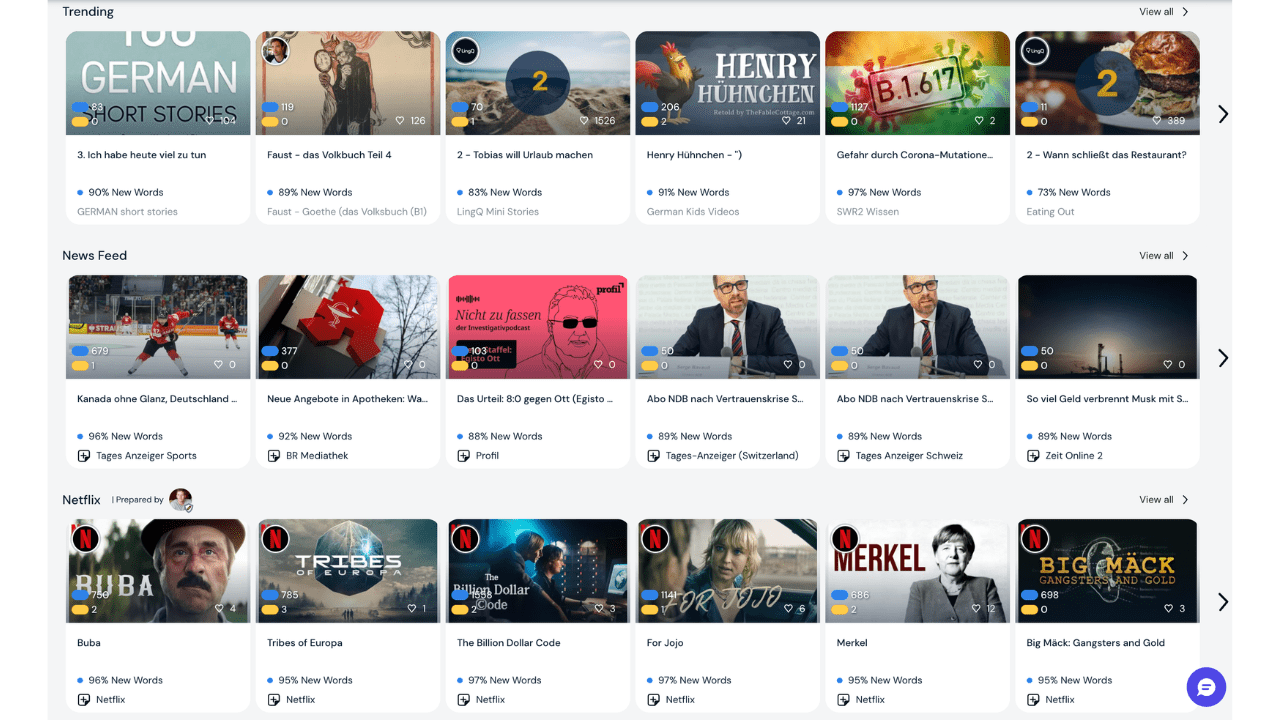
He describes it as “an assisted reader that works with other content.” Something that lets you get into material that would otherwise be too hard, that sits above your level but becomes manageable because you can look up words as you go.
The thing that sold his colleague, though, was the word tracking.
“I said, like, it keeps track of the words that you know. This is maybe the biggest thing for me. You’ve got this thing that somehow measures your progress. Okay, it’s not an exact science, but still.”
Ian compares it directly to Duolingo, in a way that says everything about why he’s still here after seven years.
“Duolingo is like a toy, really. It’s a fun toy. And I feel like LingQ is just so much more of a serious tool.”
He paused, then added: “I imagine it’s a much smaller company.”
(It is. Roughly 40 people, spread across Canada, Ukraine, Serbia, Brazil, and beyond.)
A user who’s seen the friction
Ian is honest about the trade-offs. Content discovery in some languages can feel uneven, and importing audiobooks alongside their text takes more setup than he’d like. He’s worked around all of it.
“I just put up with it,” he says. “Because I’ve invested so much in it. I’m not going to stop using it in the near future, because this is just how I do it, and I’ve had so much success. Really, with this as my main tool.”
That’s not resignation. That’s the calculation of someone who’s been doing this long enough to know what works.
What he’d tell someone starting German today
Ask Ian what he wishes he’d known at the start, and his answer is the kind of thing only a long-time learner can give you with confidence.
“I notice beginners correcting themselves all the time as they speak, trying so hard to get the word order right, or worrying about the right prepositions and articles. I’m sure that’s what I did, too. My advice would be to have a look at the grammar that’s ahead and then forget it.”
Look at the grammar. Then forget it.
“I think bad pronunciation or just limited vocab leads to way more misunderstandings. After enough exposure the sentence structure that seemed so weird at first soon starts to sound right and come out naturally.”
This is comprehensible input in one sentence, delivered by someone who’s spent 2,200 days proving it works. If you want the long-form case for this approach, Steve Kaufmann’s best way to learn German lays it out across the full method, of which Ian’s story is one lived example.
A trilingual seven-year-old
Ian’s daughter is seven. She speaks English with him, Greek with her mother, and German at school. Her younger sibling is on the same path.
“I feel a lot of admiration and pride, even though for her it’s completely natural. She seems to have an affinity for language, on top of the standard children’s sponge-brain abilities. I like to think that my learning alongside her has made her feel special about speaking three languages, and helped her to be more playful with them.”
There’s a useful inversion at the heart of this. Ian started learning Greek to follow his daughter. His daughter is now teaching him things back.
“It’s also just really fun and practical to learn from her. I notice a lot of mistakes in my pronunciation by listening to her speak, and as she’s grown she’s pretty much replaced the need for Google Translate!”
Where he is now, 2,200 days in
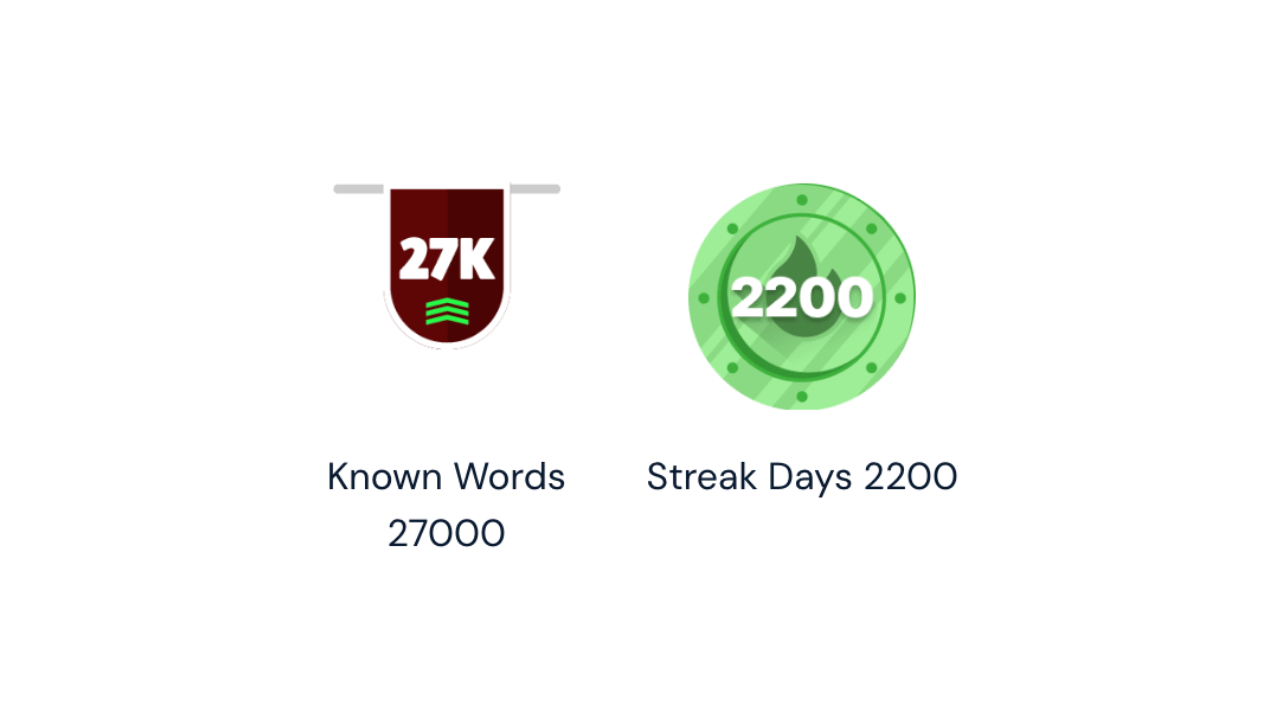
His German is at a genuinely high level and his Greek is good and still improving. Ian’s seven-year-old is trilingual. His younger child is on the way to being the same. The streak keeps running.
He’s not planning to stop, in either language, or with LingQ.
“I have to keep going with it.”
FAQs
For English speakers, the Foreign Service Institute estimates around 750 hours of guided study to reach professional working proficiency. In practice, most adult learners reach conversational fluency (B2) in two to three years of daily practice, and the comfortable fluency that lets you read books and follow family debates takes five to seven years. Ian Tames started LingQ at A2/B1, hit comfortable fluency around year three, and at year seven follows German nonfiction without effort. The variable that matters most is daily consistency.
Ian reached conversational fluency in German after roughly three years of daily reading and listening through LingQ, having started at A2/B1. He reached the level his German friends describe as fluent (C1+) at around year five to six. Comprehensible input does not shortcut the timeline. It changes what the hours feel like, replacing flashcards and grammar drills with content you actually want to spend time with.
Yes, with two caveats. First, you need genuinely comprehensible material, which means content slightly above your level where you can guess most of what you don’t know from context. Second, speaking and writing will lag behind reading and listening until you start practicing them directly. Ian’s German reading and listening reached a high level through input alone; his speaking sharpened later through family interactions and daily life in Berlin.
Adults learn differently from children, not more slowly in absolute terms. The advantage adults have is the ability to read complex content, sit with abstract grammar, and direct their own learning. The disadvantage is time and consistency, both of which Ian protected through a strict daily floor of five minutes per language. His daughter is acquiring three languages simultaneously through immersion; he is learning two through daily, deliberate exposure. Both work.
For Ian, the answer is yes. Seven years of daily use have taken him from A2/B1 German to a level his German friends now describe as fluent. His method is consistent: import German content into LingQ (books, podcasts, articles), read and listen at the same time, look up unknown words as he goes, and let comprehension build through volume. He doesn’t use the flashcard or quiz features. Just reading and listening, every day, for over 2,200 days running.
Ian’s own description: “Duolingo is like a toy, really. It’s a fun toy. And I feel like LingQ is just so much more of a serious tool.” The two apps solve different problems. Duolingo builds a beginner vocabulary base through gamified exercises and caps out around A2. LingQ is built for learners who want to take real content (books, podcasts, articles, videos) in German and turn it into ongoing practice that scales to B2, C1, and beyond. The two can be used together, with Duolingo as a starting point and LingQ as the long-term tool.
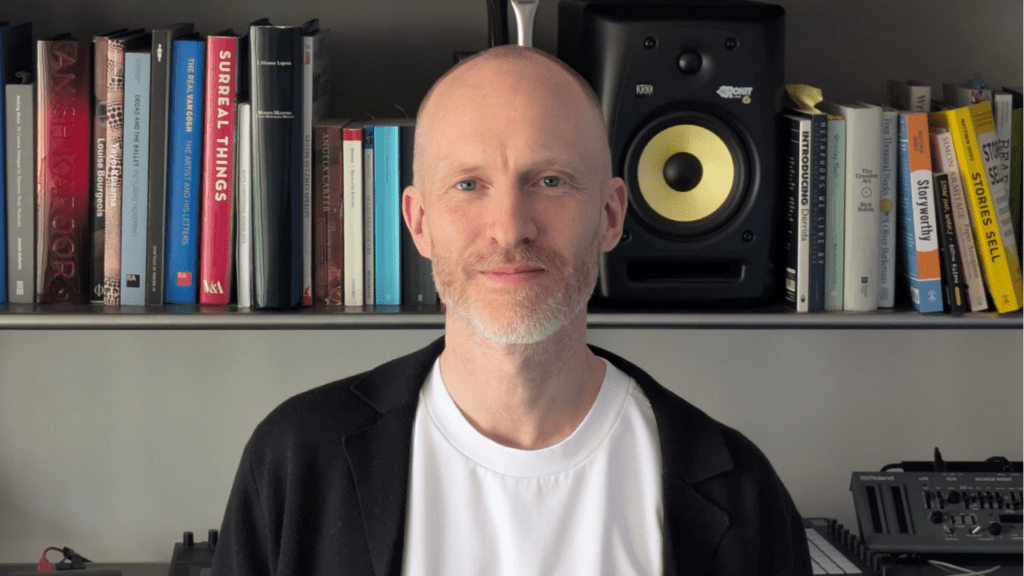
Ian Tames is a LingQ member based in Berlin. He has been learning German and Greek on LingQ since 2018.
Want to start your own streak? Learn languages the way Ian does →
You might also like