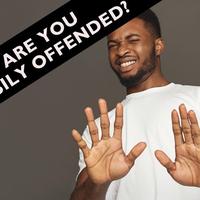
Snowflakes and taking offence: 6 Minute English - YouTube
Neil: Hello. Welcome to 6 Minute English, I'm Neil.
I'm Neil.
Rob: And I'm Rob.
Neil: Rob, would you say that you were a snowflake?
-
Rob: Wow, I can't believe you said that,
that's so offensive. How could you be so rude?
Neil: So I guess that's a yes then? Sorry, I
only asked.
Rob: Don't worry, I wasn't really upset, I
just wanted to demonstrate the meaning
of the word. The word 'snowflake' has
taken on a new meaning in recent years.
These days it's used as an insult. It's used
to criticise people or groups
that are seen to be very easily offended or
upset by things that others say.
Neil: There is usually a political side to it
too, isn't there?
Rob: Yes, people who use the word
'snowflake' tend to be from the political
right and they usually use it about those
on the political left, particularly
millennials - young, socially aware adults.
Neil: Well we'll explore this topic in more
detail shortly, but first a quiz question. In
which year was 'snowflake' one of Collins
Dictionary's words of the year? Was it
a) 1996, b) 2006, or c) 2016. Rob: Well, we said it's quite a recent word
so I'm going for c) 2016.
Neil: Well, we'll find out if you're right later
on in the programme.
The topic of offence is a very complicated one.
First what do we mean by 'offence' Rob?
Rob: Thanks for that. That is a really
difficult question. Something that is
offensive is rude, insulting and makes
people feel hurt and upset.
What's difficult about it though is that we
don't all find the same things offensive.
Some people can be deliberately
offensive and some people may be
offensive without meaning to be.
Neil: Also, different people respond to
offence in different ways - some accept it
as the price of free speech and some try
to stop the people they think are offensive
from saying the things they do.
Rob: These terms come up quite a lot in
discussions about equality, race, religion
and of course, politics.
Neil: The topic was discussed in detail in
the BBC Radio programme Sweet Reason.
Evan Davis presented the programme and
here is the first part of his summary of the
discussion. What does he say is the
reason some people talk about offence?
Evan Davis: First, on occasion, people
probably do invoke offence when really
they just have a political disagreement
and on occasion groups that suffer
discrimination or exclusion perhaps find it
exhilarating or uniting to call out that
discrimination.
Neil: He says that some people take
offence when it's just a political
disagreement. He says they 'invoke' offence.
Rob: If you 'invoke' something it means
that you use it to support your point or
explain your action. So to 'invoke offence'
is to say that we are acting this way
because we are offended by what you
have said, although the offence
may only be a political difference rather
than something truly offensive.
Neil: Davis goes on to say that groups
that do suffer from discrimination may
get some feelings of unity when they
'call out' discrimination.
They feel more together when they
publicise and highlight the discrimination
they have experienced. Even though some
offence that is taken may not be genuine,
that doesn't mean people don't have a
right to be offended. Here's Evan Davis again.
Evan Davis: Where the so-called
snowflakes surely have a point is this,
societies are entitled to make certain
things taboo and the millennials
use of the word offensive is simply
designed to say some views are not just
wrong they are in a special category of
wrong.
Rob: His point here is that societies can
decide that certain things are taboo. In
this context something that is 'taboo' is
something that is regarded by society as
being shocking and offensive and that it
is OK for people to be offended by these
things.
Neil: And I think the point he makes is a
good one.
The word 'snowflake' is usually used as an
insult - but some people may feel proud to
be a snowflake because it means they are
standing up for a particular standard, they
have a level of decency and social
responsibility that is higher than that of
those who are calling them snowflakes.
Rob: Well I hope we haven't caused any
offence today. Before we review the
vocabulary, can we have the answer to
today's question Neil?
Neil: Of course, I asked in which year was
'snowflake' one of Collins Dictionary's
words of the year? Was it…
a) 1996, b) 2006 or, c) 2016
Rob: And I said c) 2016. It's got to be right!
Neil: Well, do you want to hear the story?
Interestingly the term was coined in 1996
in the book Fight Club, but it was in 2016
that it was one of the dictionary's words
of the year. Now let's review our words of
the day. First there is 'offence'.
Rob: People can 'take offence' and be
'offended' by something that is 'offensive'.
Something that is 'offensive' could be rude,
insulting and shocking. It might take the
form of humiliation or discrimination
against a person or group.
Neil: The term 'snowflake' is a word used
by some people to talk about other
people who they think get offended too
easily and unnecessarily.
They don't want to change their language
or ideas just because snowflakes get
upset. Then we had the word 'invoke'. If
you 'invoke' something you use it as a
reason to explain your actions
and feelings
Rob: To 'call something out' is to challenge
it, to highlight it and look for justification.
Neil: And finally we have 'taboo' -
something that society says is offensive
and shocking. So there we have it. What
do you think Rob of this topic?
Rob: Well it is a very difficult subject,
particularly when it comes to politics,
religion and society. Free speech is good
but at times, particularly on social media,
I think can be unnecessarily
unpleasant.
Neil: Well, try not to be offended but it is
time for us to leave you for this programme.
Do join us next time. Remember you can
find us on Instagram, Facebook, Twitter,
YouTube and of course our website
And of course, we have a new app which
you can find on our website. It's free and
it's brilliant isn't it Rob?
Rob: Absolutely!
Neil: See you soon, bye.
Rob: Bye!
