



Last updated: October 2026
The most common way to say hello in Hindi is namaste (नमस्ते), pronounced “nuh-muh-stay.” It works at any time of day, with anyone, and you can use it for goodbye too. For a more formal hello, say namaskar (नमस्कार).
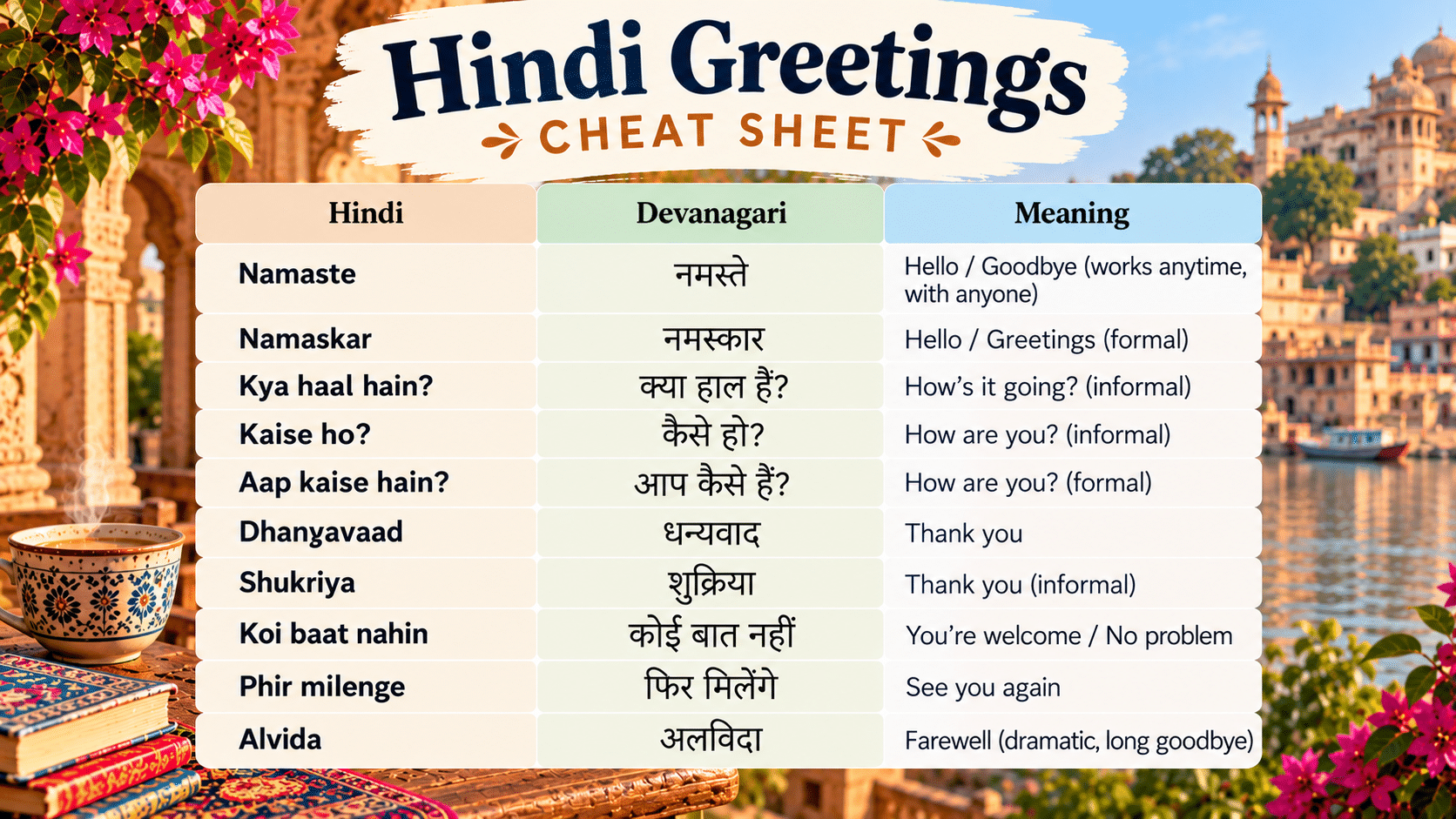
Here are the 15 Hindi greetings you’ll hear most, with Devanagari script, pronunciation and when to use each one.
| Hindi | Devanagari | Pronunciation | Meaning | When to use it |
|---|---|---|---|---|
| Namaste | नमस्ते | nuh-muh-stay | Hello / goodbye | Anytime, with anyone |
| Namaskar | नमस्कार | nuh-muh-skaar | Hello (formal) | Formal settings, elders |
| Pranam | प्रणाम | pruh-naam | Respectful greeting | Elders, teachers, family elders |
| Suprabhat | सुप्रभात | soo-pruh-bhaat | Good morning | Formal or written; often just “good morning” in speech |
| Shubh sandhya | शुभ संध्या | shubh sun-dhyaa | Good evening | Formal or written |
| Shubh ratri | शुभ रात्रि | shubh raa-tree | Good night | Formal or written, when parting at night |
| Aap kaise hain? | आप कैसे हैं? | aap kai-say hain | How are you? (formal) | Elders, strangers; kaisi for a woman |
| Tum kaise ho? | तुम कैसे हो? | tum kai-say ho | How are you? (informal) | Friends, people your age |
| Kya haal hain? | क्या हाल हैं? | kyaa haal hain | How’s it going? | Casual, with friends |
| Main theek hoon | मैं ठीक हूँ | main theek hoon | I’m fine | Answering “how are you?” |
| Dhanyavaad | धन्यवाद | dhun-yuh-vaad | Thank you (formal) | Polite or formal thanks |
| Shukriya | शुक्रिया | shook-ree-yaa | Thank you | Everyday thanks |
| Koi baat nahin | कोई बात नहीं | koi baat nuh-heen | You’re welcome / no problem | Responding to thanks or apologies |
| Phir milenge | फिर मिलेंगे | phir mil-en-gay | See you again | Casual goodbye |
| Alvida | अलविदा | ul-vi-daa | Farewell | Long or final goodbyes; sounds dramatic in daily use |
How do you say hello in Hindi?
Namaste (नमस्ते) is the classic Hindi hello. It’s respectful, works at any time of day, and doubles as goodbye. Traditionally, you say it with your palms pressed together in front of your chest and a slight bow.
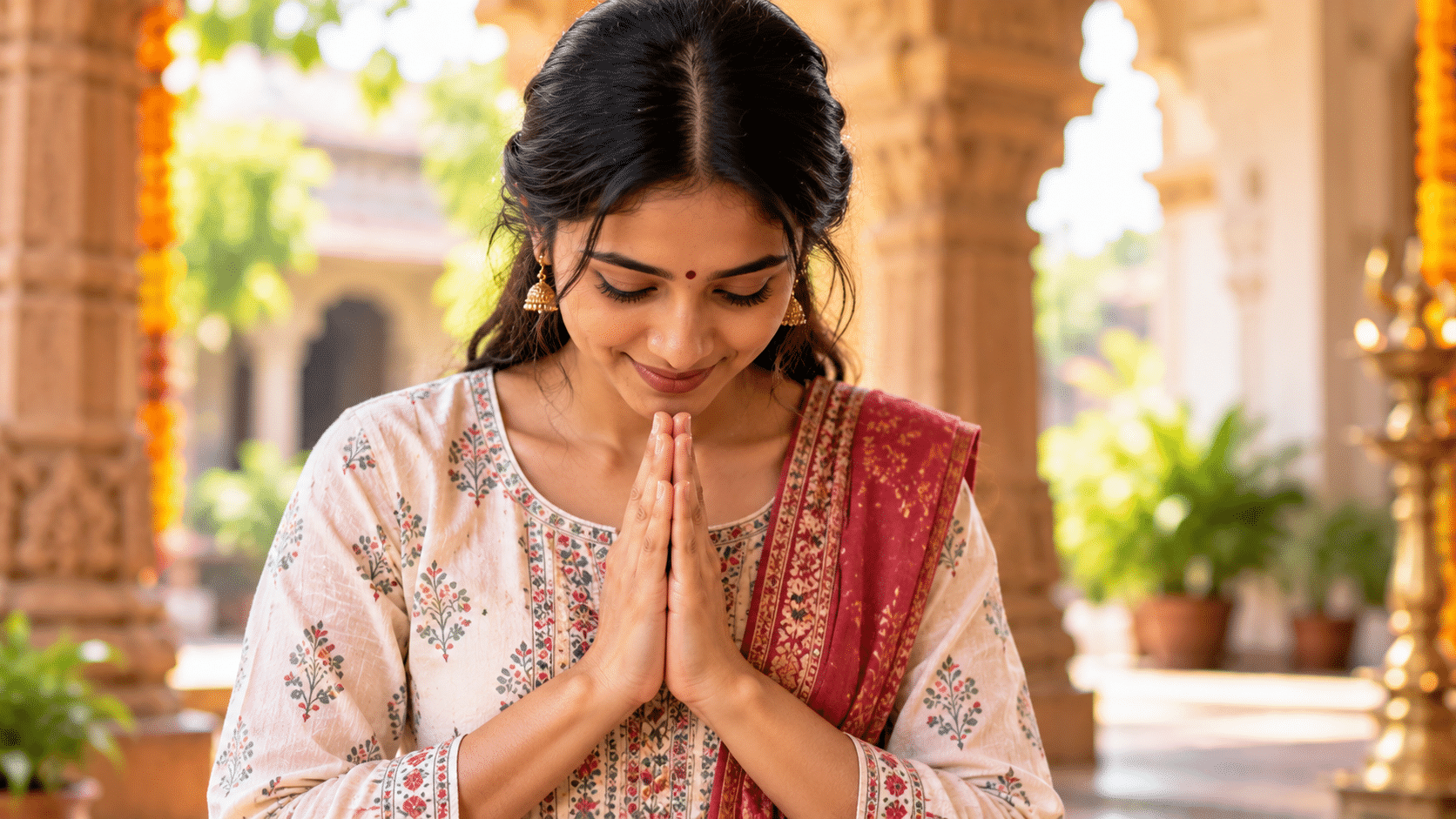
Namaskar (नमस्कार) means the same thing but sounds a little more formal. You’ll hear it in speeches, on TV and when greeting people you want to show extra respect.
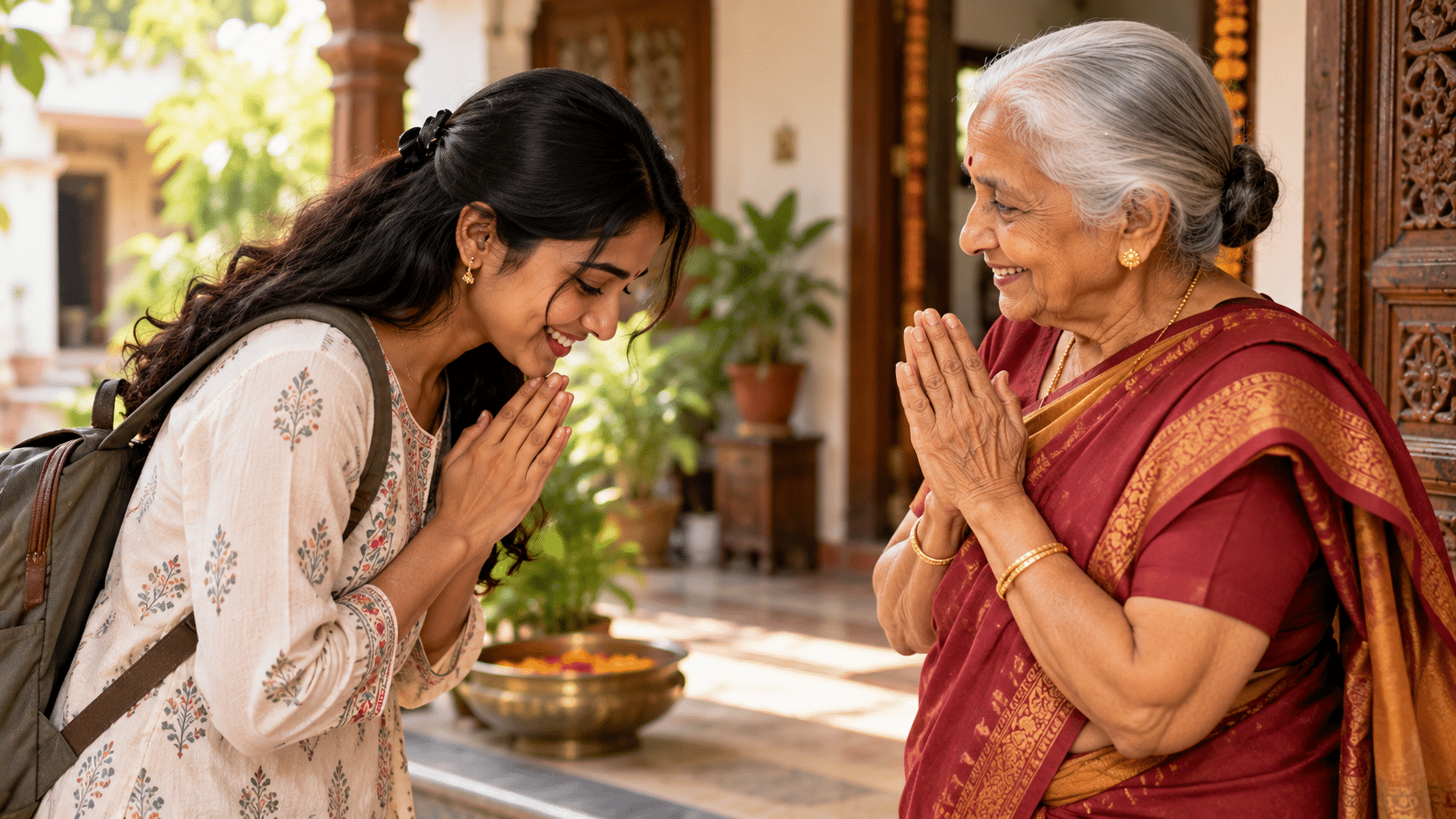
Pranam (प्रणाम) is a deeply respectful greeting, used mainly with elders, teachers and older relatives. In some families it comes with touching the elder’s feet as a sign of respect.
In casual conversation between friends, especially in cities, many Hindi speakers simply say “hi” or “hello” in English. Namaste is never wrong, though, and as a learner it’s the safest choice.
What does namaste mean?
Namaste literally means “I bow to you.” It comes from Sanskrit: namaḥ (bow, salutation) + te (to you).
You’ll often see it translated as “the divine in me bows to the divine in you.” That’s a popular spiritual interpretation, especially in yoga classes, but it isn’t the literal meaning. In everyday Hindi, namaste is simply a polite, respectful hello or goodbye, the way “hello” is in English.
A few things worth knowing:
- The gesture matters. Palms together at chest level with a slight nod or bow is called añjali mudrā. You can say namaste with or without it.
- It’s not only for hello. Namaste works for goodbye too.
- Add ji for extra respect. Namaste ji (नमस्ते जी) is warmer and more respectful, especially with elders.
How do you say good morning in Hindi?
Good morning in Hindi is suprabhat (सुप्रभात). It’s correct, but it sounds formal. You’ll see it more in writing, on the news and in messages than in everyday conversation. In person, most people just say namaste, or “good morning” in English.
The other time-of-day greetings work the same way:
- Good evening: shubh sandhya (शुभ संध्या)
- Good night: shubh ratri (शुभ रात्रि), said when parting at night
If you’re not sure which to use, namaste works at any hour.
How do you say “How are you?” in Hindi?
Hindi has formal and informal ways to ask, and the word changes slightly depending on who you’re talking to.
- Aap kaise hain? (आप कैसे हैं?) The polite form, for elders, strangers and anyone you want to show respect. Use kaisi for a woman: Aap kaisi hain? (आप कैसी हैं?)
- Tum kaise ho? (तुम कैसे हो?) The informal form, for friends and people your age.
- Kya haal hain? (क्या हाल हैं?) A casual “How’s it going?” You’ll also hear kya haal hai? (क्या हाल है?); both are correct.
How to answer:
- Main theek hoon (मैं ठीक हूँ): I’m fine.
- Main achchha hoon (मैं अच्छा हूँ): I’m good. A woman says achchhi.
- Aur aap? (और आप?): And you?
How do you say thank you in Hindi?
- Dhanyavaad (धन्यवाद) is the standard, slightly formal “thank you.”
- Shukriya (शुक्रिया) is just as common in everyday speech and sounds a little warmer.
To reply, say koi baat nahin (कोई बात नहीं), which literally means “it’s nothing” and works like “you’re welcome” or “no problem.”
How do you say goodbye in Hindi?
- Namaste (नमस्ते) works for goodbye as well as hello.
- Phir milenge (फिर मिलेंगे) means “we’ll meet again,” a friendly, casual goodbye.
- Alvida (अलविदा) means “farewell.” Be careful with this one: it suggests a long or permanent goodbye, so it sounds dramatic in daily life. You’ll mostly hear it in Bollywood films and songs.
What is a respectful greeting in India?
Respect shapes how people greet each other in Hindi. A few simple habits go a long way:
- Add ji (जी). Adding ji after a greeting or a name, as in namaste ji or Sharma ji, adds warmth and respect. It’s one of the easiest ways to sound polite.
- Use aap with elders. Aap is the respectful “you.” Save tum for friends and people your age.
- Greet elders first. Younger people usually greet older people first, often with namaste or pranam.
India is diverse, and some people use greetings tied to their religion or region. You may hear sat sri akal (Sikh), salaam or assalamu alaikum (Muslim), or Ram Ram and Jai Shri Krishna (Hindu, especially in villages and northern India). If someone greets you this way, it’s polite to reply with the same greeting. When in doubt, namaste is always respectful.
Learn Hindi greetings in context with LingQ
Memorizing a list of greetings is a good start, but you’ll remember them far better once you hear them in real conversations. That’s where LingQ comes in.
- Start with Hindi Mini Stories. A course of 60 short lessons on everyday topics, with audio. You’ll meet greetings like namaste and aap kaise hain again and again, naturally.
- Tap any word. Look up words and phrases as you read and listen. LingQ saves them so you can review them later.
- Import what you love. With the LingQ Importer browser extension, you can turn Bollywood movies, Hindi YouTube videos and Indian TV shows into lessons and hear greetings used the way native speakers really use them.

FAQ
How do you say hello in Hindi?
The most common way is namaste (नमस्ते). For a more formal hello, use namaskar (नमस्कार).
What does namaste mean?
Namaste literally means “I bow to you,” from the Sanskrit namaḥ (bow) and te (to you). It’s used as a respectful hello or goodbye.
Is namaste hello or goodbye?
Both. Namaste works when you arrive and when you leave.
How do you say good morning in Hindi?
Suprabhat (सुप्रभात). It’s quite formal, so in everyday speech many people just say namaste or “good morning” in English.
How do you say thank you in Hindi?
Dhanyavaad (धन्यवाद) is the standard form, and shukriya (शुक्रिया) is just as common in everyday speech.
What is a respectful greeting in India?
Namaste with your palms together is always respectful. Add ji (namaste ji) for extra warmth, and use aap rather than tum with elders.
 Learning Hindi?