44 Useful Phrases in Japanese: A Beginner’s Guide (2026)
 Elle
13 Apr 2017
Elle
13 Apr 2017
If you are about to start a Japanese language learning journey, prepare for a challenging, but wonderful experience. Japanese is a remarkably rich, and it contains concepts that don’t even exist in English.
However, many aspiring learners hesitate because they hear that Japanese is one of the hardest languages for native English speakers to master. The U.S. Foreign Service Institute (FSI) even classifies it as a Category IV “super-hard” language.
But here is the truth that every polyglot knows: you do not need to master thousands of kanji or complex honorific grammar to start interacting with Japanese culture. With some core phrases, you can immediately build a bridge of respect. Learning how to say thank you in Japanese is the perfect first step on your road to genuine fluency.
The Gold Standard of Japanese Politeness: Gratitude and Bowing
In English, a simple “thank you” or “excuse me” works in almost any social tier. In Japan, gratitude and politeness require more nuance. Social hierarchy and relationship dynamics cannot be overlooked.
Take the word for thank you. You might know arigatou, but using it by itself with a boss, a stranger, or a store clerk can sound blunt or even rude. Politeness in Japan operates like a sliding scale:
- Casual (Short forms): Used exclusively with close friends, classmates, peers, and family members. Examples include doumo or arigatou.
- Formal (Long forms): Used with strangers, teachers, superiors, shop staff, or in business settings. Examples include arigatou gozaimasu or sumimasen.
The Art of the Bow (Ojiqi)
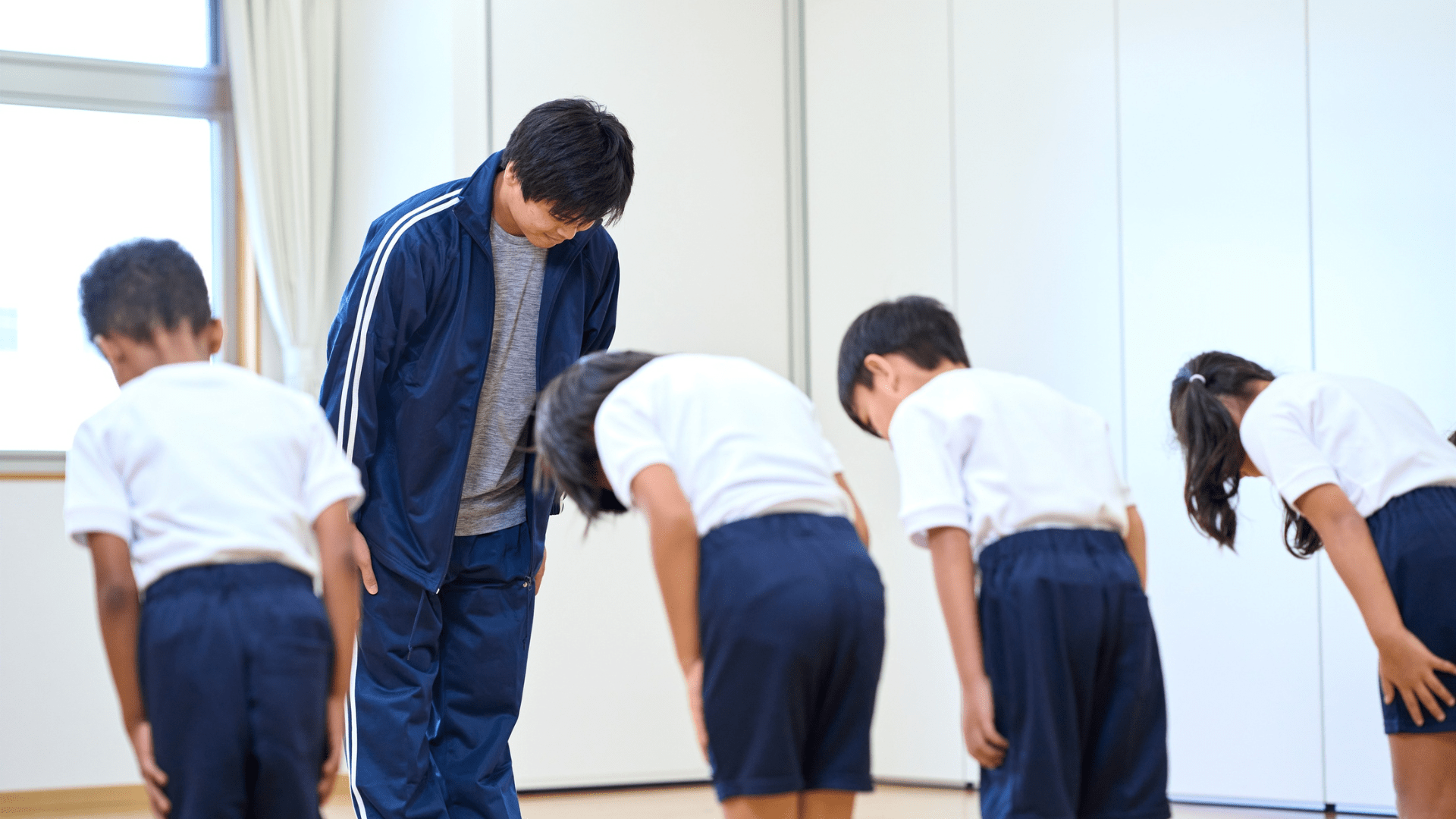
In Japan, your physical posture carries as much weight as your spoken words. When expressing gratitude or apologizing, a physical bow (ojigi) is customary.
- The Nod/Casual Bow (Eshaku): A slight 15-degree tilt of the upper body. Use this for casual greetings or when saying a quick thank you to a peer.
- The Polite Bow (Keirei): A clear 30-degree bend from the waist, keeping your back straight and eyes cast down. Use this when thanking a customer, an employer, or an elder.
By pairing the correct level of spoken Japanese with a respectful posture, you demonstrate an appreciation for the culture that goes far beyond reciting a generic phrasebook.
1. Expressions of Gratitude and Politeness
Gratitude is the cornerstone of Japanese social interactions. The phrases below allow you to express appreciation across all levels of formality, from casual street slang to corporate politeness.
| Japanese (Script) | Romaji | English Translation | When to Use |
| ありがとうございます | arigatō gozaimasu | Thank you very much | The standard, safe, polite way to thank strangers, superiors, and service workers. |
| ありがとう | arigatō | Thank you | Casual. Use only with close friends, family, and peers. |
| どうも | dōmo | Thanks / In a way | Very casual shorthand. Often combined with other phrases or muttered as a quick acknowledgement. |
| どうもありがとうございます | dōmo arigatō gozaimasu | Thank you so much | Extremely polite. Use when someone goes completely out of their way to help you. |
| すみません | sumimasen | Excuse me / Thank you | The ultimate survival word. It expresses a mix of “excuse me” and “thank you for the trouble you took for me.” |
| 恐れ入ります | osoreirimasu | I am sorry to trouble you / Thank you | Ultra-formal business Japanese. Used when expressing gratitude to clients or high-ranking officials. |
| どういたしまして | dōいたしまして | You’re welcome | The standard response to gratitude. Note: avoid using this with high superiors as it can sound slightly patronizing. |
| いいえ、とんでもないです | iie, tondemonai desu | No, don’t mention it / Not at all | A very polite, humble way to deflect a compliment or a massive expression of gratitude. |
| こちらこそ | kochirakoso | Likewise / The pleasure is mine | Use this when someone thanks you, but you want to emphasize that you are the one who is grateful. |
2. Essential Greetings and Introductions
First impressions matter, especially in Japan. These foundational greeting phrases will help you start conversations smoothly, whether it is first thing in the morning or late at night.
| Japanese (Script) | Romaji | English Translation | When to Use |
| 今日は | konnichiwa | Hello / Good afternoon | The standard daytime greeting. Safe for almost any conversational partner. |
| お早うございます | ohayō gozaimasu | Good morning | Polite morning greeting. Use with coworkers, teachers, and strangers until about 10:30 AM. |
| おはよう | ohayō | Morning! | Casual morning greeting used with close friends and family members. |
| 今晩は | konbanwa | Good evening | Standard greeting used after dark. Polite and safe for all situations. |
| さようなら | sayōnara | Goodbye | Farewell. Note: This has a strong sense of finality (like “goodbye for a long time”). |
| じゃあね / またね | jaa ne / mata ne | See you / Bye! | Casual goodbyes used daily among close friends and peers. |
| 初めまして | hajimemashite | Nice to meet you | Literally means “this is the first time.” Say this at the very beginning of an introduction. |
| お元気ですか | o genki desu ka | How are you? | Polite inquiry about someone’s health or well-being. |
| 元気です | genki desu | I am doing well | The typical positive response to “How are you?” |
| お名前はなんですか | o-namae wa nan desu ka | What’s your name? | Polite way to ask for someone’s identity during an introduction. |
| 愛佳です | Aika desu | My name is Aika | A clean, standard template to introduce yourself ([Your Name] desu). |
3. Navigating Location, Origin, and Language
When traveling through Japan, you will naturally need to communicate where you are from, ask directions, or find out if someone speaks English. Use these directional phrases to find your way.
| Japanese (Script) | Romaji | English Translation | When to Use |
| 出身はどこですか | Shusshin wa doko desu ka? | Where are you from? | A polite question to ask someone about their hometown or country of origin. |
| アメリカ出身です | Amerika shusshin desu | I’m from the United States | Standard response template for Americans ([Country] shusshin desu). |
| カナダ出身です | Kanada shusshin desu | I’m from Canada | Standard response template for Canadians. |
| イギリス出身です | Igirisu shusshin desu | I’m from the United Kingdom | Standard response template for British citizens. |
| 英語はできますか | Eigo dekimasu ka | Do you speak English? | Literally “Can you do English?” Use this when you need assistance from a local. |
| 日本語はできますか | Nihongo dekimasu ka | Do you speak Japanese? | A polite query to check if a fellow foreigner can communicate in the local language. |
| 少しできます | sukoshi dekimasu | I can speak a little | A humble, perfect response when someone asks if you can speak Japanese. |
| …はどこですか | … wa doko desu ka | Where is the…? | The ultimate navigation sentence frame. Place your destination at the beginning. |
| バス停はどこですか | basutei wa doko desu ka | Where is the bus stop? | Essential phrase when navigating local public transit networks. |
| スーパーマーケットはどこですか | sūpāmāketto wa doko desu ka | Where is the supermarket? | Useful for finding food, supplies, or daily items while traveling. |
| トイレはどこですか | toire wa doko desu ka | Where is the restroom? | A critical phrase for any traveler out exploring a Japanese city. |
4. Dining and Socializing Phrases
Japan has a specific food culture. These phrases ensure you show respect before eating, enjoy your drinks politely, and complete transactions correctly at restaurants.
| Japanese (Script) | Romaji | English Translation | When to Use |
| いただきます | itadakimasu | Bon appetit! / I humbly receive | Said before every meal. It expresses gratitude to the ingredients, the chef, and nature. |
| ごちそうさまでした | gochisōsama deshita | Thank you for the meal | Said immediately after finishing a meal to express deep appreciation to the host or restaurant crew. |
| 乾杯 | kanpai | Cheers! | Said loudly when raising your glass with friends or colleagues at an izakaya (pub). |
| ください | kudasai | Please give me… | A polite request phrase. Place what you want before it (e.g., Mizu kudasai = Water, please). |
| メニューをください | menyū o kudasai | Please give me the menu | Use this as soon as you sit down at a local restaurant table. |
| お会計をお願いします | okaikei o onegai shimasu | The bill, please | Use this at the end of your dining experience to request the total check. |
| お勧めは何ですか | osusume wa nan desu ka | What do you recommend? | A fantastic phrase to use when you want the chef’s top choice or specialty dish. |
| 美味しいです | oishii desu | This is delicious | A wonderful compliment to pay your host or the restaurant staff while eating. |
Moving Beyond Simple Phrase Lists
Memorizing phrase tables gives you an immediate toolkit for travel, but it is not how you achieve true fluency. Your may struggle to recall these phrases in the high-pressure environment of a real conversation.
To turn these phrases into second nature, you need to encounter them repeatedly in context, across stories, articles, and series. I always advise language learners to focus heavily on listening and reading content where high-frequency phrases naturally repeat.
By utilizing the LingQ Japanese platform, you can jump straight into the courses and playlists designed for novice learners, such as the famous Japanese Mini Stories.
Here is how content looks as an active lesson inside the system:
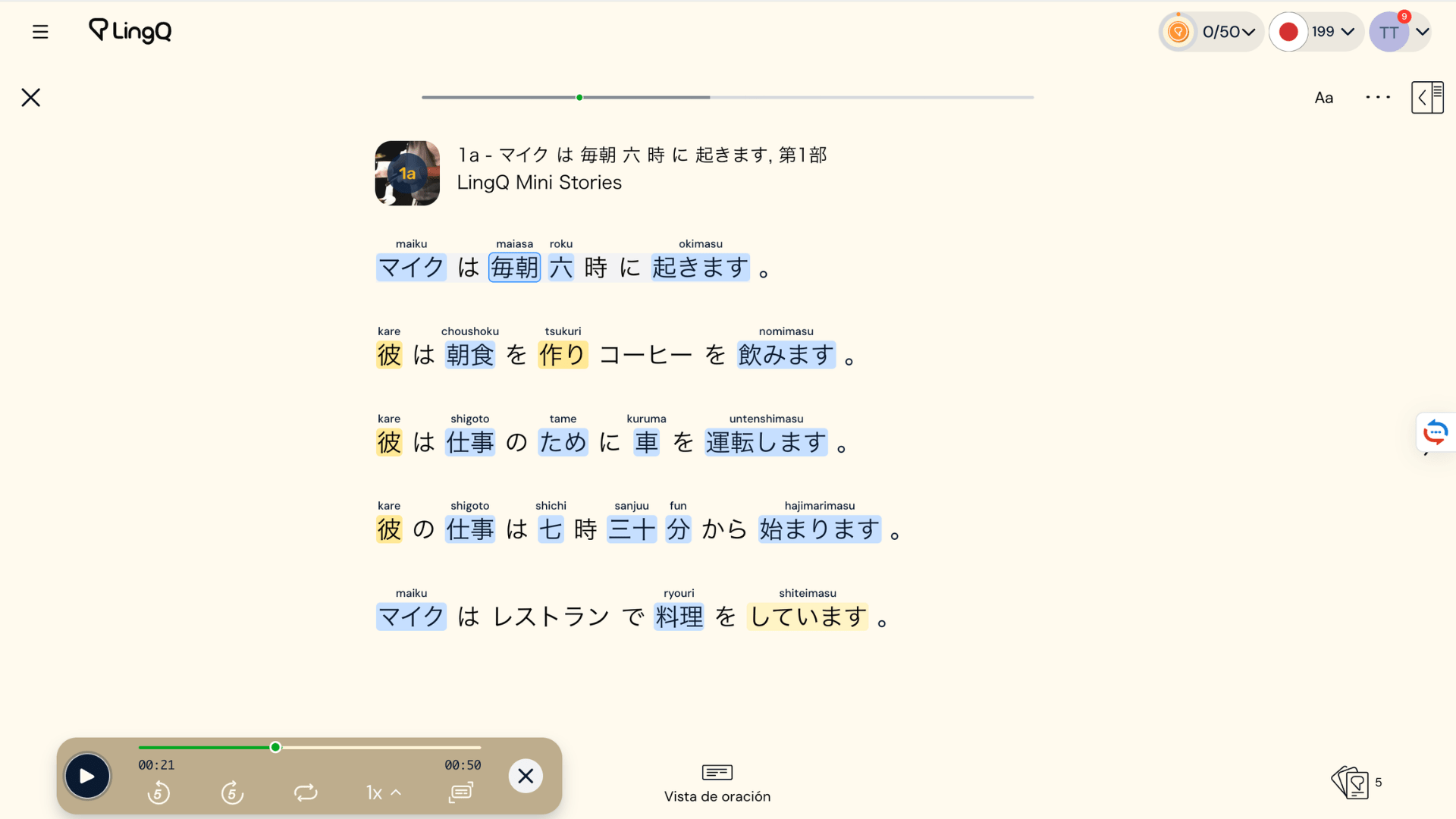
– Clicking a word shows the instant translation and highlights it yellow.
– As you encounter the word across different stories, it gradually turns into clean, unhighlighted text.
This natural method means you are absorbing the core elements of the language in context, bypassing boring flashcard drilling entirely. The system keeps clear track of your vocabulary milestones so you can see exactly how close you are to stepping into the next proficiency level.
Frequently Asked Questions (FAQ)
1. What is the difference between Arigatou and Sumimasen?
While Arigatou is a direct expression of gratitude (“Thank you”), Sumimasen is a versatile phrase that means “Excuse me” or “I’m sorry.” However, Japanese speakers frequently use Sumimasen to thank someone who has gone out of their way for them.
2. Is the word Sayonara commonly used for goodbye?
Not as often as you might think. Sayonara carries a heavy weight of finality, almost like “farewell forever” or “goodbye for a very long time.” In daily life, coworkers use Otsukaresama desu (thank you for your hard work), and friends use casual expressions like Jaa ne (See you) or Mata ne.
3. How long does it take to learn the Japanese writing systems?
Japanese uses three scripts: Hiragana (phonetic alphabet for native words), Katakana (phonetic alphabet for foreign loan words), and Kanji (characters representing ideas). Most dedicated beginners can master reading and writing both Hiragana and Katakana within two to three weeks of consistent practice. Kanji is a lifelong journey, but you only need a few hundred to navigate daily signs.
4. Why are there different words for “please” in Japanese?
The two most common words are ください (Kudasai) and お願いします (Onegai shimasu). Use Kudasai when asking for a concrete object (Mizu kudasai = Water, please). Use Onegai shimasu when requesting an abstract favor, a service, or when pointing out something to a professional (Okaikei o onegai shimasu = The bill, please).
Start Your Japanese Journey Today
Don’t let the fear of a complex language system hold you back from exploring Japanese. By building consistency, prioritizing interesting content, and learning these foundational expressions, you will not only achieve fluency, but also enjoy the process.
Discover how to master Japanese naturally through the power of context with LingQ today.

***
You might also like