Why Language Learning Feels Hard (Even When You’re Making Progress)
 Tyler Tolman
26 Jan 2026
Tyler Tolman
26 Jan 2026
TL;DR
Language learning feels hard for many learners, especially once the initial excitement fades. Drawing from the experience of LingQ user Tomas Mills, successful language learners shift from outcome-based goals to enjoying the process itself. Turn frustration into motivation and language learning becomes a lifelong pursuit of personal growth.
This post was inspired by Tomas Mills’ reflections on learning Danish. Read his full post and read more about his thoughts on life lessons in language learning here.
Ironically, as you progress in a language, you start to doubt yourself. Progress feels slower or even imperceptible. You’re more aware of how interminable the language-learning process can be, and you become discouraged. In this post, we’ll explain why language learning feels hard (even when you’re on the right track) and how to shift your mindset towards a more positive direction.
Why Progress in Language Learning Isn’t Linear
When you first start learning a language, progress is immediate, fast, and noticeable. Your motivation is high, and every interaction with the target language feels fruitful. However, this is no longer the case as you reach an intermediate level.
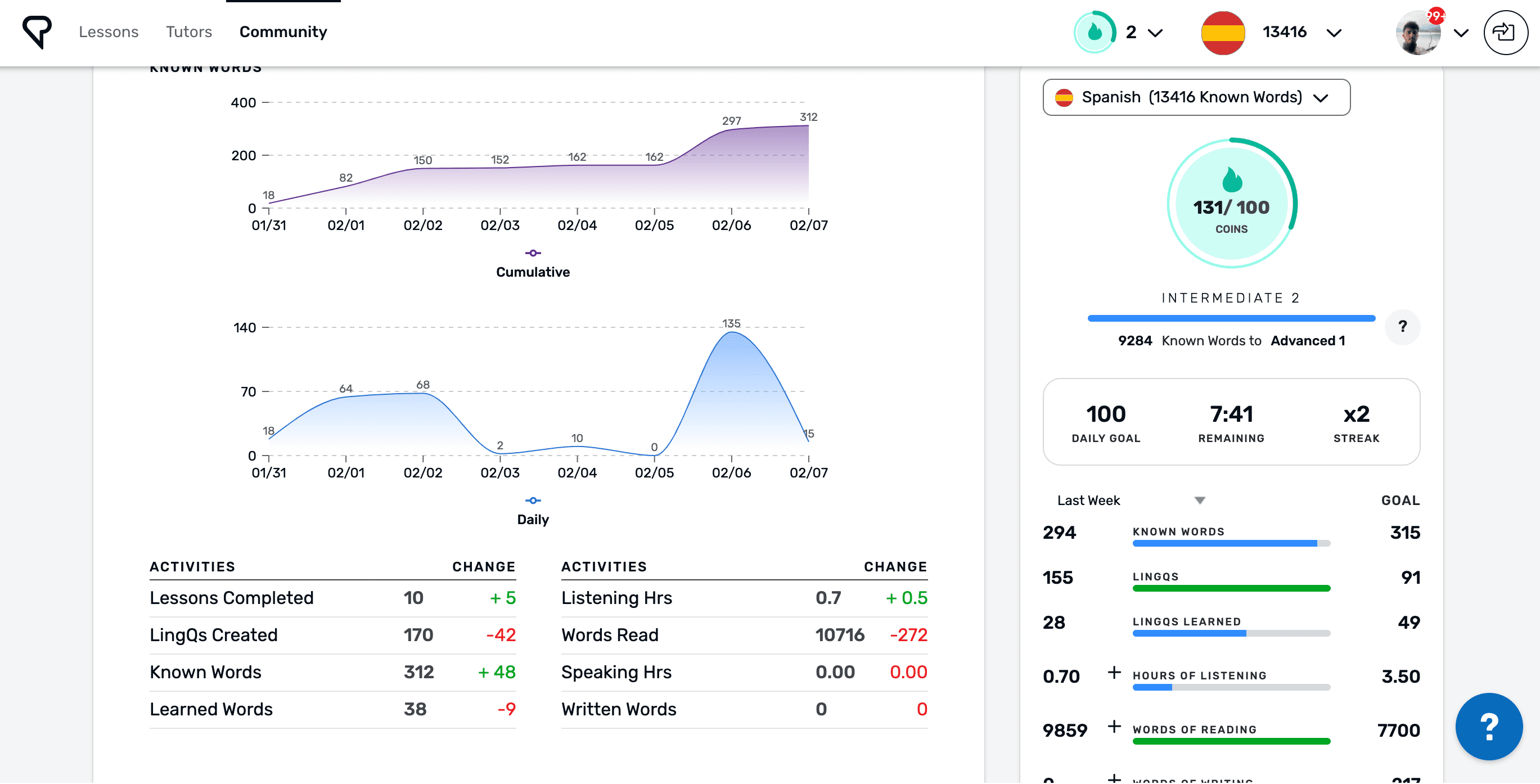
A LingQ user’s progress in Spanish – Our language learning (let alone our progress) is going to be inconsistent. We’ll have dips and spikes in motivation, but the goal is to build strong habits and continue exploring our interests through the target language.
Suddenly, you feel stagnant. You understand how big a language really is, and the end seems nowhere in sight. Language learning doesn’t consist of constant reassurance. In fact, language learning entails obstacles, plateaus, and failure.
Is Failure a Normal Part of Language Learning?
“In November 2022,” writes LingQ user Tomas Mills, “I had the privilege of failing my beginner’s Danish test.” We cannot expect language learning to be a steady stream of success. Early on in his efforts to learn Danish, Tomas encountered failure.
Despite his initial setback, Tomas sought a new approach to language learning. Through LingQ, Tomas learned not only to accept failure, but embrace it as a part of the language learning process. In fact, not passing his Danish exam became an opportunity to reflect on his process and reasons for pursuing the language in the first place.
The Mindset Shift That Changes Everything
The more things a man is interested in, the more opportunities of happiness he has. ~Betrand Russell
It’s critical for language learners to understand that language learning is not a means to an end. We learn languages to connect with others, explore personal interests, and broaden our horizons. Tomas quickly learned that learning Danish wasn’t a barrier between him and his goals. In fact, the process of learning Danish is his window into Danish history, culture, and connection.
An outcome-based mindset is why language learning feels hard. If we’re unable to align language learning with our interests, the process becomes cumbersome and harder to enjoy. The process is the reward. Tomas writes:
While I couldn’t go from failing my beginners test to reading academic texts and books, I could engage with children and teenager content on Danish history, culture and politics…I started to realise and act in such a manner that the joy did not come from some idealised goal, like a mirage, constantly lingering in the horizon no matter how far we push forward, the joy was in fact the chase itself.
What Real Progress in Language Learning Actually Looks Like
Successful language learners find a way to get hooked on the learning process, not the outcome. Tomas compares language learning to playing a video game. Once we win the game, we seek a new, harder challenge. We’ll either play the game again at a higher level of difficulty or challenge ourselves with a new game altogether.
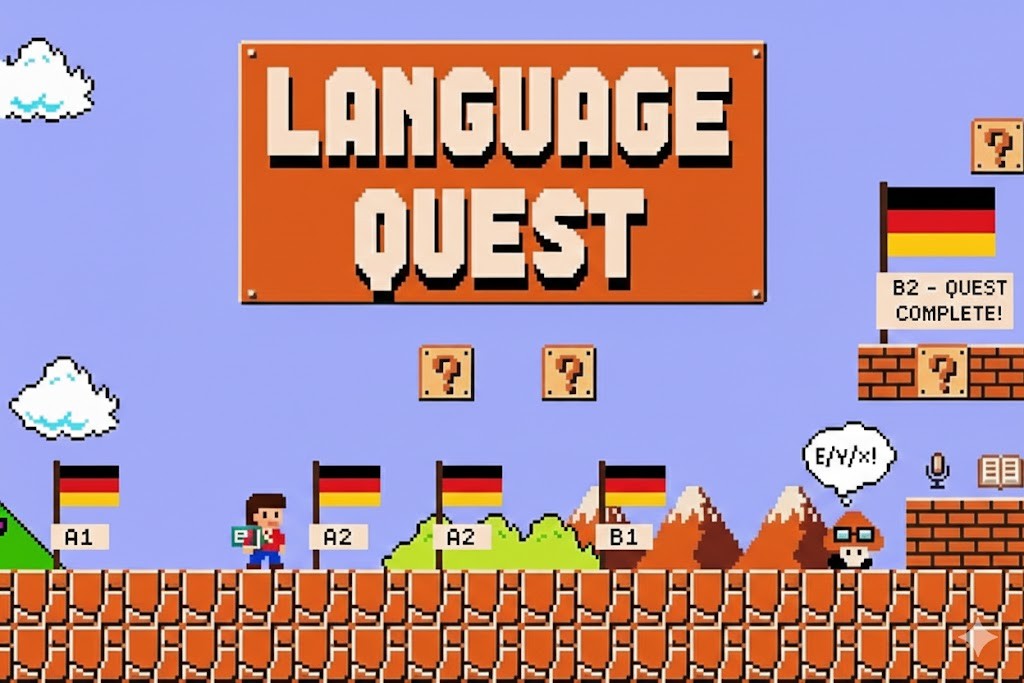
Progress is an inevitable outcome of consistent, curiosity-driven language learning. Pursuing our personal interests in the target language, augmenting the difficulty as we dig deeper, is progress. Using the language to make deeper social connections or reach for new professional opportunities is progress.
Success is not passing an exam, but rather finding personal satisfaction through the target language. At times, language learning can feel difficult. However, if we align our process with our interests, motivation outweighs the challenge.
How Tools Can Help
Language learning doesn’t have to feel hard. Tools like LingQ can greatly reduce the strain from reading and listening to another language. At LingQ, our goal is to remove friction between the learner and their ability to explore their interests through the target language.
Sifting through beginner-content, automatically generating transcriptions, and importing content, Tomas considers LingQ to be a real game changer. “Almost all of my stuff at LingQ is imported content,” shares Tomas.
It’s possible to enjoy Danish ebooks, podcasts, news articles, and YouTube videos more easily than ever before. Instant translation, custom review, and progress tracking remove barriers between the learner and their content.
Language learning highlights the importance of enjoying the process. Language learning feels hard when viewed as a series of hurdles to overcome. When viewed as a process to be enjoyed, however, language learning becomes a lifelong pursuit of personal growth, enrichment, and connection.
FAQs
Why does language learning feel harder at the intermediate level?
Progress is less rapid and you have a better idea of how much you don’t know.
Is failure a sign that I’m doing something wrong?
Not necessarily. Failure and mistakes are unavoidable. As a language learner, you’re constantly pursuing new challenges.
How can I stay motivated when progress feels invisible?
Align your learning with content that legitimately interests you. You want to keep returning to the language for the content, not just the pursuit of fluency.
What does real progress look like in language learning?
Real progress is understanding more, accessing richer content, and using the language in real life.
How can tools like LingQ make language learning easier?
Good tools reduce friction. You spend less time struggling with the actual tasks of reading and listening and more time enjoying content.
Writer Bio

Tyler is an American language teacher and language learner. He’s taught Spanish, French and Latin in the K-12 system since 2018. Tyler also speaks Thai and Italian. Currently, he’s learning German and Polish on LingQ!
You might also like