LingQ Premium Review 2026: Is It Worth the Upgrade?
 Tyler Tolman
25 Feb 2026
Tyler Tolman
25 Feb 2026
TL;DR
Is LingQ worth it? This depends on you. LingQ is built for learners who enjoy reading and listening to real content. LingQ users are motivated, consistent, and strive to be independent learners. It’s less suited for those who want a structured course, heavy speaking drills, or a gamified app experience.
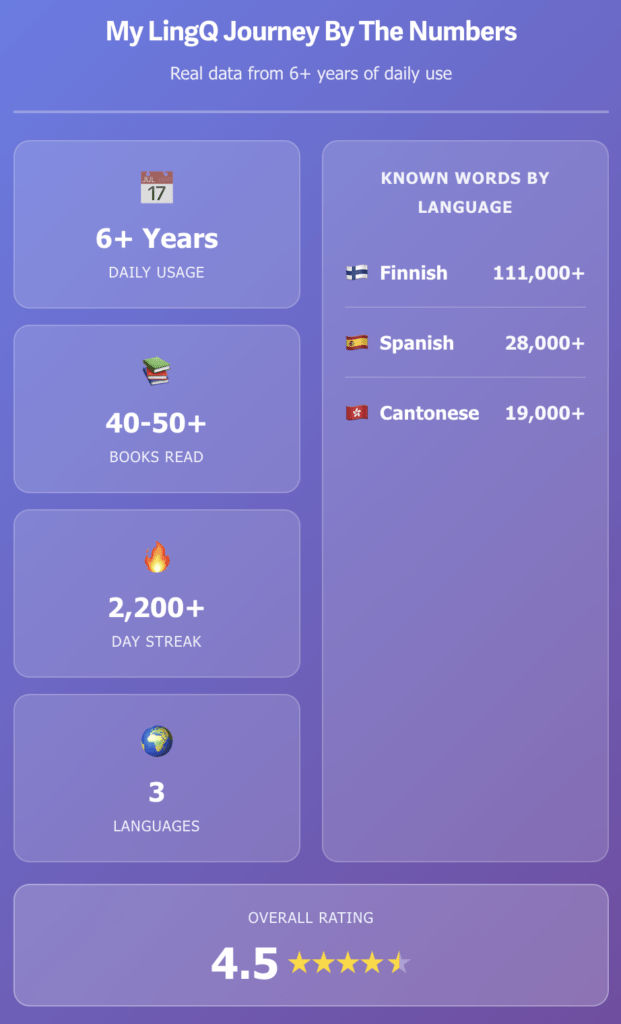
Is LingQ worth it? If you’re serious about fluency, absolutely. After 6+ years of using LingQ to learn Finnish, Cantonese, and Spanish, Christian Tapper agrees.
But LingQ isn’t for everyone.
Ultimately, whether or not LingQ is worth it depends on your learning style and long-term goals. You can read Christian’s full LingQ Premium review and explore his other posts, or keep reading for a breakdown.
LingQ Premium Review: Is LingQ Worth It?
LingQ is worth it if:
- You want to learn through real content.
- You’re an independent learner.
- You see language learning as a long-term goal.
LingQ may not be worth it if:
- You want a step-by-step course.
- You only want speaking practice.
- You prefer gamified apps.
How does LingQ Work?
LingQ’s approach to language learning is straightforward: build fluency through reading and listening. LingQ is a reading platform that equips language learners with the following:
- Libraries of content organized by topic and level.
- Click-to-translate and speech-to-text.
- Progress tracking for known words, learning habits, etc.
- The ability to import content from Netflix, YouTube, etc. using the LingQ Importer browser extension (available for Chrome, Safari, Edge and Firefox).
There are additional features, but the core idea is simple: move from beginner material to native-level content through consistent exposure.
Why LingQ Might Be Worth It
Christian lays out LingQ’s strengths and shortcomings. Let’s start with the strong points.
1. Built for Real Content
LingQ has content for learners at every level, but there’s really no upper limit. LingQ users can read novels, listen to podcasts, and explore YouTube channels.
As your listening and reading skills build, you’re able to push yourself towards more advanced content. Eventually, you’re just enjoying the language as a native speaker would.
2. Vocabulary Grows Naturally
You don’t need to review flashcards or drill lists of words to expand your vocabulary. Seeing words in different contexts is enough to internalize meaning.
LingQ makes progress visible through color coding:
- New words appear in blue.
- Clicked words turn yellow (still learning)
- Known words are no longer highlighted.
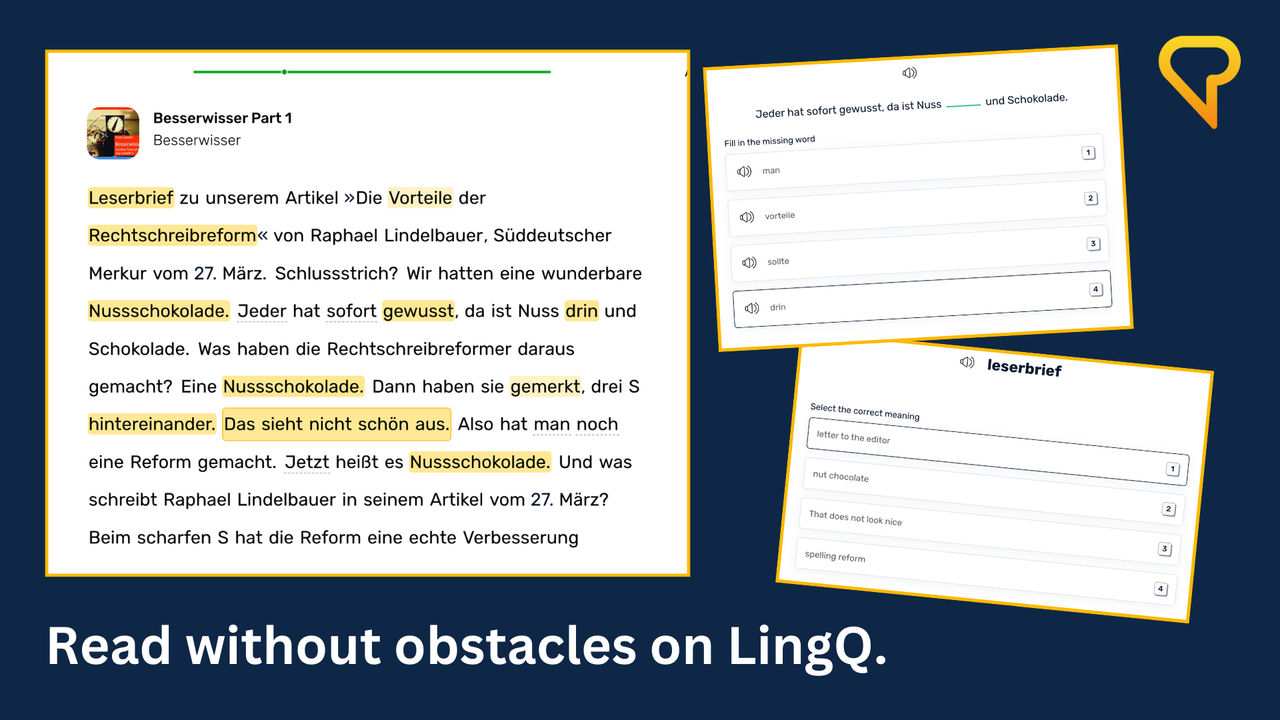
Over time, you can watch your vocabulary grow. The system also helps you gauge text difficulty:
- If a text is mostly blue, it might be too hard.
- If you barely see any blue or yellow, it’s time to increase the challenge.
3. Designed for Long-Term Growth
LingQ isn’t a course. It’s not a game to win. It’s an immersion platform. Whether as a beginner or advanced learner, LingQ grows with you.
Beginners benefit more from the mini stories and sentence review whereas advanced learners are importing books, joining challenges, and striving for 30,000 known words.
LingQ isn’t something that you outgrow. It’s designed for long-term use and guides you towards actual fluency.

Where LingQ Falls Short
No platform is perfect. Christian highlights several of LingQ’s limitations.
1. LingQ is Best for Independent Learners
LingQ doesn’t offer a rigid path. Ultimately, the learner needs to explore the features, choose content, and discover how they like to learn.
LingQ has a lot of features, a lot of content, and it’s expected that learners will use the platform differently. This can be overwhelming. Christian shares his personal go-to features here.
2. Limited Speaking Focus
Ultimately, LingQ is for listening and reading. If your sole goal is to practice speaking, LingQ may not be ideal.
Although LingQ connects learners to private tutors, other websites like italki offer a much larger pool of teachers and emphasis on live conversation.
We believe that listening and reading comprehension are the foundation to fluency. Speaking and writing emerge from this foundation.
3. Room for Improvement
There are some aspects of the user-experience to improve. Christian’s main critiques include:
- The layout of YouTube imports could be optimized.
- Listening time should be displayed more clearly (i.e. 30 minutes instead of 0.5 hours).
- Word parsing for languages like Cantonese aren’t always accurate.
LingQ takes these comments seriously, and we’re constantly working to improve the platform. Just last year, we’ve added several languages, improved speech-to-text features, and added AI-driven features like the Lynx chat bot and context-based translations.
Who is LingQ Best For?
As said earlier, LingQ is not for everyone. Learners who would see the most success with LingQ include…
- Self-directed learners.
- People who enjoy reading and listening.
- Learners frustrated with gamified apps.
- Learners who have outgrown beginner material.
- Those studying less-common languages.
Thousands of long-term users rely on LingQ across dozens of languages because it supports deep, sustained immersion.
If you don’t enjoy reading and prefer every aspect of your learning to be curated/chosen for you, LingQ may not be the best choice. If you’re just trying to pick up a few tourist phrases, LingQ might be overkill.
LingQ is for language learners who want to develop a deeper understanding of the language. LingQ users explore culture and interesting content through language learning. LingQ users are in it for the long haul.
Final Thoughts: Is LingQ Worth It?
If your goal is real fluency through immersion, yes, LingQ is worth it.
If you want entertainment, quick phrases, or a fully guided classroom-style program, it may not be the right fit.
LingQ rewards independence, curiosity, and long-term commitment. For learners serious about comprehension-based fluency, it’s one of the most powerful tools available.
Try LingQ for free and see if it’s right for you.
FAQs
1) Is LingQ good for beginners?
Yes, especially motivated beginners. LingQ has curated content for beginners, as well as more challenging content to reach for.
Is LingQ better than Duolingo?
LingQ and Duolingo serve different purposes. Duolingo offers a more gamified experience, and it emphasizes short exercises and sentence drilling. LingQ focuses on immersion through real content.
How much does LingQ cost?
LingQ offers a free version with limitations and paid plans for full access to tracking, imports, and unlimited vocabulary saving.
Can you become fluent using LingQ?
Yes. LingQ makes it easier to read and listen to large amounts of content. Consistent effort and exposure lead to fluency.
Writer Bio

Tyler is an American language teacher and language learner. He’s taught Spanish, French and Latin in the K-12 system since 2018. Tyler also speaks Thai and Italian. Currently, he’s learning German and Polish on LingQ!
You might also like