15 Cool & Funny Dutch Words Every Learner Should Know
 LingQ
8 Apr 2025
LingQ
8 Apr 2025
Some of the most interesting Dutch words in the language have no English equivalent at all. Dutch has a word for sitting back and letting your belly out after a big meal. It has a word for walking in the wind to clear your head. It has a word for the joy of anticipating something fun. This list of 15 Dutch words gives you a glimpse into the language and the culture behind it.
Dutch Words Worth Knowing
The 15 Dutch words below cover everything from social rituals to emotional states. Some are untranslatable. Some are hilariously literal. All of them are worth adding to your Dutch vocabulary.
Funny & Surprising Dutch Words
Uitbuiken
English doesn’t really have an equivalent of the word uitbuiken, but it describes a universal act that transcends both language and culture. To uitbuiken is what you do after a good meal when you simply sit back and let your belly out. In fact, the word literally means ‘out-bellying.’ Try it out the next time you have too much bitterballen at the borrel.
Trekker
Learning another language also means learning another way of expressing certain ideas and this is where the word trekker comes into play. You see, in Dutch, you don’t always lead a project or task. Instead you actually pull (trekken) it and the person who does the pulling is called the trekker.
The term trekker doesn’t have to just apply to those who pull projects, but it can also be used for social gatherings. The person in a social group who organizes a night out, makes the reservations and tells everyone what time to meet up can also be referred to as the trekker.
Ogenblik

The term ogenblik is actually quite a straight-forward word. It literally translates to ‘eye-blink’ and refers to any short amount of time. Dutch does have the word second (seconde) and moment (moment/momentje), but you’re much more likely to hear ogenblik. Dutch speakers frequently use the word to mean anything between a ‘jiffy’ a ‘second’ and an ‘instant.’ It’s so prevalent, the ATMs even use it when you wait for your cash.
Want these Dutch words to stick?
Consistent reading and listening is best way to grow your vocabulary. Use LingQ to encounter words across different contexts and develop a deeper sense of meaning.
Create Dutch lessons with Netflix shows, YouTube videos, blog posts, song lyrics, novels and more. If you’re new to the language, the Dutch LingQ Mini Stories are the perfect place to start. Begin your Dutch learning journey today. What are you waiting for?

Common Dutch Words You’ll Hear Every Day
Vinden
If you’re just learning Dutch, one of the first things you learn is that the language has no expressions for liking something. In Dutch, you can’t simply say that you like or dislike anything. Instead you have to specify exactly how you ‘find it’ in order to express your opinion and the Dutch are a very opinionated people. As such, you can use the verb vinden with almost any adjective to make your thoughts about something known.
Ik vind het leuk – ‘I find it great’
Ik vind het lekker – ‘I find it tasty’
Ik vind het gezellig – ‘I find it cozy’
Ik vind het verschrikkelijk – ‘I find it terrible’
Hoor
Hoor is a tiny little word in Dutch that doesn’t actually have any meaning on its own. It comes at the end of a sentence to give it a bit more flavor. Sometimes, it can be used to soften a sentence or make it sound nicer.
Sorry hoor – ‘sorry there’
Nee hoor, bedankt – ‘no, thanks’
Watch out though, hoor is not always meant as something polite. You can also tack it on to the end of a sentence or phrase to give it a sense of sarcasm.
De koud is niet slecht, hoor – ‘the cold isn’t bad, really’
(tongue-in-cheek)
Fiets/Fietsen
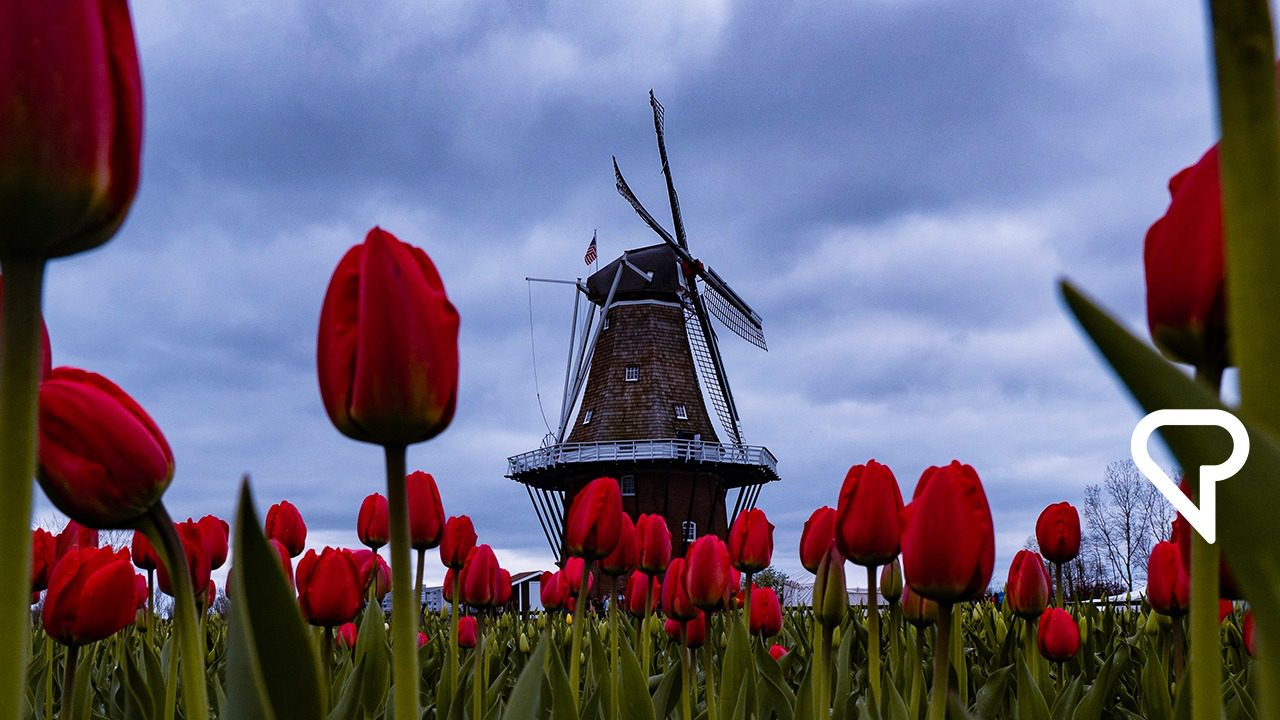
The Dutch are famous for a lot of things like windmills, tulips and loving the color orange, but if you ought to know anything about Dutch culture, it’s the bicycle. The bicycle (de fiets) is essential to Dutch living as a huge percent of the population bikes (fietsen) to get anywhere. Likewise, since fietsen are so integral to life in the Netherlands, there are loads of compound words for describing different parts of bikes and their role in society.
Fiets(en) – ‘bike(s)’
Fietsen – ‘to bike’
Fietstas – ‘bike bag’
Bakfiets – ‘cargo bicycle’
Fietshelm – ‘bike helmet’
Bromfiets – ‘moped’
Untranslatable Dutch Words With No English Equivalent
Gezellig/Gezelligheid
Gezellig (pronounced roughly heh-ZEL-likh) is one of the most beloved words in the Dutch language and one of the hardest to translate.
If you’ve spent any time in Dutch society, especially at a party, then you’ve heard this word many, many times. Dutch culture has a particular fixation on the idea of making things gezellig and maintain gezelligheid. The word gezellig has no direct translation in English, but is used regularly to describe anything that evokes feelings of coziness, enjoyment or good vibes. Often it’s used to indicate a sense of belonging, time spent with family, catching up with an old friend or just a general feeling of togetherness. If it makes your heart feel warm, then you can probably call it gezellig.
Lekker
The word lekker, meaning “tasty” or “delicious” at its core, is the most used example of an untranslatable Dutch word. At first glance, you can use lekker as you would ‘tasty’ or ‘delicious’ and it is used for good food. However, the word can also have a lot of additional meanings, as you can use lekker to describe not only food, but also weather, a situation, and potential romantic interests.
Ga lekker zitten – ‘make yourself comfortable’
Lekker weer – ‘great weather’
Lekker ding – ‘attractive person’ (literally ‘tasty thing’)
Lekker brood – ‘tasty bread’
Uitwaaien
This expression literally means “out-blowing”. It’s a term for walking outside in windy (often colder) weather to clear your head and reduce stress. If you need some short term relief after a stressful day, consider a brisk walk to uitwaaien.
Snikken
English has many variations of the word to cry, but this Dutch word has a bit more specificity. Snikken refers to the act of noisily crying with convulsive, short breaths. In other words, snikken is a peculiar mix of sobbing, weeping, and gasping.
Voorpret
Voorpret describes the joy you feel in anticipation. Literally translated to “pre-fun”, voorpret captures the excitement and pleasure of planning a trip, buying concert tickets, or preparing for a party. Vorangst, on the other hand, speaks to anticipatory dread or anxiety.
Uitzieken
Our last Dutch word on the list translates to “out-sick”. It means to allow a minor illness to run its course through rest, hydration, and staying home. It implies avoiding unnecessary medication and opting for quality, at-home self-care.
Dutch Cultural Expressions
Doe maar normaal
Doe maar normaal is a fundamental Dutch phrase. It essentially translates to “Just act normal”. This phrase has a critical tone, often used to discourage someone from bragging, showing off, or standing out.
Borrel
Borrels are informal gatherings at pubs or bars, that often include snacks like bitterballen and definitely include some kind of drink. Companies or employers will organize borrels as a way to foster bonding and team-building. If you spend any time in the Netherlands, then you’ll almost certainly be invited to one.
Polderen
This Dutch verb literally means to reclaim land from water, creating a polder. However, the polderen nowadays is used more metaphorically. It’s a cooperative, consensus-based approach to decision-making.
Polderen emphasizes equality and mutual respect to solve disputes and make compromises.
Learn Dutch Faster with the LingQ App
Immersing yourself in Dutch doesn’t require you to travel abroad or sign up for an expensive language program.
However, it can be a bit tiresome to find interesting content, go back and forth between sites, use different dictionaries to look up words, and so on. That’s why you should learn Dutch on LingQ. A language app that helps you discover and learn from content you love. You can import videos, podcasts, and much more and turn them into interactive lessons.

Keep all your favourite Dutch content stored in one place, easily look up new words, save vocabulary, and review. Check out our guide to importing content into LingQ for more information.
LingQ is available for desktop as well as Android and iOS. Gain access to thousands of hours of audio and transcripts and begin your journey to fluency today.
FAQs
What are some common Dutch words?
Some of the most commonly used Dutch words include gezellig (cozy, warm atmosphere), lekker (tasty, but also used for weather and situations), hoor (a filler word that softens or adds flavor to a sentence), and fiets (bicycle, central to Dutch daily life). These words come up constantly in everyday Dutch conversation.
What are the most beautiful Dutch words?
Many Dutch speakers consider words like voorpret (anticipatory joy), gezelligheid (the feeling of coziness and togetherness), and lieveheersbeestje (ladybug, literally “little animal of the Good Lord”) among the most beautiful in the language. They capture concepts that English simply doesn’t have single words for.
What is a cool Dutch word?
“Desalniettemin” translates to “nevertheless” or “nonetheless.” This is a rhythmic, four-syllable word that adds some elegance to your speech.
What is a Dutch word with no English equivalent?
There are plenty. For example, “Gedoogbeleid” is a uniquely Dutch word referring to “a policy of tolerance”. A rough sentimental equivalent is “live and let live”.
What is a funny Dutch compound word?
“Handschoen” is curiously literal. In Dutch, a glove is simply a “hand shoe.” “Wildplassen”, the word for public urination, is an honorable mention. It literally means “wild peeing”.
What do Dutch people say all the time?
“Hè hè.” This is not a laugh, but a Dutch exhale of relief or satisfaction. Use this after finally taking a seat or finishing a difficulty task.
Ready to put these Dutch words into practice? Start learning Dutch on LingQ and import any Dutch content you find interesting directly into your lessons.
***
John Melnyk is a freelance writer and translator from Florida, USA. He has a masters degree in Linguistics and Communication and is currently working on his first novel.
You might also like